Scan our QR code to stay updated with the recent news and upcoming events.
Scan our QR code to stay updated with the recent news and upcoming events.

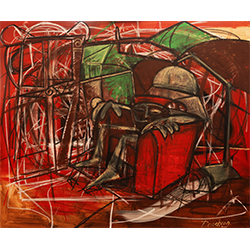
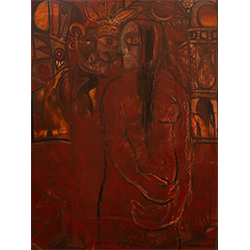
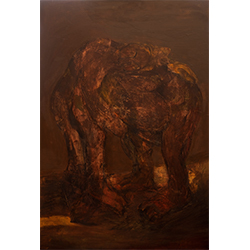
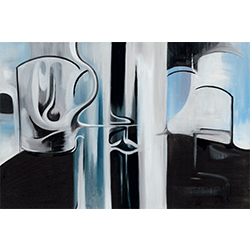
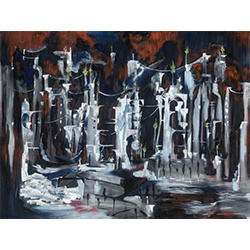
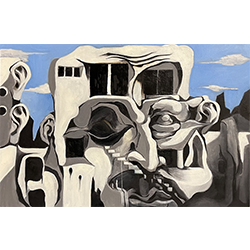
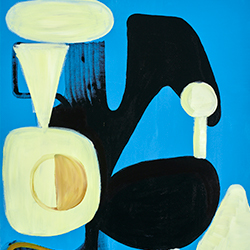
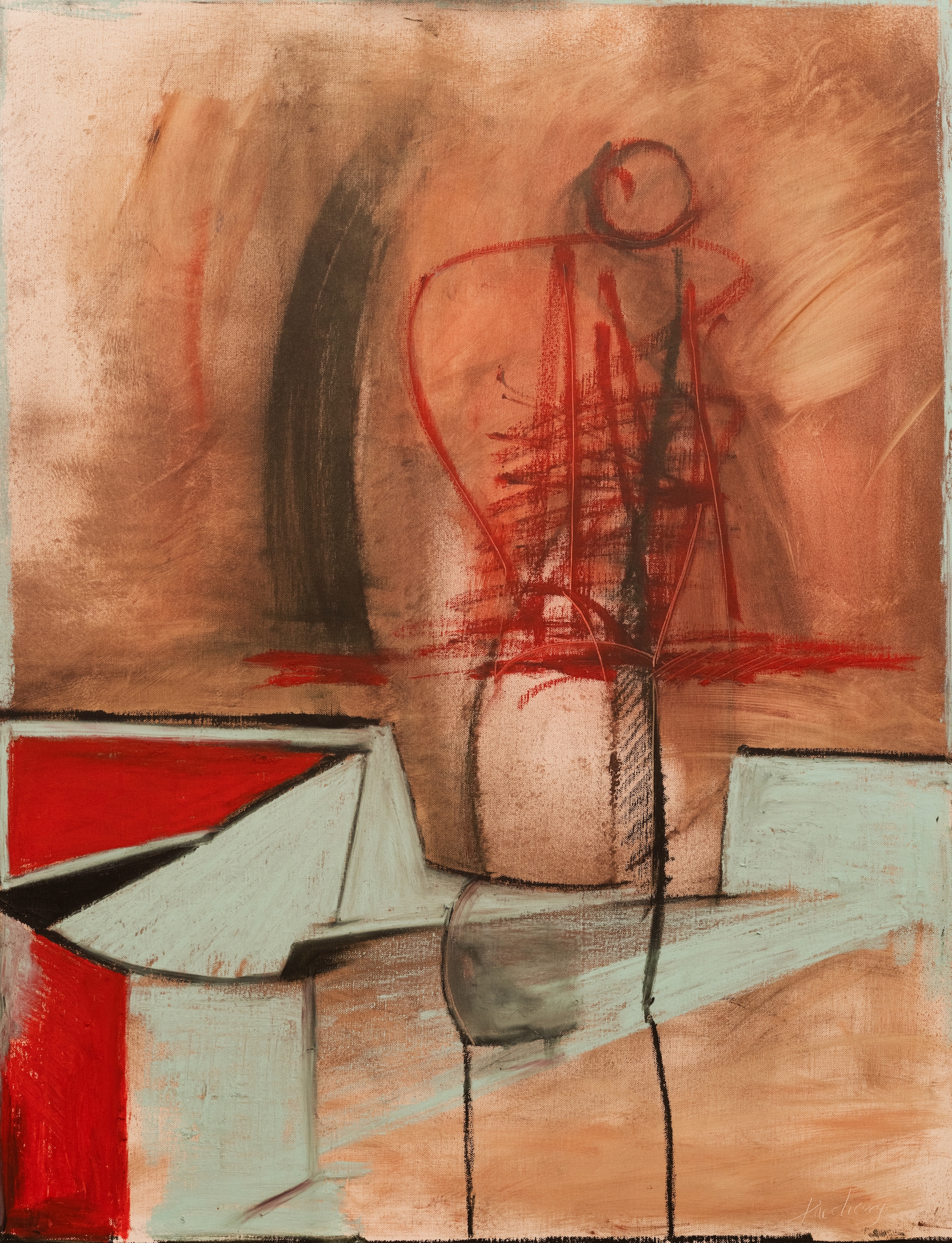
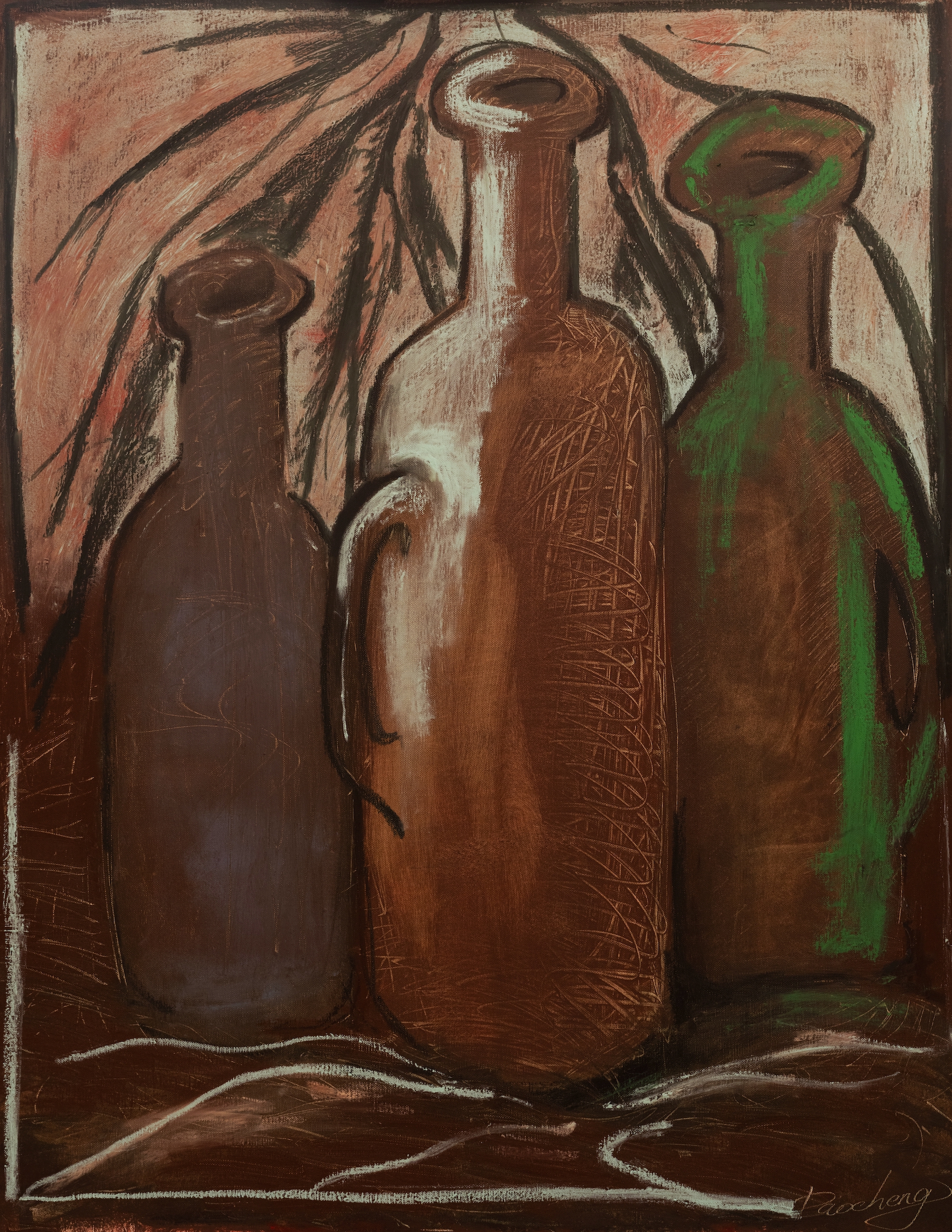
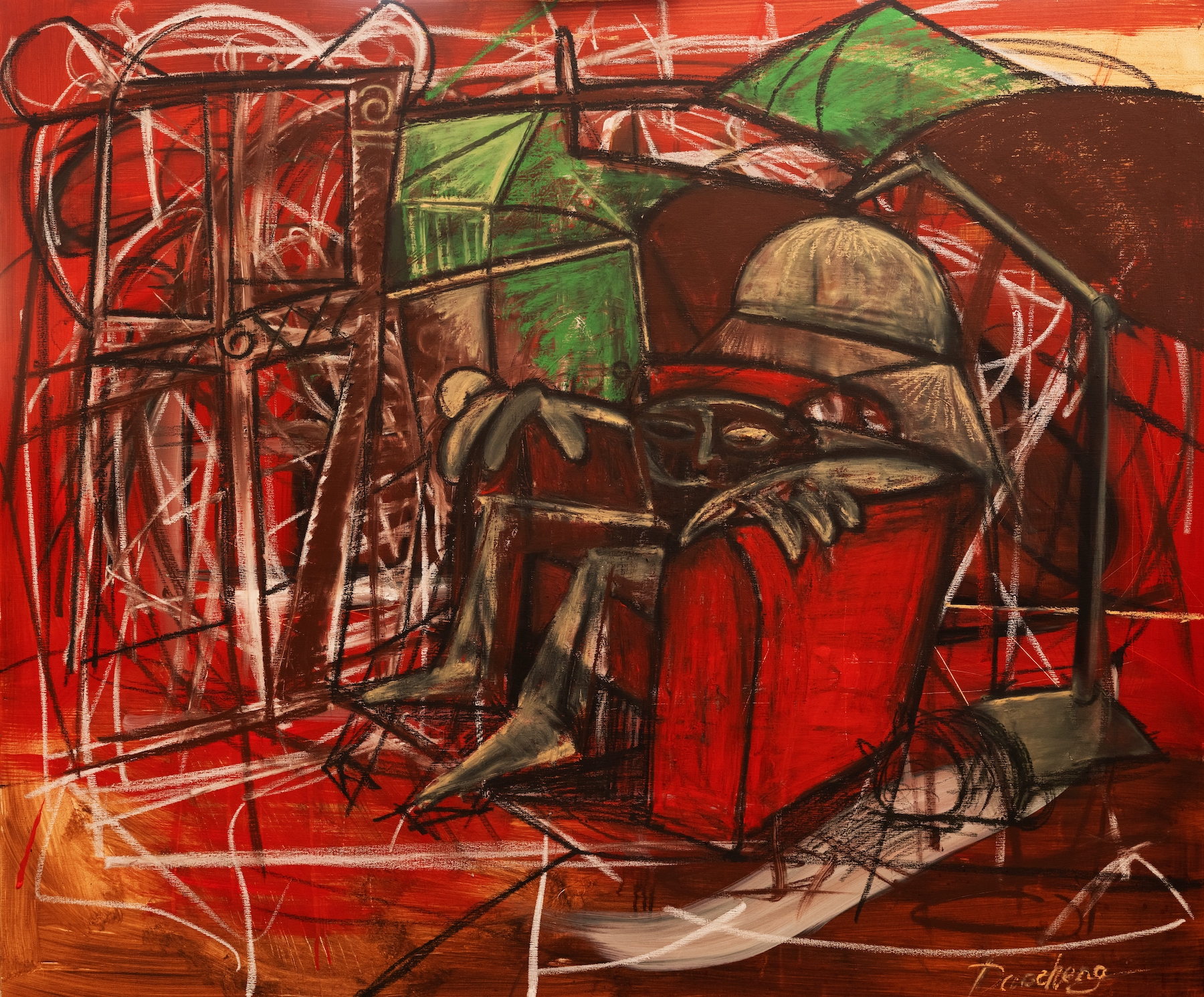
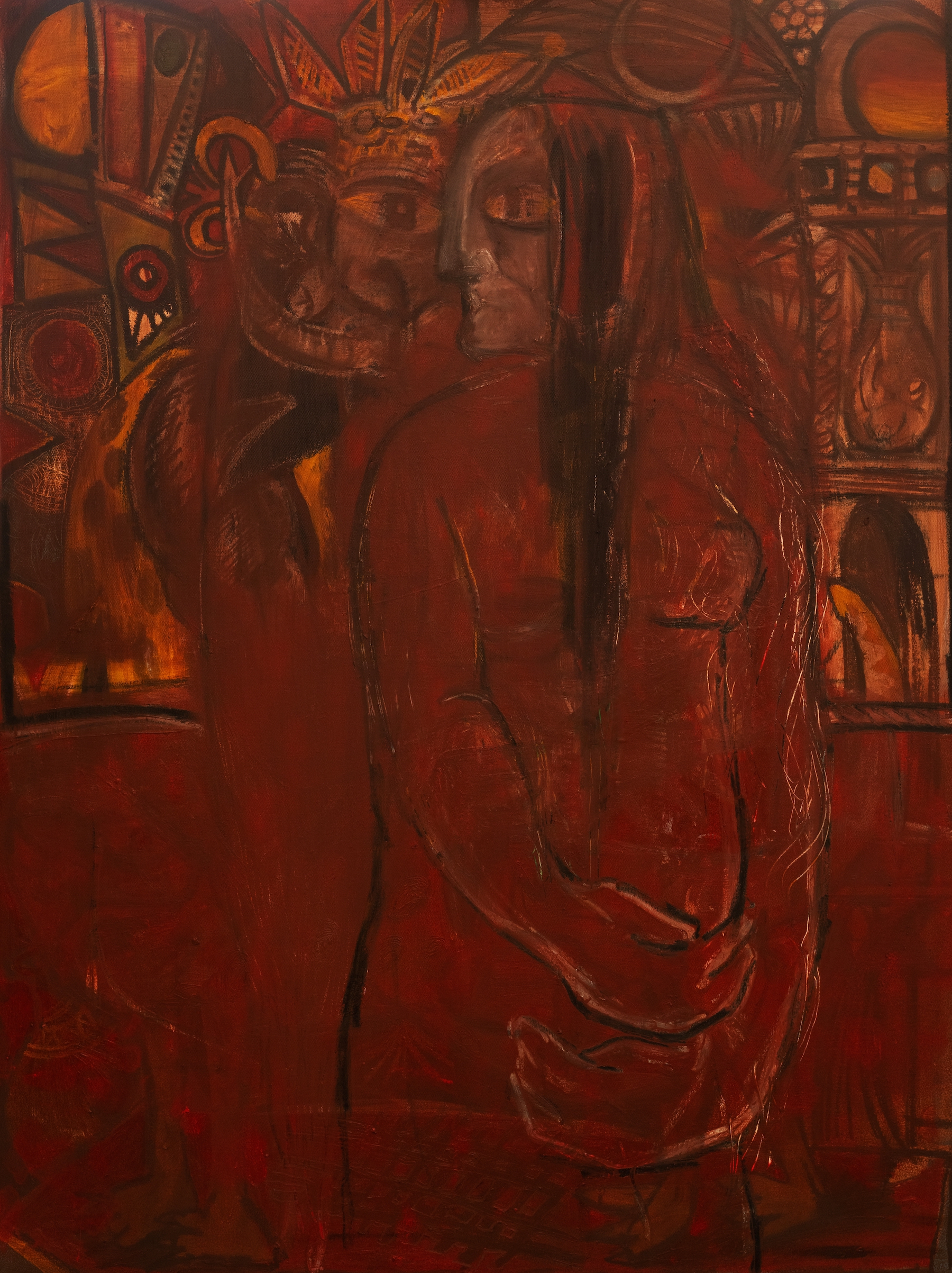
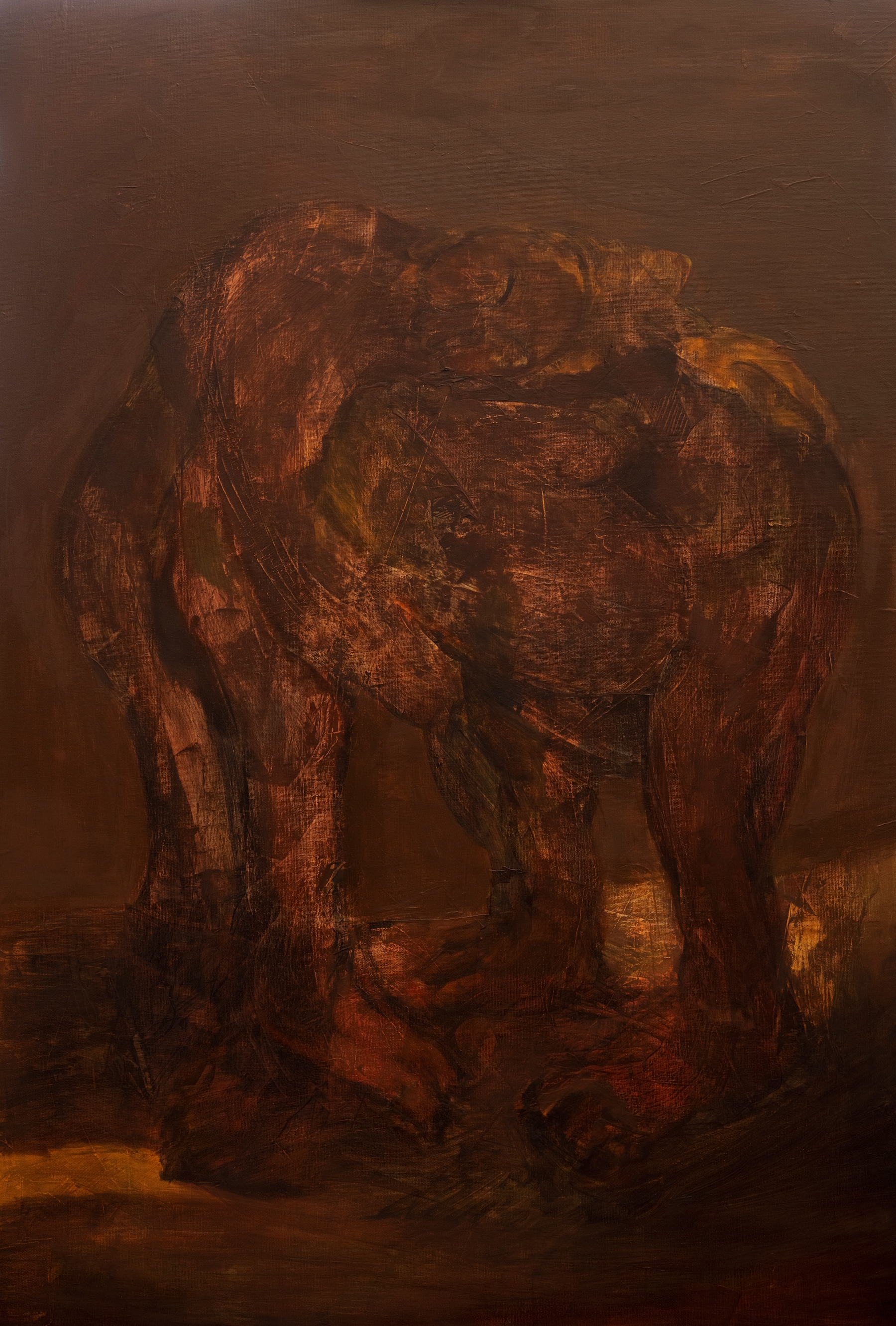
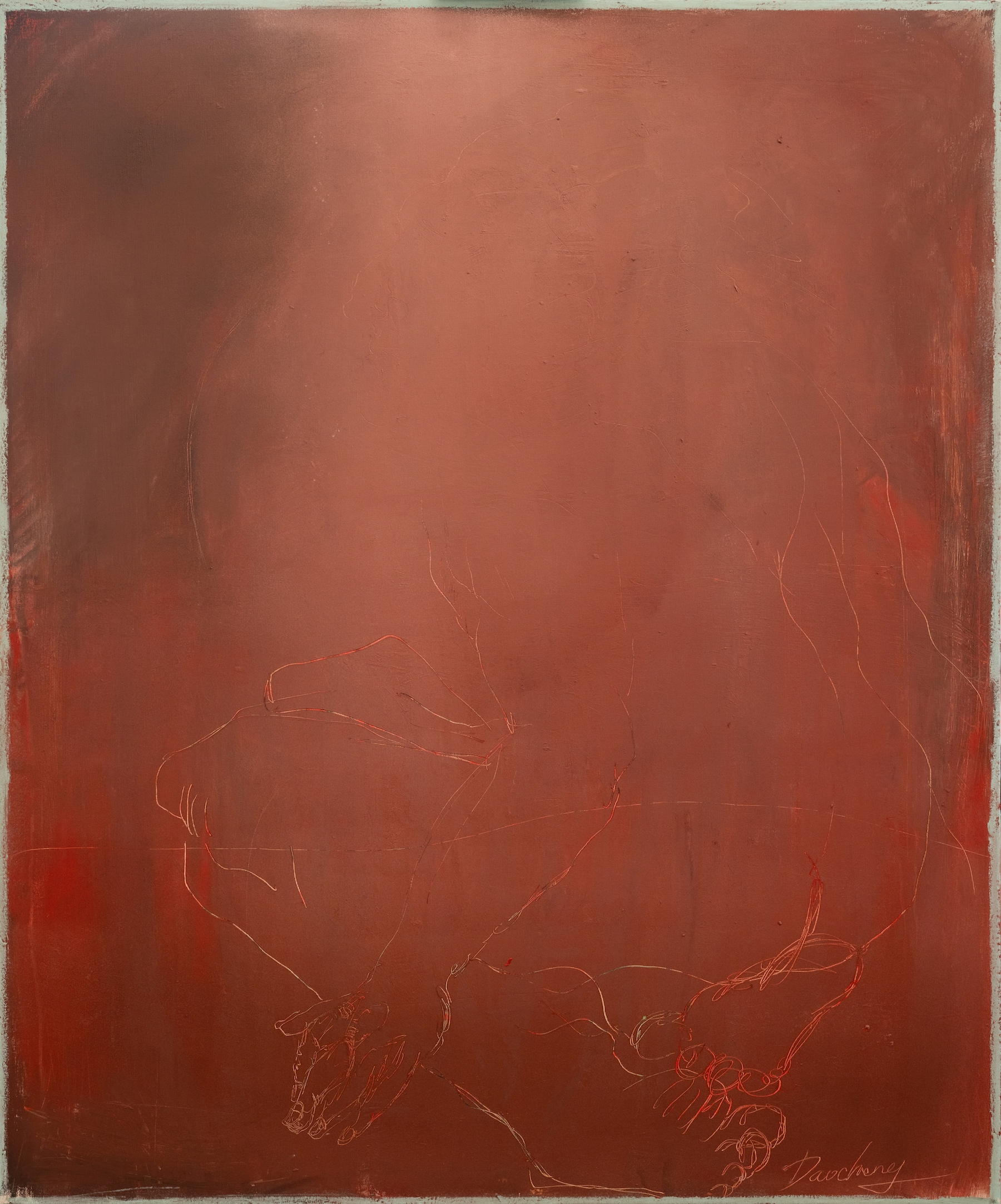
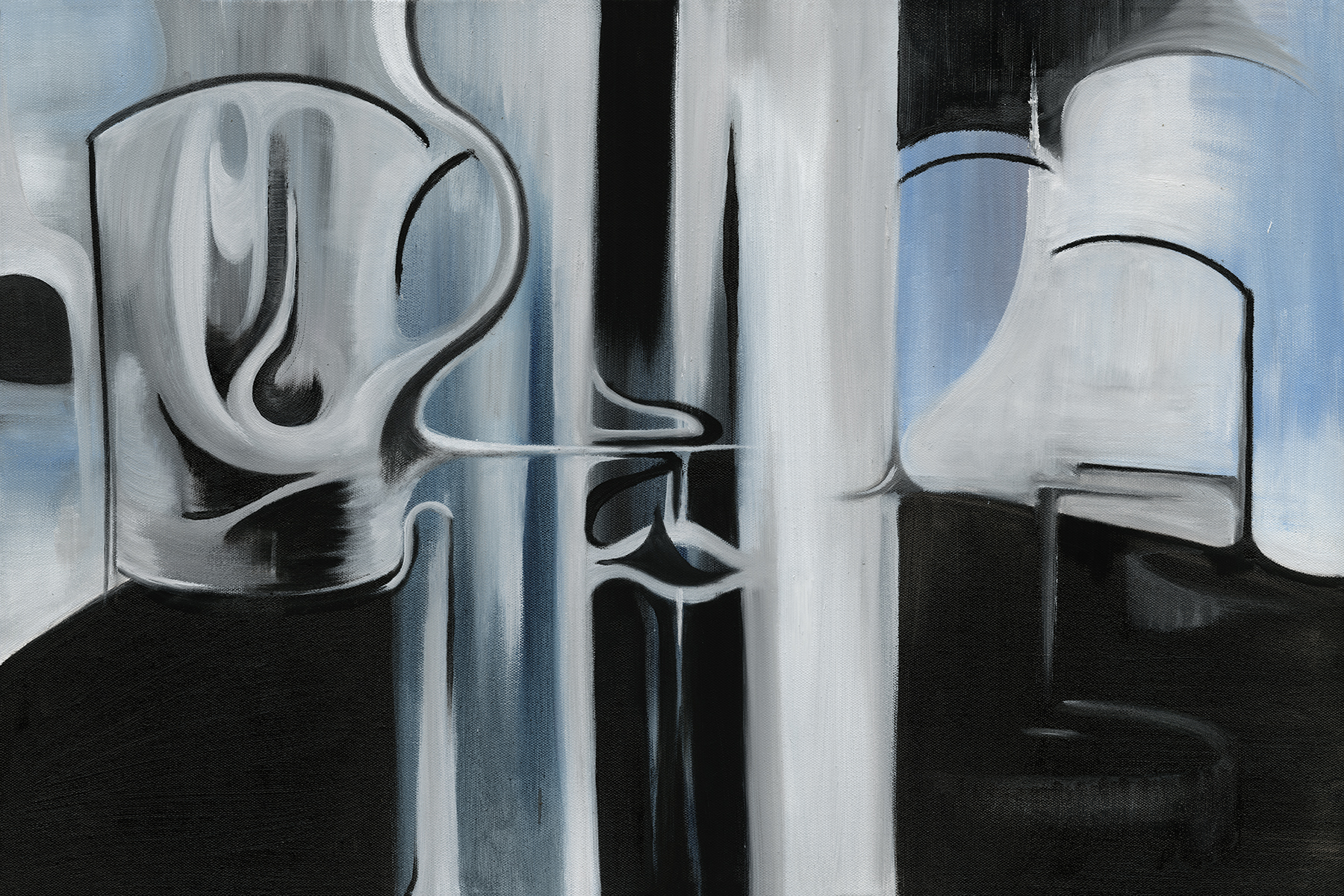
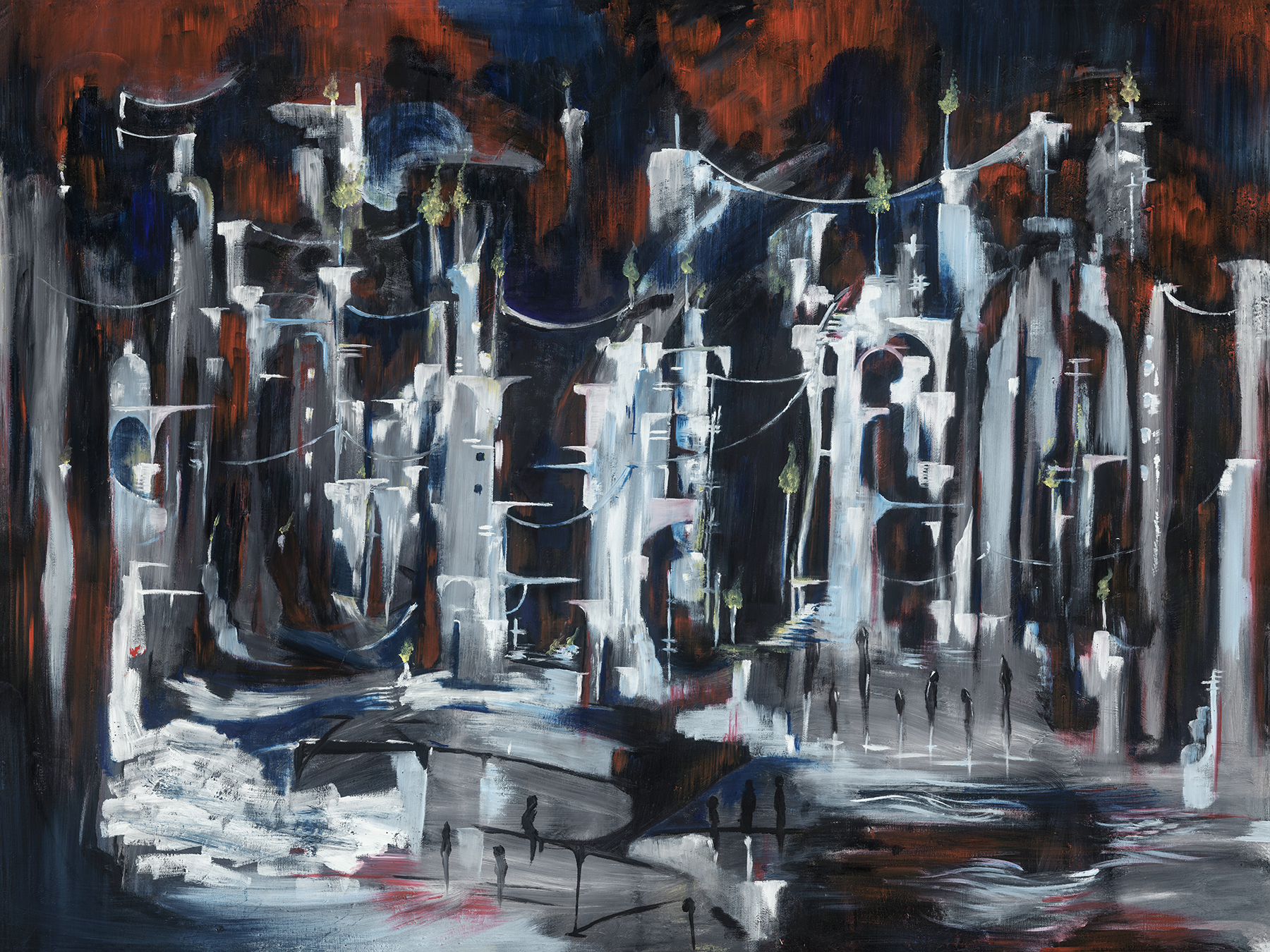
Art+ Shanghai is pleased to present a new body of work by Nan Chuan, whose recent paintings unfold as a charged inquiry into memory, interiority, and the unstable architecture of perception. Rather than offering descriptive images of figures, objects, animals, or domestic spaces, these works posit painting as a psychic terrain: a site where the visible world is fractured, reassembled, and haunted by the residues of sensation. Through a lexicon of dense reds, earthen browns, acidic greens, and abrupt black contours, Nan Chuan transforms familiar motifs, vessels, flowers, architectural fragments, animal bodies, and human-like forms, into signs suspended between recognition and dissolution.
At the center of this body of work is a sustained tension between figuration and instability. Nan Chuan’s paintings appear to emerge through a process of excavation: images are scratched, overpainted, dragged, and partially obscured, as if the canvas were a palimpsest of impulses, memories, and unresolved encounters. In this sense, the works enter into dialogue with Neo-Expressionism, the late twentieth-century movement in artists such as Georg Baselitz, Jean Michel Basquiat, Francesco Clemente, that reasserted the visceral force of the painted figure after the conceptual and minimalist reductions of the postwar period. Yet Nan Chuan’s relationship to this lineage is not nostalgic. The raw contour, agitated surface, and chromatic intensity that recall Neo-Expressionist painting are redirected toward a distinctly contemporary inquiry into psychic residue, perceptual fragmentation, and the instability of subjectivity.
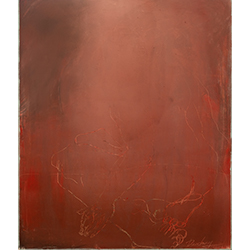
The artist’s brushwork resists refinement in favour of urgency. Lines remain raw and assertive; surfaces bear the trace of repeated revision; figures seem less composed than summoned. This material intensity situates the paintings within a broader genealogy of expressive figuration, where distortion, chromatic pressure, and gestural excess operate not as stylistic effects, but as instruments for excavating the inner life of the image. Nan Chuan approaches the body, the object, and the interior as volatile sites in which memory, affect, and perception collide. The resulting forms are neither fully abstract nor conventionally representational; they occupy a liminal space where image and trace, presence and disappearance, structure and rupture remain in constant negotiation.
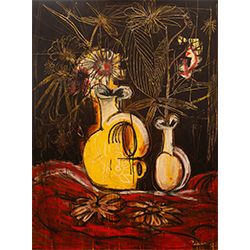
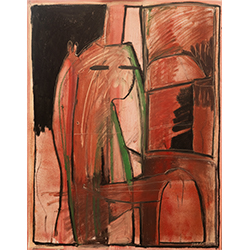
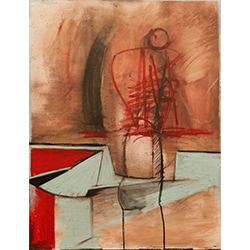
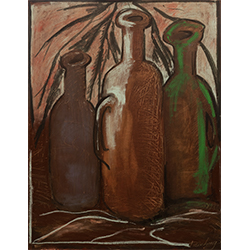
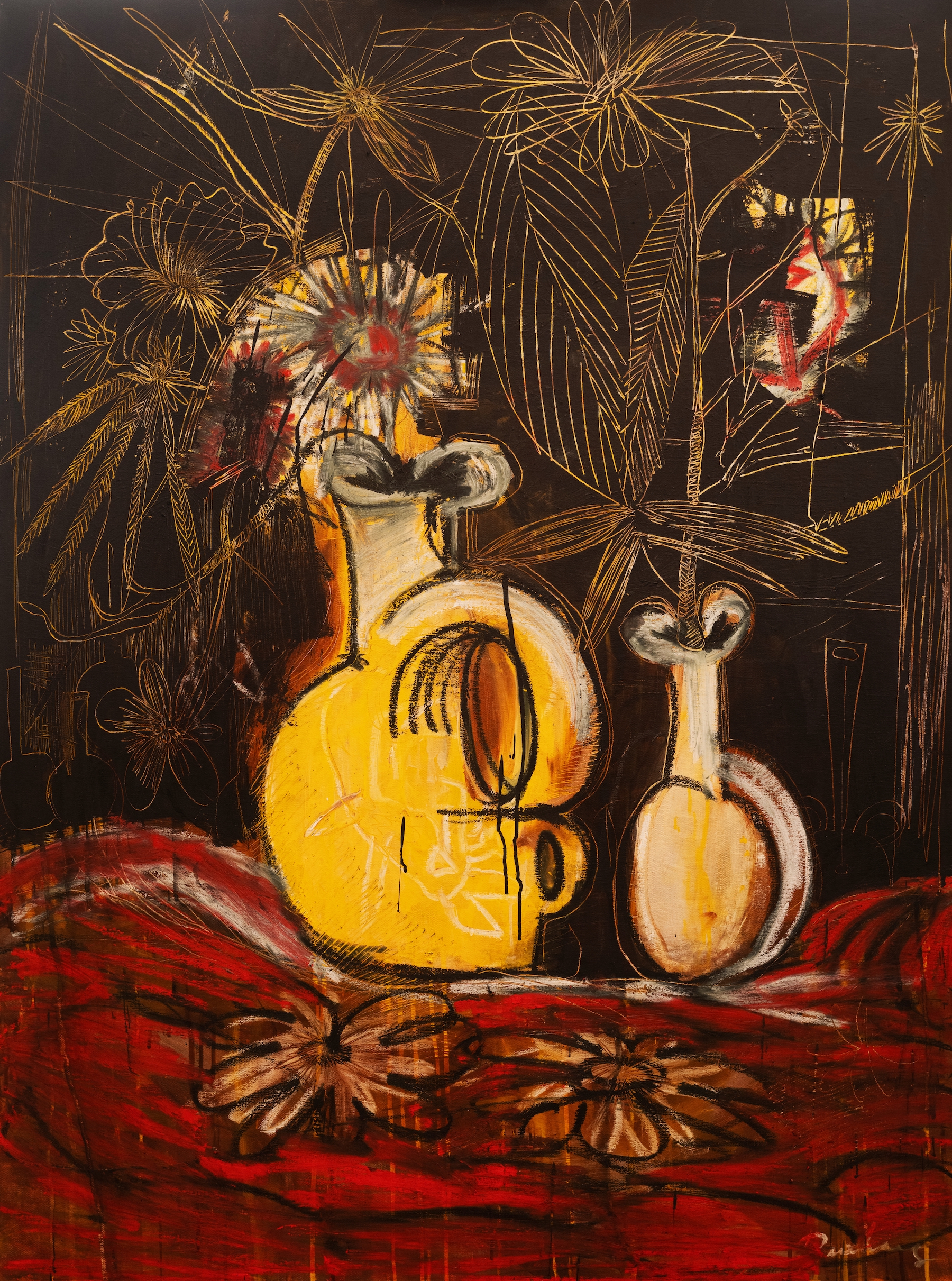
In works featuring bottles and floral forms, still life becomes a site of ontological uncertainty. The vessels stand as containers of absence, their hollow interiors and darkened mouths suggesting both preservation and loss. Flowers, rendered through wiry, almost skeletal lines, refuse decorative prettiness; they become graphic inscriptions of vitality under pressure. Elsewhere, animal and human-like figures appear absorbed into dense chromatic fields, their bodies neither fully present nor entirely erased. Nan Chuan does not represent the body as stable identity, but as a mutable form shaped by sensation, memory, and affect.
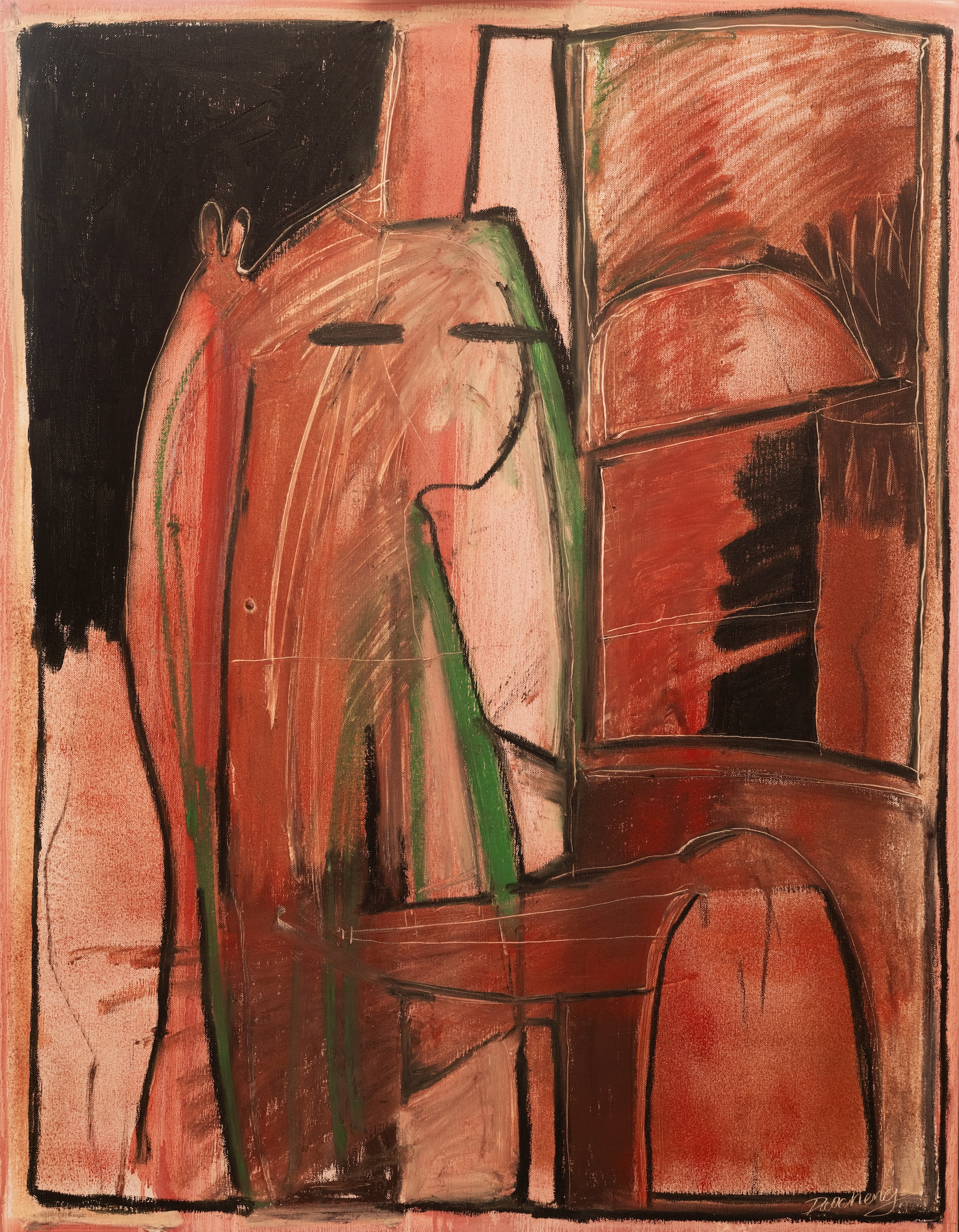
The recurring dominance of red and brown intensifies this atmosphere of interior heat. Red functions not merely as color, but as emotional climate, a field of agitation, vitality, and latent violence. Against it, black lines operate simultaneously as structure and rupture, holding the image together while exposing its instability. Through this charged visual language, Nan Chuan affirms painting as a site where perception is not clarified but deepened. These works invite the viewer into a world where memory is tactile, space is psychological, and every image remains in the process of becoming.
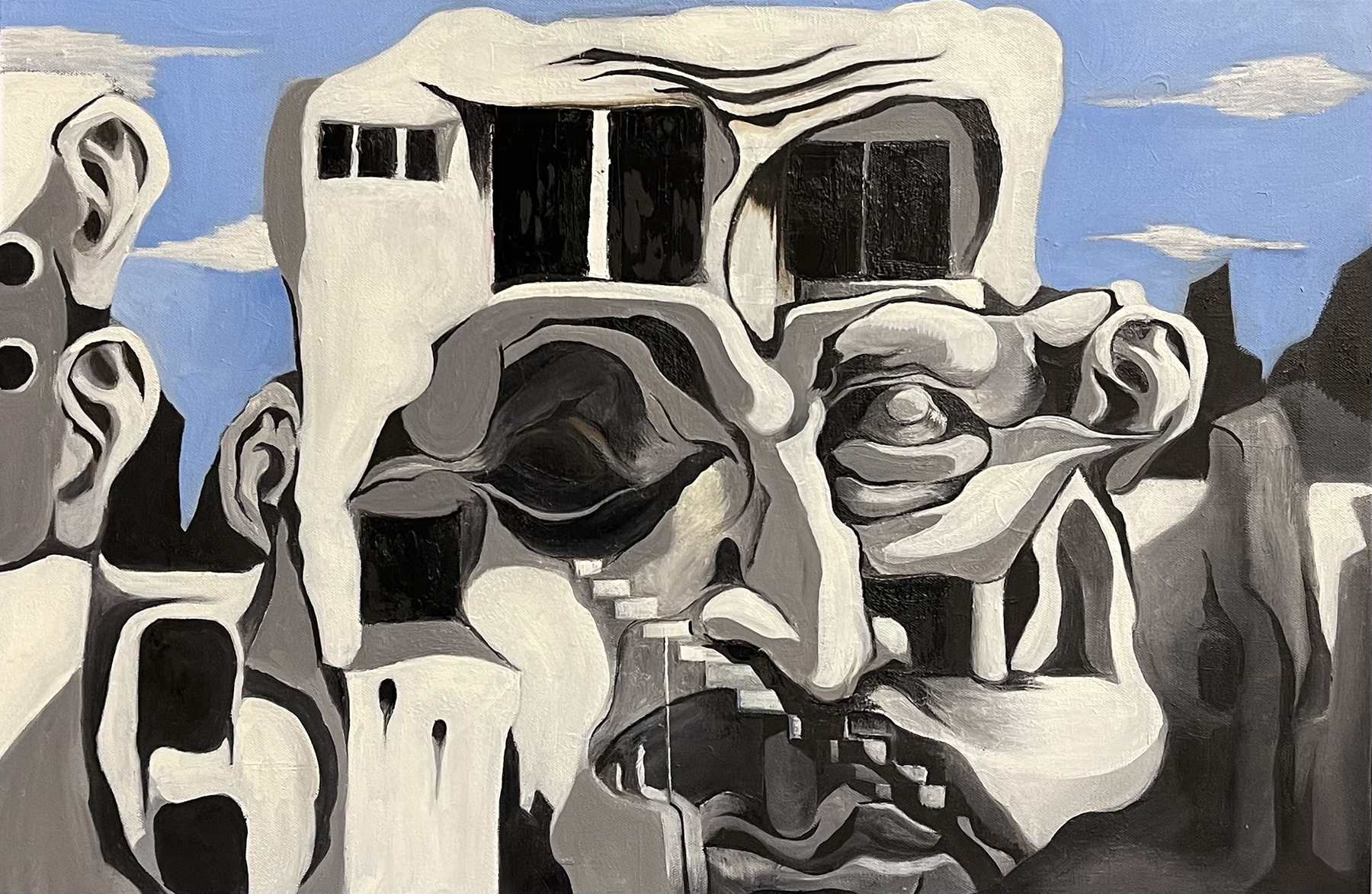
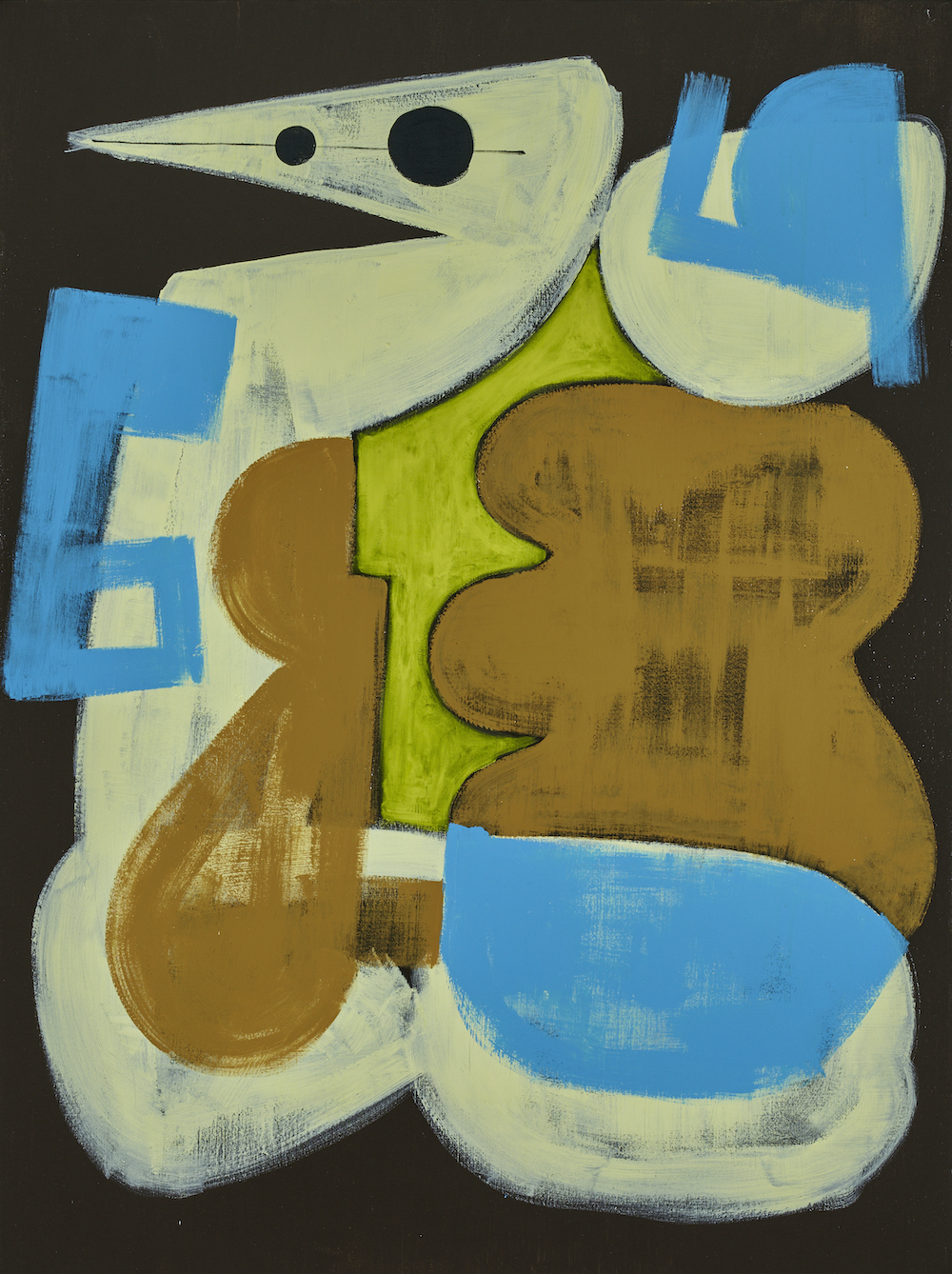
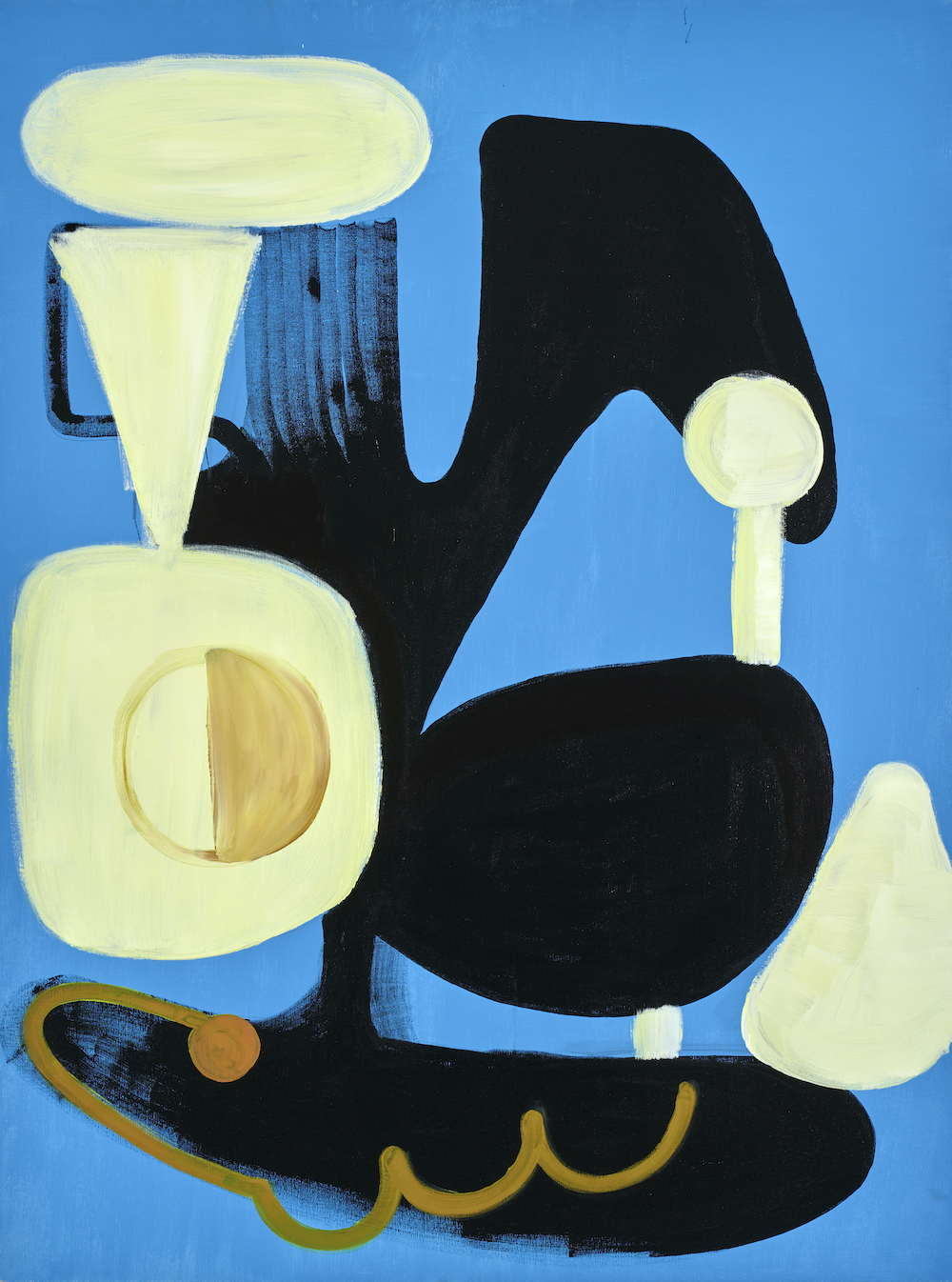
Art+ Shanghai is pleased to present a new body of work by Nan Chuan, whose recent paintings unfold as a charged inquiry into memory, interiority, and the unstable architecture of perception. Rather than offering descriptive images of figures, objects, animals, or domestic spaces, these works posit painting as a psychic terrain: a site where the visible world is fractured, reassembled, and haunted by the residues of sensation. Through a lexicon of dense reds, earthen browns, acidic greens, and abrupt black contours, Nan Chuan transforms familiar motifs, vessels, flowers, architectural fragments, animal bodies, and human-like forms, into signs suspended between recognition and dissolution.
At the center of this body of work is a sustained tension between figuration and instability. Nan Chuan’s paintings appear to emerge through a process of excavation: images are scratched, overpainted, dragged, and partially obscured, as if the canvas were a palimpsest of impulses, memories, and unresolved encounters. In this sense, the works enter into dialogue with Neo-Expressionism, the late twentieth-century movement in artists such as Georg Baselitz, Jean Michel Basquiat, Francesco Clemente, that reasserted the visceral force of the painted figure after the conceptual and minimalist reductions of the postwar period. Yet Nan Chuan’s relationship to this lineage is not nostalgic. The raw contour, agitated surface, and chromatic intensity that recall Neo-Expressionist painting are redirected toward a distinctly contemporary inquiry into psychic residue, perceptual fragmentation, and the instability of subjectivity.
The artist’s brushwork resists refinement in favour of urgency. Lines remain raw and assertive; surfaces bear the trace of repeated revision; figures seem less composed than summoned. This material intensity situates the paintings within a broader genealogy of expressive figuration, where distortion, chromatic pressure, and gestural excess operate not as stylistic effects, but as instruments for excavating the inner life of the image. Nan Chuan approaches the body, the object, and the interior as volatile sites in which memory, affect, and perception collide. The resulting forms are neither fully abstract nor conventionally representational; they occupy a liminal space where image and trace, presence and disappearance, structure and rupture remain in constant negotiation.
In works featuring bottles and floral forms, still life becomes a site of ontological uncertainty. The vessels stand as containers of absence, their hollow interiors and darkened mouths suggesting both preservation and loss. Flowers, rendered through wiry, almost skeletal lines, refuse decorative prettiness; they become graphic inscriptions of vitality under pressure. Elsewhere, animal and human-like figures appear absorbed into dense chromatic fields, their bodies neither fully present nor entirely erased. Nan Chuan does not represent the body as stable identity, but as a mutable form shaped by sensation, memory, and affect.
The recurring dominance of red and brown intensifies this atmosphere of interior heat. Red functions not merely as color, but as emotional climate, a field of agitation, vitality, and latent violence. Against it, black lines operate simultaneously as structure and rupture, holding the image together while exposing its instability. Through this charged visual language, Nan Chuan affirms painting as a site where perception is not clarified but deepened. These works invite the viewer into a world where memory is tactile, space is psychological, and every image remains in the process of becoming.

Nanchuan Daocheng (南川道成) is a contemporary Chinese artist of Naxi (纳西族) heritage whose multidisciplinary practice investigates the tension between personal fragmentation, cultural lineage, and material presence. Born in Lijiang, Yunnan Province in 1993, Nanchuan relocated to New York in 2015 to study at the Parsons School of Design. Initially focusing on fashion design before transitioning to fine arts, he subsequently departed formal institutional academia to embark on an intensive, self-directed inquiry into art history, material culture, and philosophy.
His formative years in New York catalyzed a profound cross-cultural dialogue that continues to anchor his work. Embracing psychological and cultural dislocation not as an impasse but as a generative condition, Nanchuan approaches art-making as a method of self-reconstitution, piecing together fragmented subjectivities work by work. Central to his visual lexicon is the conceptual weight of silence and intervals: much like the pregnant rests that define musical composition, formless and negative spaces in his work function as vital expressive forces.
Nanchuan’s practice seeks an organic equilibrium among three distinct epistemological realms: the subtle aesthetic underpinnings of traditional Chinese philosophy, the critical perceptions of Western postmodernism, and the raw, unembellished directness of prehistoric visual mark-making. Through disciplined textural accretions and measured compositions, his work creates a contemplative space where memory, ancestral identity, and contemporary alienation coalesce.
Since returning to China in 2020, Nanchuan has presented his work in solo and group exhibitions across institutions and galleries, including Art+ Shanghai Gallery and Objective Gallery. In addition to his studio practice, he has completed major site-specific commissions for international luxury houses, notably Louis Vuitton flagship destinations in Beijing and Chengdu. He currently lives and works in China.