Scan our QR code to stay updated with the recent news and upcoming events.
Scan our QR code to stay updated with the recent news and upcoming events.

2026.03.14-05.08
There is a moment in all acts of creation when structure forms to something it did not foresee. A grid bends beneath the weight of accumulated memory. A piece of paper, folded and then flattened, retains the ghost of dimension it no longer occupies. A thread stretched across a frame begins to vibrate with an energy that exceeds its engineering. A groove carved into wood by electric tool captures not a landscape, but the tremor of the hand that holds it.
“Between Order and Emergence” brings together four artists who work precisely at this threshold, the interval where the system encounters sensation, where deliberation gives way to the unforeseen. What unites Chen Linggang, Fu Shuai, Gu Benchi, and Julián Pesce is not a shared medium, generation, or geography, but rather a common conviction that, the deepest artistic meaning arises not just from the imposition of order or the embrace of chaos alone, but from the vivid and unresolved tension between the two. Each artist constructs rigorous systems of grids, folds, weavings, and serial repetitions. They then subject these systems to forces that alter, complicate, and ultimately transcend them. By doing so, they illuminate a condition that extends far beyond the studio: the experience of navigating a world in which inherited structures and emerging realities are in constant and generative collision.
The exhibition title is articulated between two conceptual poles. “Order” evokes the rational, the repeatable, the architectonic: the grid, the rivet, the mathematical formula, the warp and the weft. “Emergence” evokes what occurs when complexity exceeds prediction; when accumulated repetitions produce qualities that no isolated unit contains; when the fold surprises the hand that created it; when the viewer’s perception completes a meaning the artist could not fully prescribe. Between these two poles, the four artists in this exhibition conduct their respective investigations.
Cheng Linggang: The Grid as a Cultural Mirror
The starting point of Chen Linggang’s practice is the most elementary compositional unit, namely, a square. Each small square represents a person, a building, a city, a second, a day, a year, a page, a book, a period of history. They repeat infinitely, at once independent and inseparable, each simultaneously a whole and a part within a greater whole. Since 2008, when Chen began pasting photographs and newspaper fragments onto canvas and dividing the surface into blocks separated by white lines, the grid has served both as the structural skeleton and the philosophical foundation of his work.
In the Heritage Series, Chen transcribes text onto rice paper, old book pages, or newspapers, then crumples the material and affixes it to a canvas. The characters, once legible, dissolve into texture that are present yet indecipherable, inherited yet no longer fully understood. The question these works ask is quiet but relentless: if text is the vehicle of culture, how much of that culture has truly been transmitted to our generation? Is our understanding clear or rather irreversibly blurred? Chen offers no answer. Each viewer’s response, is like each small square, completely different.
The Reading Series prolongs this question. Entire books, novels, poetry, and historical texts are taken apart page by page and reconstituted as visual fields on canvas. Knowledge is physically present, yet resists retrieval. More recent works incorporate newspapers, magazines, portraits, and metallic star forms, evoking the collective memory of a generation and its contemplation of lived reality. In every case, the specific image is hidden. What remains is a condition that Chen describes as “both is and is not,” a fundamental uncertainty he refuses to resolve, because uncertainty itself is the subject.
Chen’s most recent works, completed in 2025, mark a significant evolution. Using paper and ink as fundamental art medium, the compositions feature vertical lines, ink-wash motifs, and fragments of text symbolizing the fleeting nature of time and the slippage of memory. Conceived as a counterpart to the Reading Series, this new body of work reflects the ordered relationship between whole and part with a distinctly more “information-oriented” sensibility. Against the backdrop of artificial intelligence and accelerated technological change, the work invites what Chen calls a multidimensional “reading,” an extension of two-dimensional art whose elements diffuse into the surrounding space. The grid endures, but what it contains and how we are invited to read it, is constantly in motion.
Fu Suhai: The Fold as Metaphysical Inquiry
If Chen Linggang’s unit is the square, Fu Shuai’s is the fold. For more than a decade, Fu has been situated within the border zone of materiality and illusion, developing a singular practice in which paper, through saturation, layering, and meticulous handiwork, is transformed into surfaces that simulate corroded, patinated industrial metal. This territory, often described as “2.5D,” occupies the ambiguous zone between two-dimensional image and three-dimensional object, and it is here that Fu conducts both a philosophical and visual exploration.
In the new Fold-Fix series, this exploration continuous further. Fu’s working method has evolved toward a form of “reverse engineering”.Firstly, the paper is physically folded to construct a real volume, afterwards pigment is projected from a single, fixed angle using an airbrush and spray pen. Finally, the paper is unfolded and returned to flatness. What remains is what Fu calls a “memory of light and shadow,” the faithful recording of a three-dimensional moment, now compressed into two dimensions. Realism is not painted in the traditional sense, but is rather developed, like a photograph, through the physics of projection. Yet the process is entirely manual, producing a quality of light and shadow difficult to reproduce through conventional painting precisely because it simulates the physical laws of light projection in the real world.
His works’ conceptual resonance are multi-layered and rich. Fluorescent pigments, which in earlier works served as metaphors for the virtual hues of electronic screens, have migrated outward into the skin of the city: corrugated metal facades, vacant billboards, and the metallic barriers of unfinished buildings that fill the modern metropolis.
Under urban lights, these industrial materials resembling ruins, take on psychedelic colors. It evokes cyberpunk landscapes of science fiction where fluorescence is no longer confined to the digital realm, but materialized as urban fact. Fu Shuai captures this liminal state between construction and abandonment, between the new and the dilapidated. He casts an archaeological gaze upon the residues left by the accelerated development of contemporary society.
The rivets appearing in recent works are preinstalled before each folding, imposing a rational, industrialized order of fixed points. Yet when the supple paper is compressed and folded between them, the resulting textures are never entirely predictable. Even with identical fixed points, each folding generates a unique form. Fu reads in this an analogy to social structures: beneath an overarching systemic order, the rivets, each individual existence retains an organic, unpredictable dimension. This tension between rule and chance, system and singularity, is not merely represented but physically embodied in every work. Drawing on French philosopher Gilles Deleuze’s concept of the fold as a passage between interior and exterior, visible and invisible, Fu Shuai creates works that are at once trompe-l’œil illusions and investigations into the very nature of perception. When flat illusion becomes more convincing than three-dimensional reality, we are no longer looking at a painting; we confront the condition of a world saturated with images and simulacra.
Gu Benchi: Thread as Cosmological Structure
Gu Benchi arrives at order through a unique origin. While accompanying his wife in 2012 to a textile market in Shanghai, he encountered a stall where thousands of polyester thread spools were arranged by specification, material, and color on shelves nearly three meters high and more than ten meters long. This spectacle awakened something fundamental: the recognition that the universe itself is organized according to a subtle, invisible order, and that it’s the artist’s task to make this order tangible.
This revelation was not isolated, but an accumulation of multiple life changing events. Gu had spent years in society’s margins, spending a decade in an artists’ village in a former nursery outside Shanghai’s ring road, a period he compares to as life on a deserted island. However, the most formative event was during his adolescence when he encountered Piet Mondrian’s geometric abstraction in an art book at his teacher’s studio. This eventually planted the first seed of his artistic DNA, one governed by rules, rhythm, and visual order. On the other hand, Buddhist practices, absorbed through Gu’s wife’s devotion and by years of copying the Diamond Sutra, provided a spiritual framework: the conviction that both art and religion share the quality of transcendence and that the capacity to surpass one’s own existence can be achieved through training in concentration and contemplation.
These threads, esthetic, spiritual, and material, converge in works of extraordinary precision and luminous beauty. Inspired by the ceiling medallions of traditional Chinese opera stages, whose complex bracket systems radiate outward in concentric layers, and by esoteric Buddhist mandala paintings, whose progressive expansion from a central core represents cosmic order, Gu constructs multilayered woven structures from high-strength polyester fiber. The symmetrical works are the product of precise mathematical calculation, often computer-assisted to establish the generative logic of a pattern, a formula in which different parameters may be substituted. Grid-based works, by contrast, maintain a strict spatial order of horizontal and vertical lines while seeking rhythm and cadence through variations of color, width, and thickness. A process Gu compares to jazz improvisation.
For Gu, light is an implicit yet essential artistic medium. Under shifting conditions, the interaction of overlapping segments becomes more distinct and three-dimensional, enriching the spatial experience. Gu favors exhibition spaces lit like dim theaters, where spotlights illuminate only the works, allowing them to appear as luminous stars in the darkness.
Yet precision alone does not explain these works. Gu describes his process as allowing “dispersed energy to finally concentrate and burst forth through constant repetition, accumulation, and layering of the same object.” Weaving is a form of meditation like a mirror reflecting the mind’s state. In his most recent portrait series, prompted by the fractures of the post-pandemic world, this spiritual architecture confronts the human figure. Inspired by German-American philosopher Herbet Marcuse’s critique of modernity in One-Dimensional Manand by the Buddhist teaching that all appearances are illusion, Gu renders the self through eight layers of continuous weaving as something fragmented and reconstructed, no longer whole, but shimmering with the tension between dissolution and coherence. These portraits are not celebrations of individual identity but meditations on its impossibility: an acknowledgment that human beings do not exist as fixed “selves,” but as vessels for world and mind. And yet, like Sisyphus pushing his rock, the act of creation is persistent, concentrated, and repetitive and generates its own form of hope.
Julián Pesce: The Mark as Transcultural Translation
Julian Pesce brings the sensibility of a percussionist and an engraver to every surface he touches. Born in Buenos Aires in the late 1980s and trained in both Fine Arts and Electronic Arts, he carries within him something of the analog world while remaining open to digital tools. He calls himself a member of a “hinge” or transitional generation. His practice is rooted in translation: between cultures, between media, between handmade and technological processes, between sound and image. “One of my recurring questions,” Pesce says, “is: how might I say the same thing in another language?”
Working from what he describes as “the exact antipodes” of China, Julian came to Shanghai not to reproduce the masters of Shan Shui painting, but to absorb certain lessons and transform them into a more personal art. The philosophical foundations of Chinese landscape painting, including its sensitivity, reverence for nature, and its understanding of the human scale as a small part of a vast whole, carry for Julian a powerful message in an era of climate urgency. The technical discipline fascinates him equally: the four tonal values of ink that generate depth and shadow; the risk of brush on rice paper that cannot be erased; the capacity of different brushes to absorb and release ink through gesture. He adopted this tonal differentiation in his circle series, building from very light tones to the most saturated, blending field observation, study, and personal history.
Shanghai’s hypermodernity sharpened Julian’s attention to what persists beneath technological surfaces. Two elements caught his eye in the street: bamboo brooms and bamboo scaffolding , ancestral objects representing intelligent use of natural resources that have survived the current digital-technological era. Chopsticks, too, became both subject and tool, giving rise to a series of small-format paintings. “Some things are so well designed,” he observes, “that they withstand the technological-digital avalanche.” These humble objects anchor a practice that finds the sacred in the overlooked, the durable within the ephemeral.
Across woodcuts, biomaterials, watercolors, and installations, the common thread of Julian’s practice is the body in action: the energy of gesture, the trace, the imprint in the broadest sense. He works consistently in series, driven by curiosity and by the conviction that technique must never eclipse what one wishes to express. Each body of work responds to a specific context: a moment in life, the people nearby, the workspace in which it was created. “Those of us who make art,” he reflects, “leave traces by which we are ultimately recognized—messages that speak of an era.”
“Between Order and Emergence” proposes that the most vital art of our time is created at the meeting point of control and contingency. Chen Linggang’s grids hold culture in suspension, legible yet unreadable, inherited yet irrevocably transformed. Fu Shuai’s folds capture a light that no longer exists in the space it once occupied, enacting the metaphysical predicament of a world saturated with images. Gu Benchi’s weavings transform meditative repetition into cosmological revelation, confronting the fragmented self with the possibility of transcendence. Julian Pesce’s marks translate between worlds situated at opposite ends of the earth, finding in humble materials and transcultural encounter a language at once deeply personal and universally resonant.
What emerges from their collective practice is not resolution but recognition: order is not the enemy of life, but rather its scaffolding. And emergence is not disorder; it is the most beautiful and unpredictable consequence of order. In the space between the two, something essential about our contemporary condition takes shape. We all navigate this intermediate state, between the inherited and the invented, the fixed and the fluid, the systemic and the singular, the known and the becoming. These four artists do not claim to map this territory in its entirety. They offer something more honest and more enduring: proof of its exploration, conducted with rigor, sensitivity, and an unshakable faith in art’s capacity to make visible what systems alone can never predict.
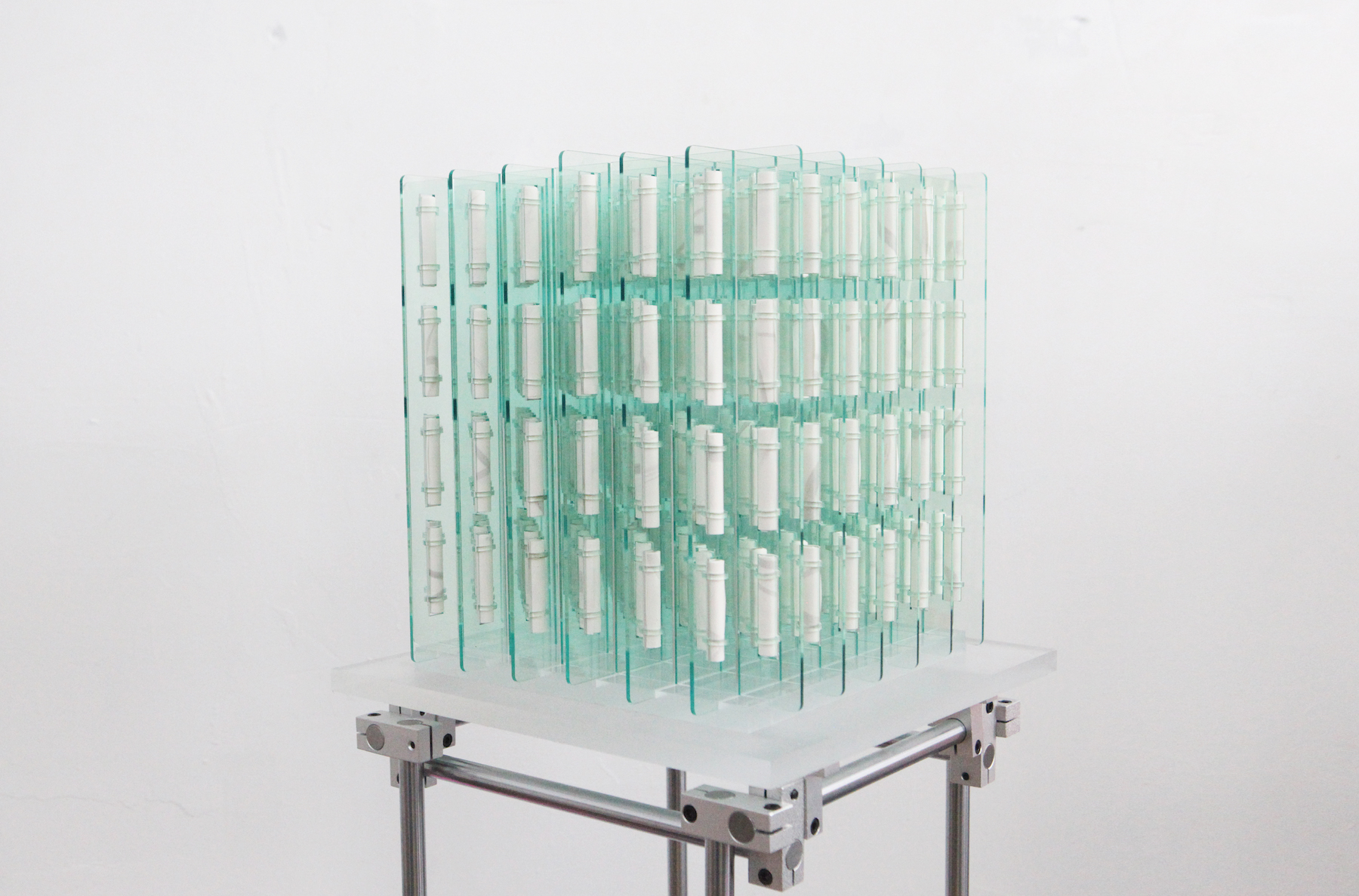
Chen Linggang, Reading Series 250506, 30x30x30 cm, 2025
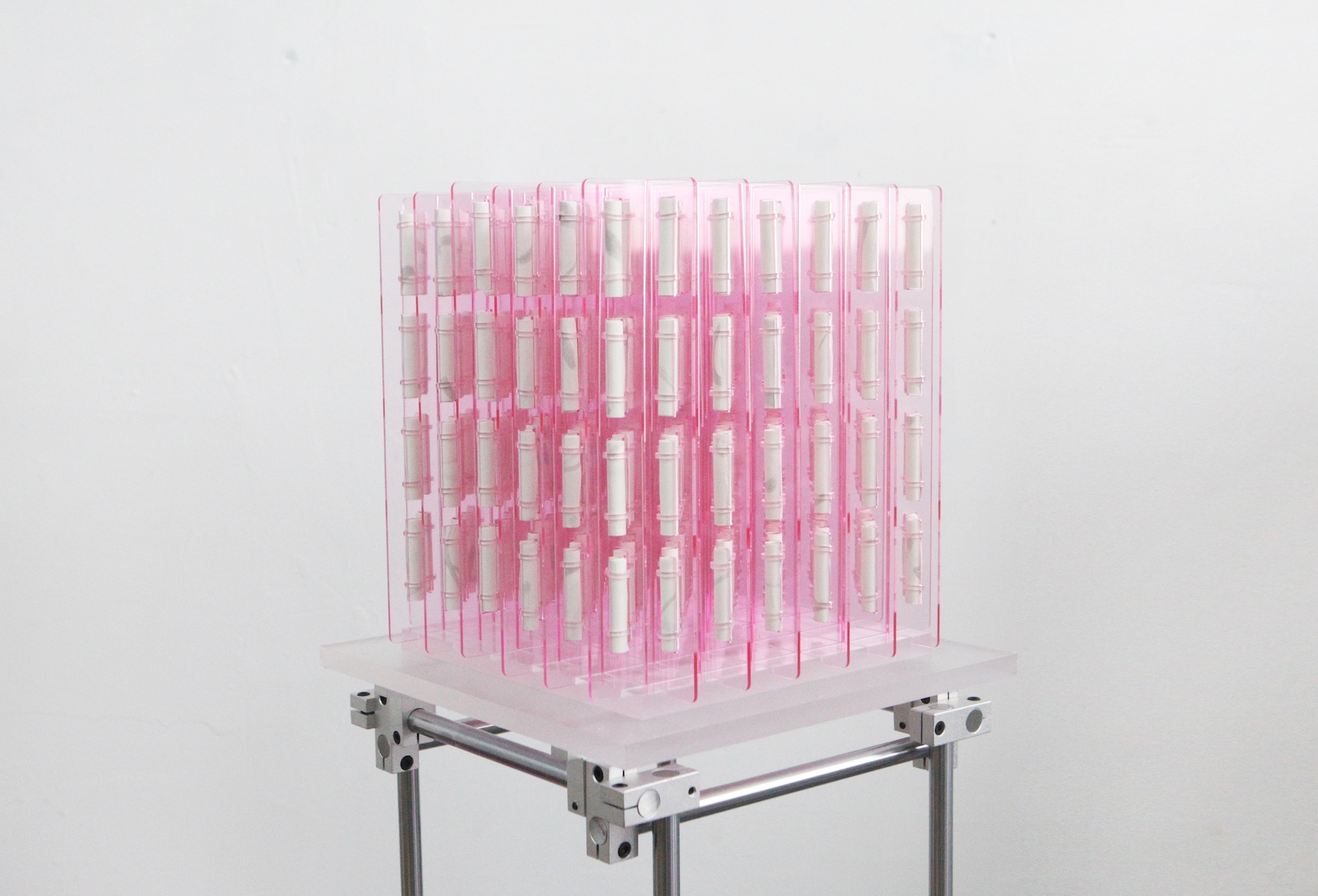
Chen Linggang, Reading Series 250505, 30x30x30 cm, 2025
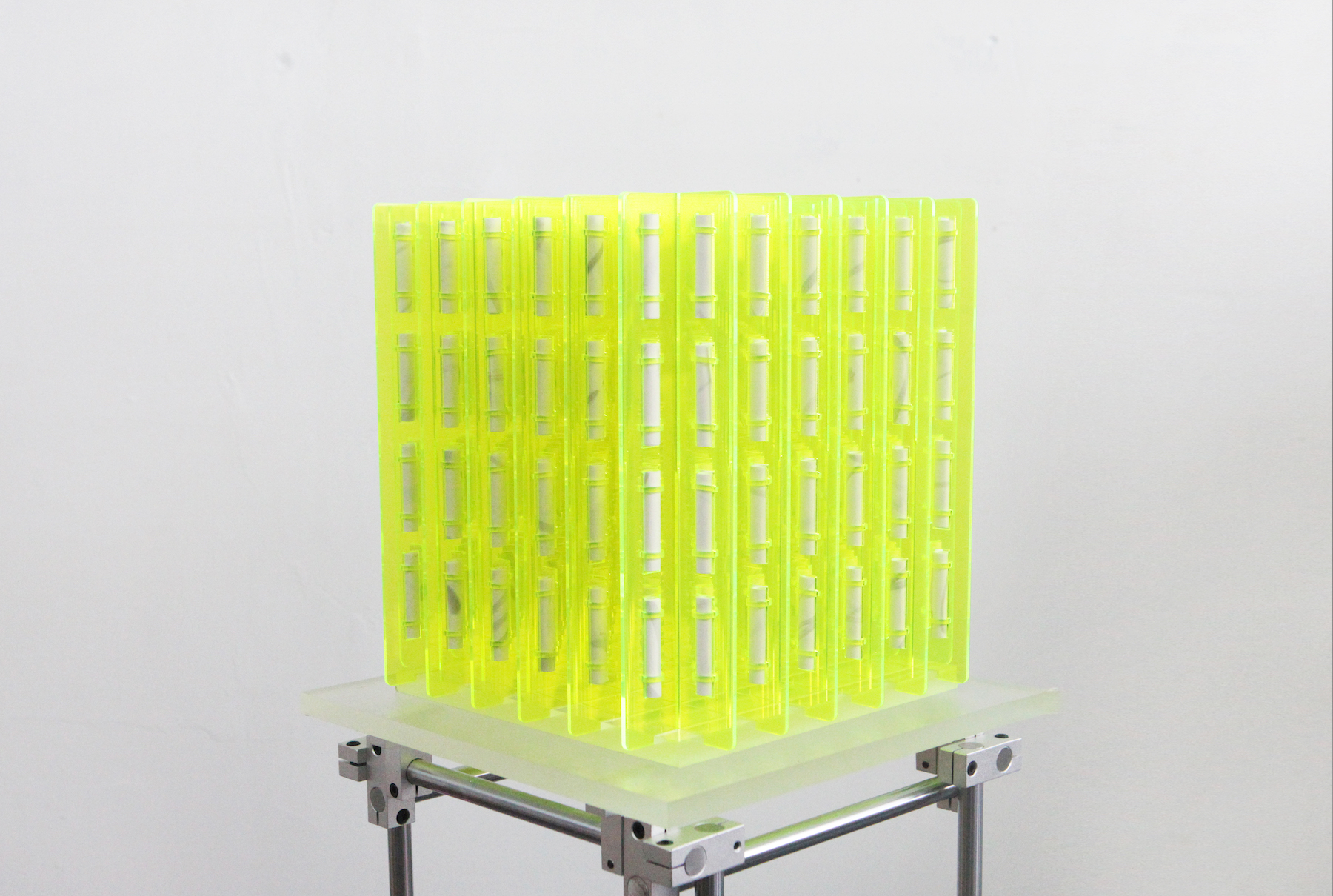
Chen Linggang, Reading Series SAVING260201, 30x30x30 cm, 2025
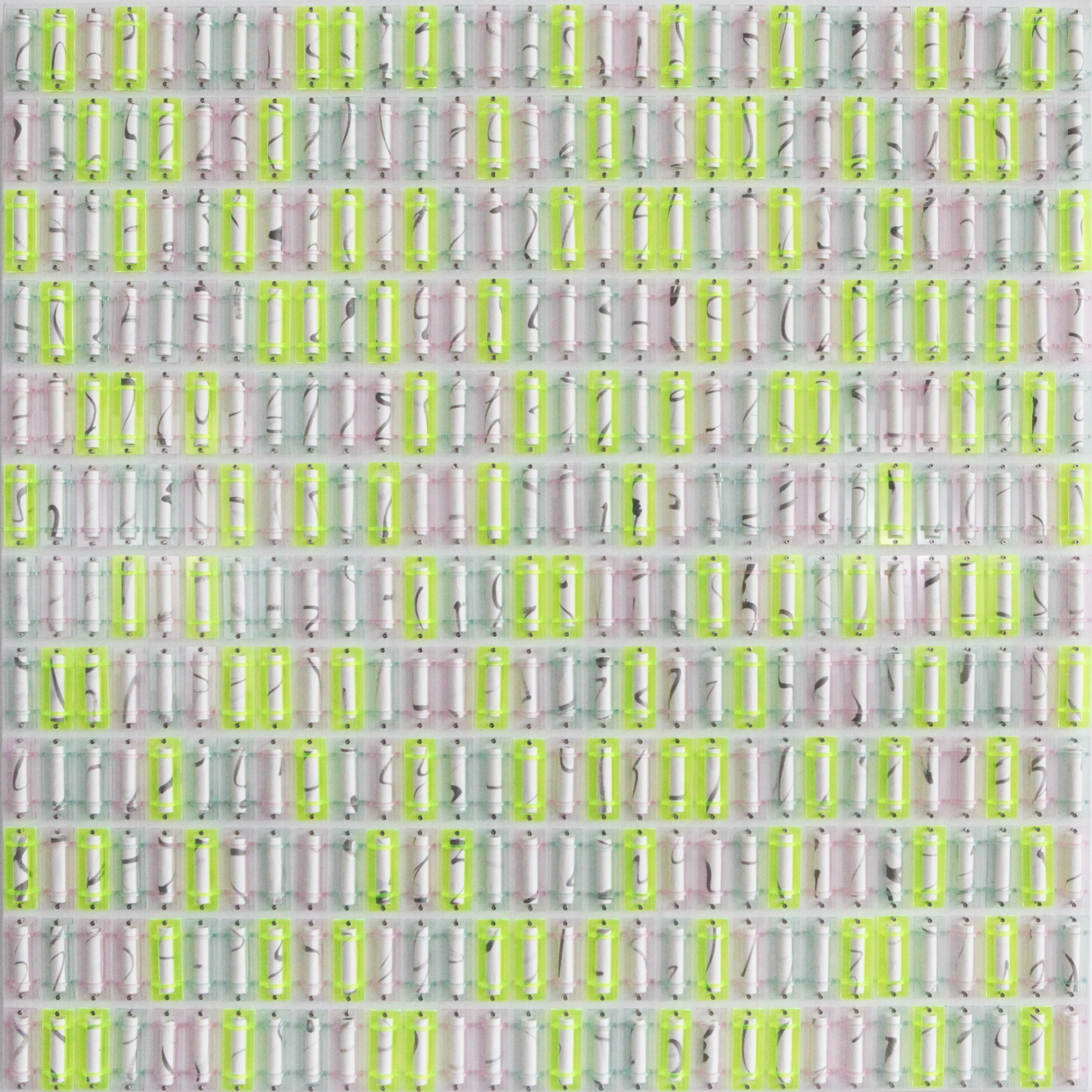
Chen Linggang, Reading Series 250201 Mixed media, 80x80 cm 2025
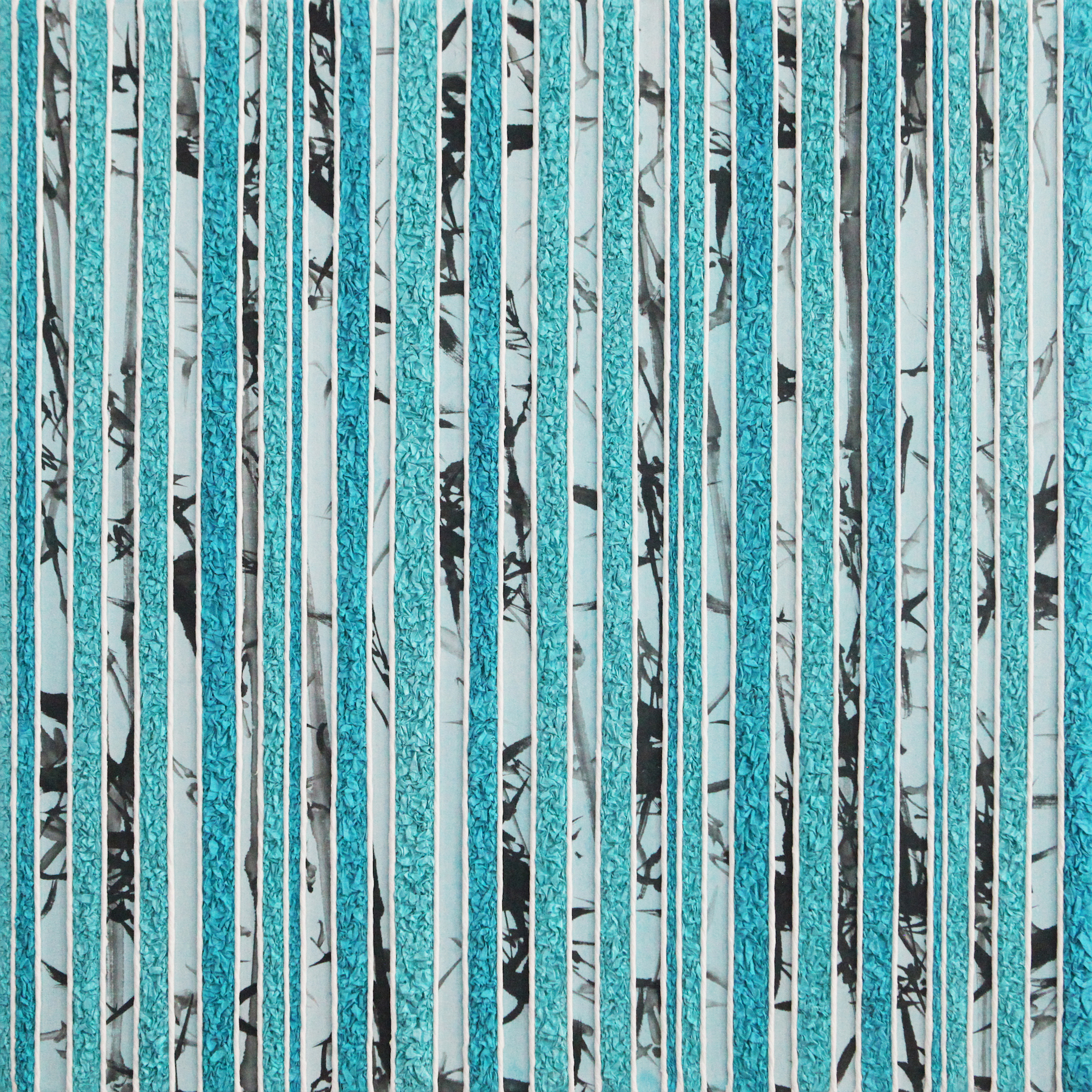
Chen Linggang, Reading Series 260102 Mixed media, 100x100 cm 2026
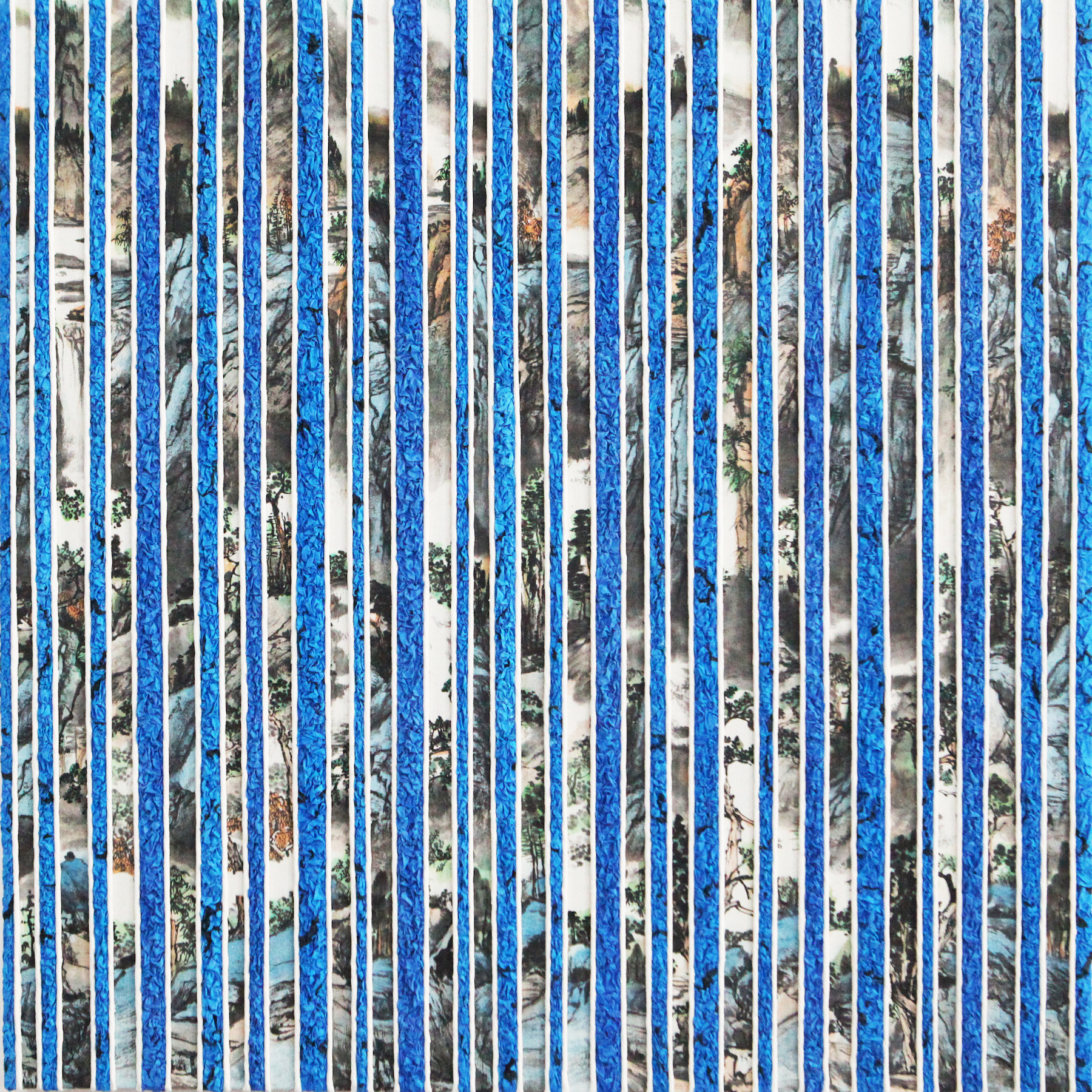
Chen Linggang, Reading Series 260103 Mixed media, 100x100 cm 2026

Chen Linggang, Reading Series 260203 Mixed media, 100x100 cm 2026
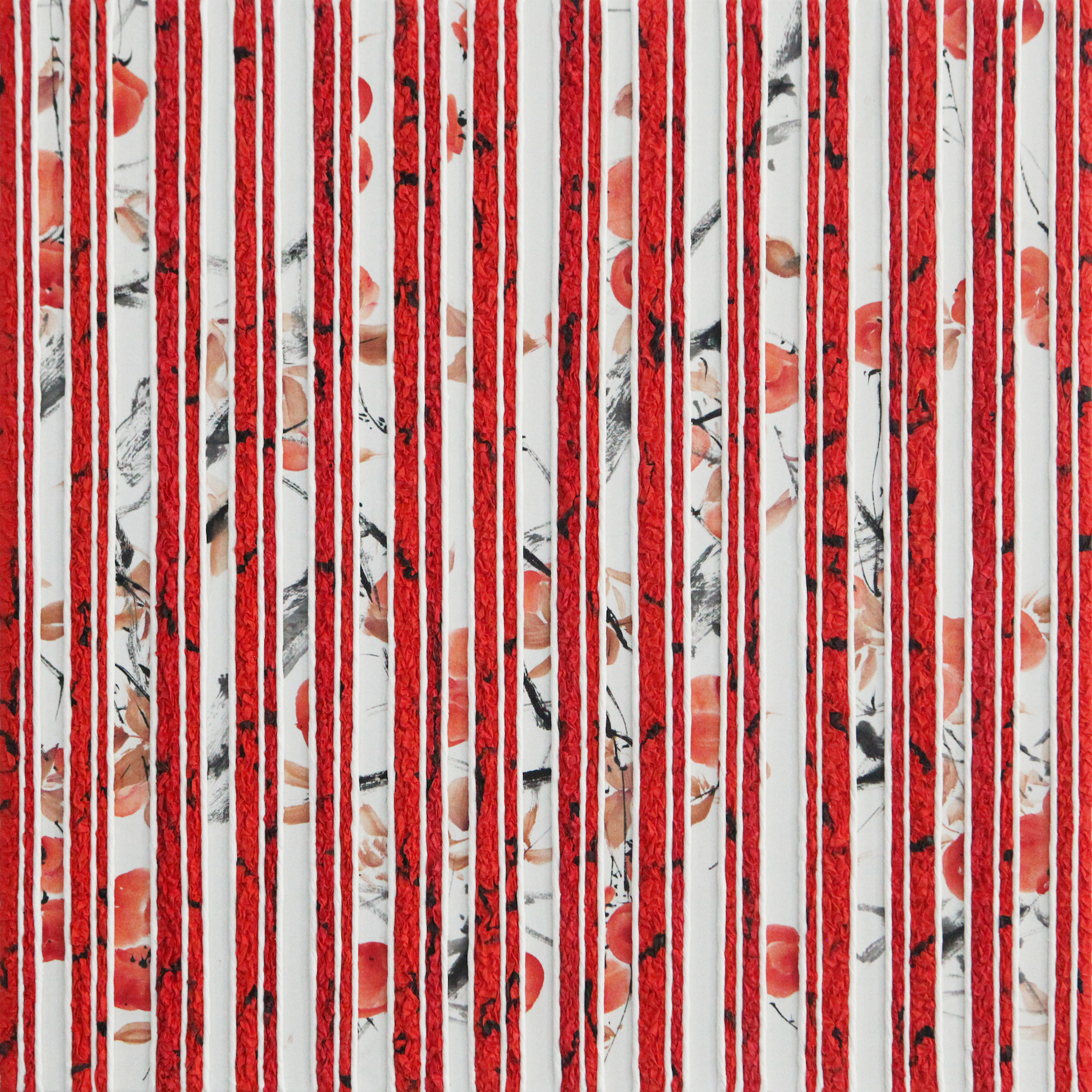
Chen Linggang, Reading Series 260206 Mixed media, 100x100 cm 2026
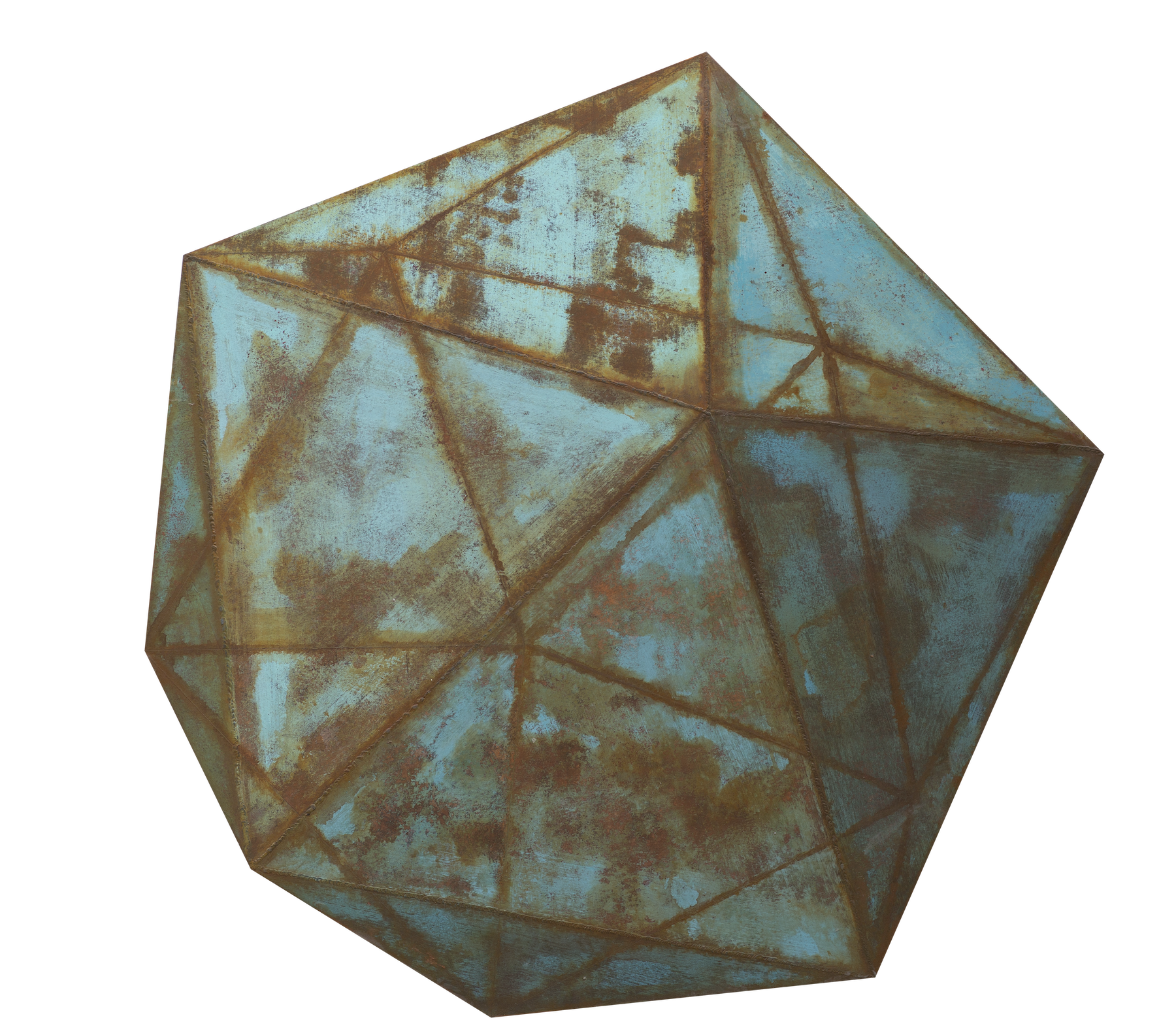
Fu Shuai, Icosahedron - Perspective 120×125 cm, Mixed Media 2022

Fu Shuai, Piled Cubes 1,118×132 cm, Mixed Media, 2022
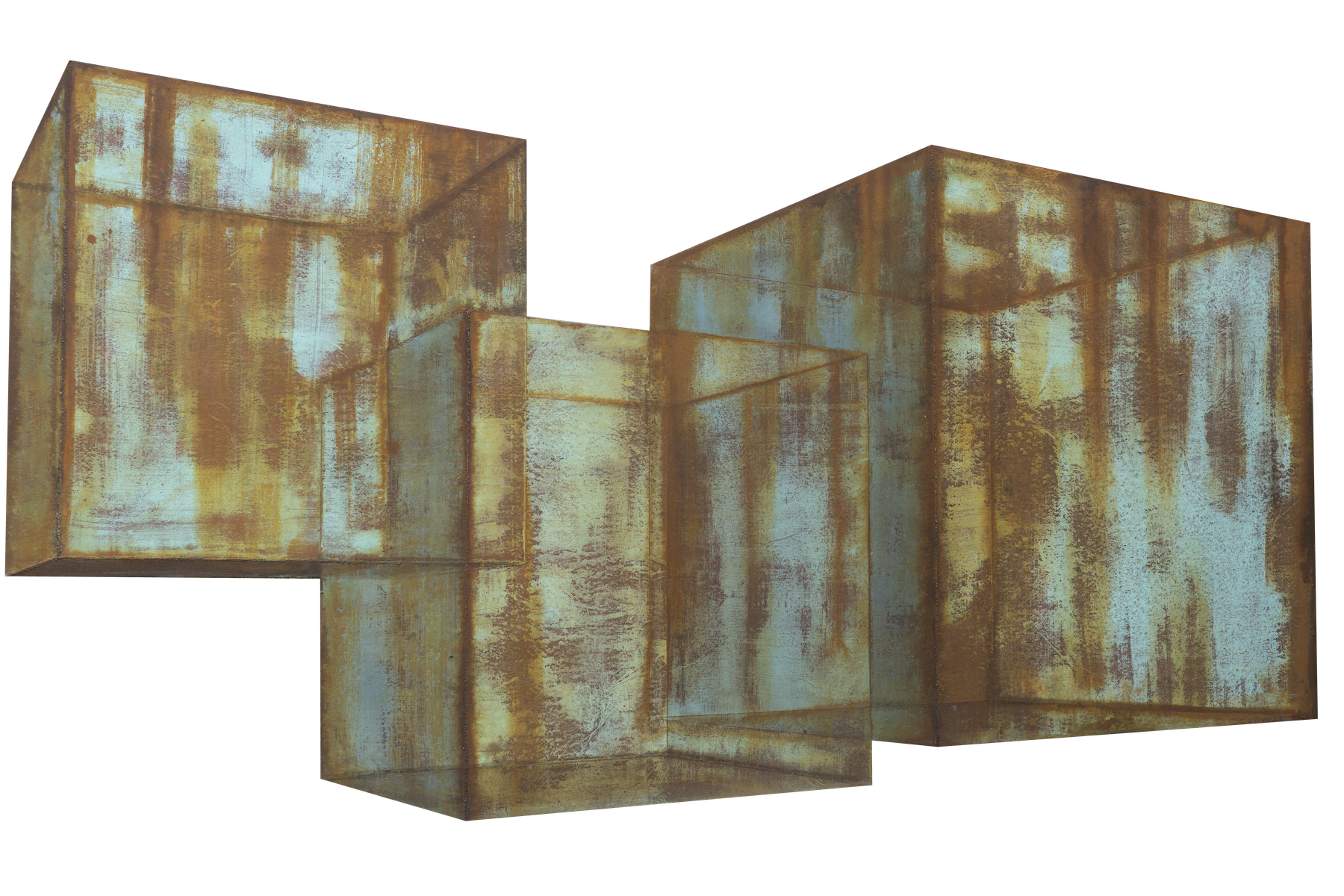
Fu Shuai, Piled Cubes 2, 216×121 cm, Mixed Media, 2022
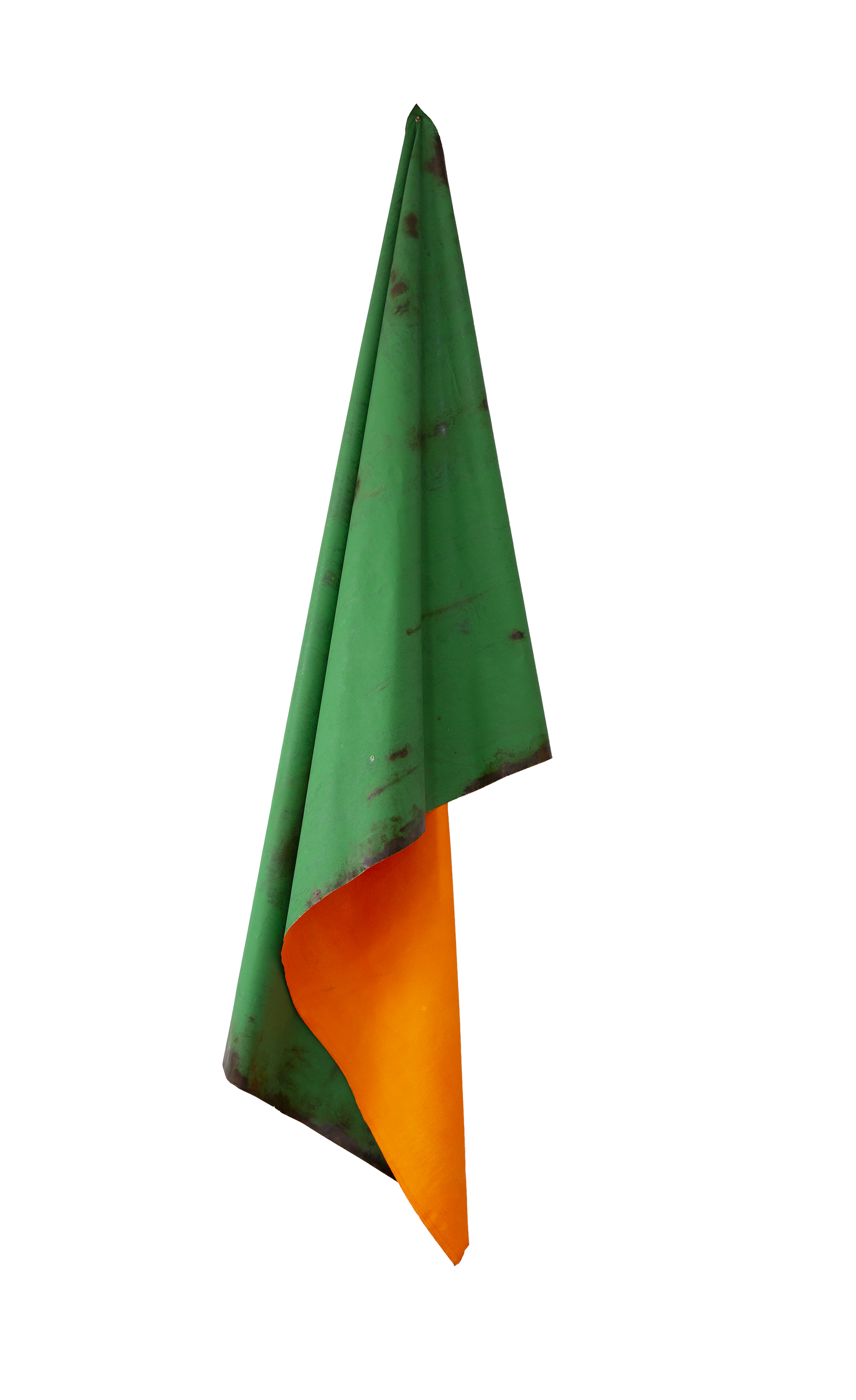
Fu Shuai, PY3, PG7, PW6 acrylic on Tyvek, various dimensions 2025
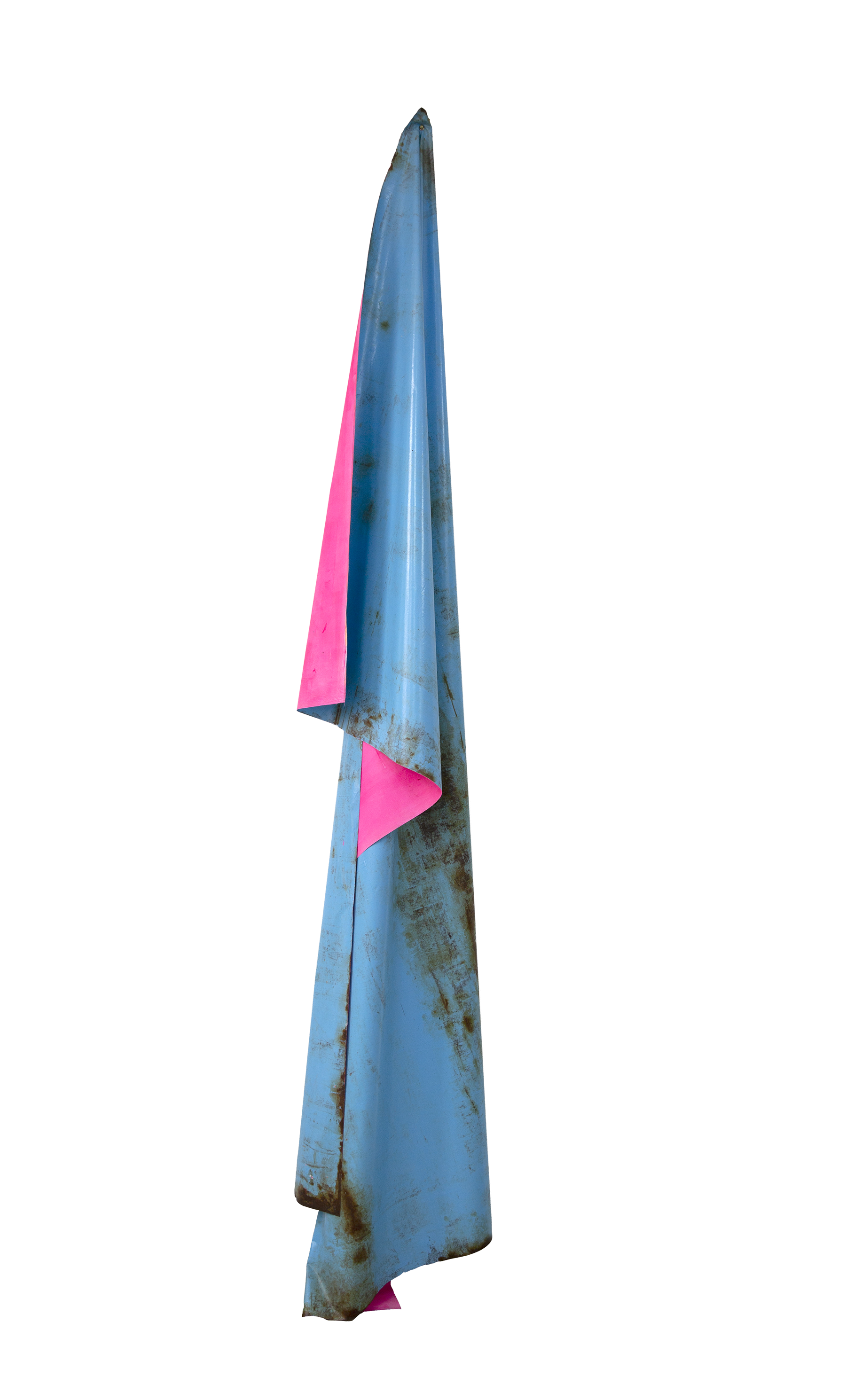
Fu Shuai, PW6,PG7,PB15, acrylic on Tyvek, various dimensions 2025
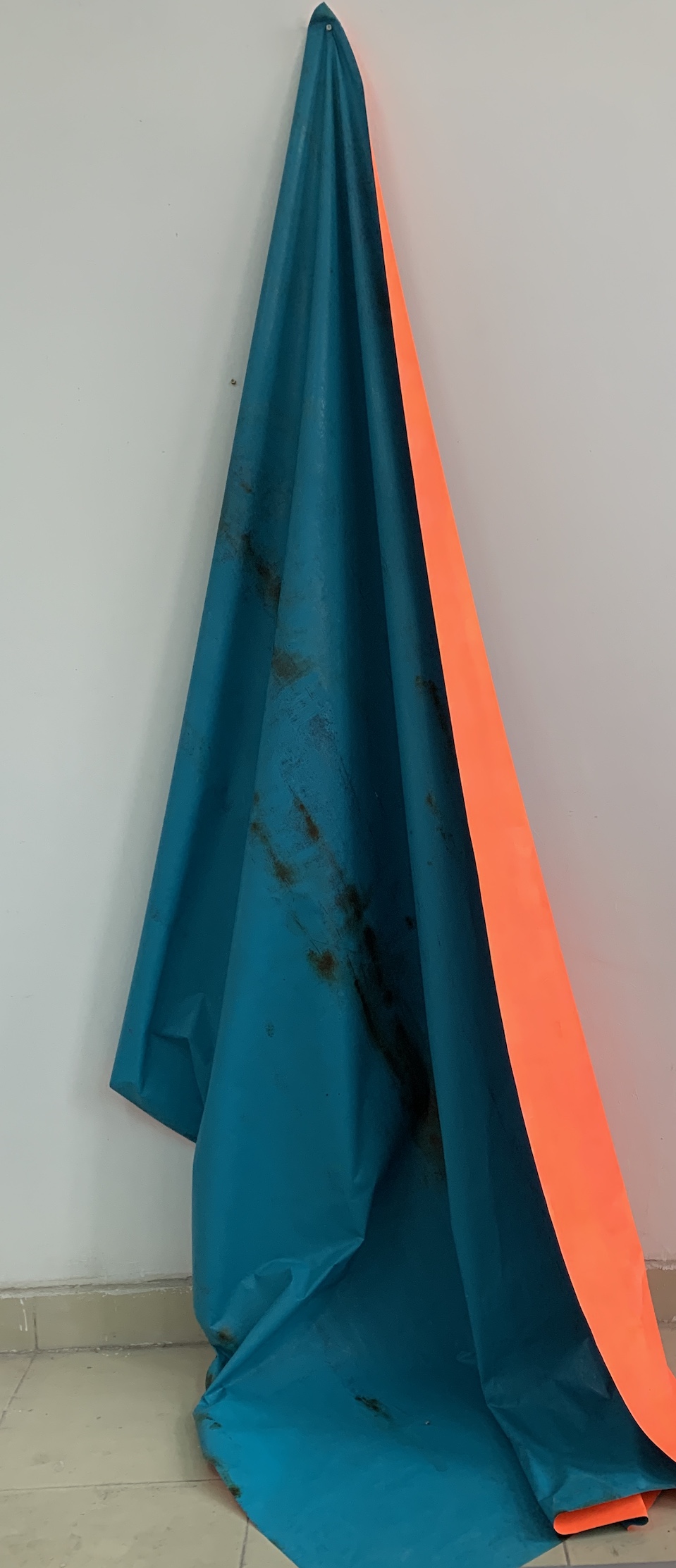
Fu Shuai, PB15:3 ,PG7,PW6 Arcylic on Tyvek various dimensions 2025
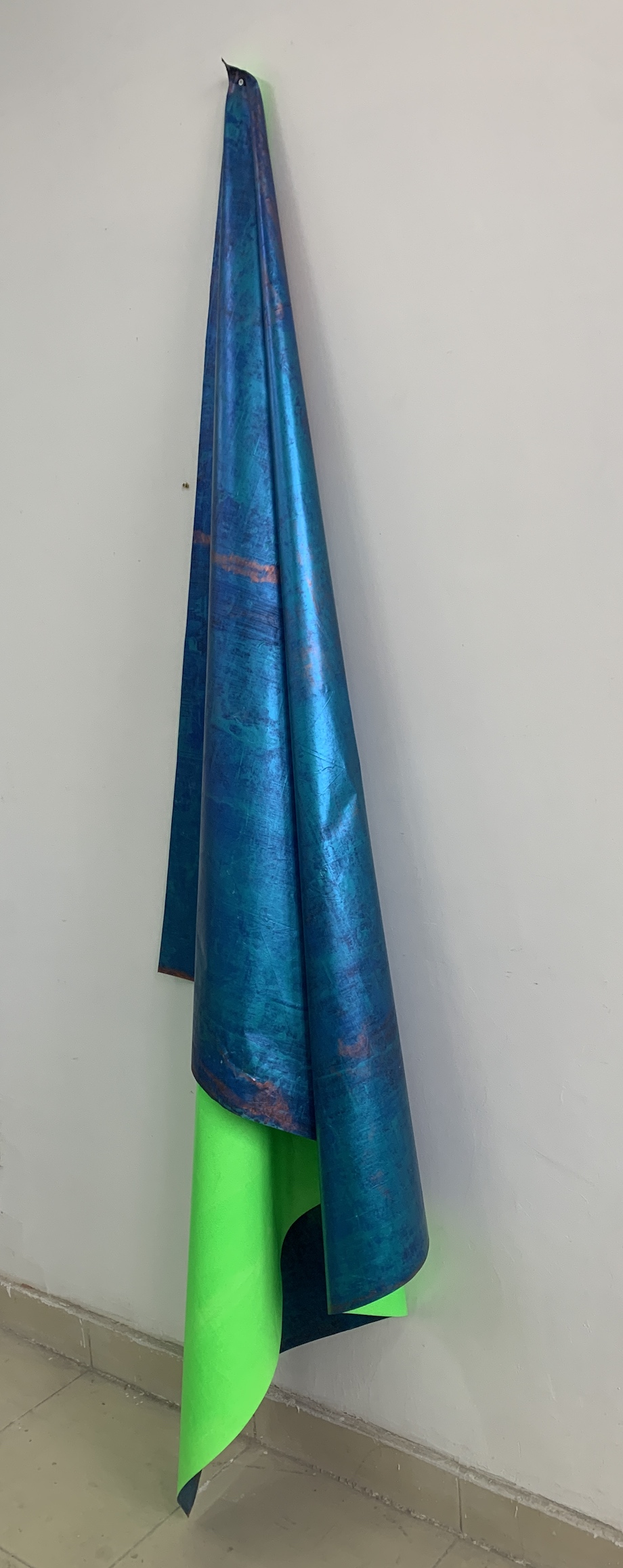
Fu Shuai, 839357c Arcylic on Tyvek various dimensions 2025
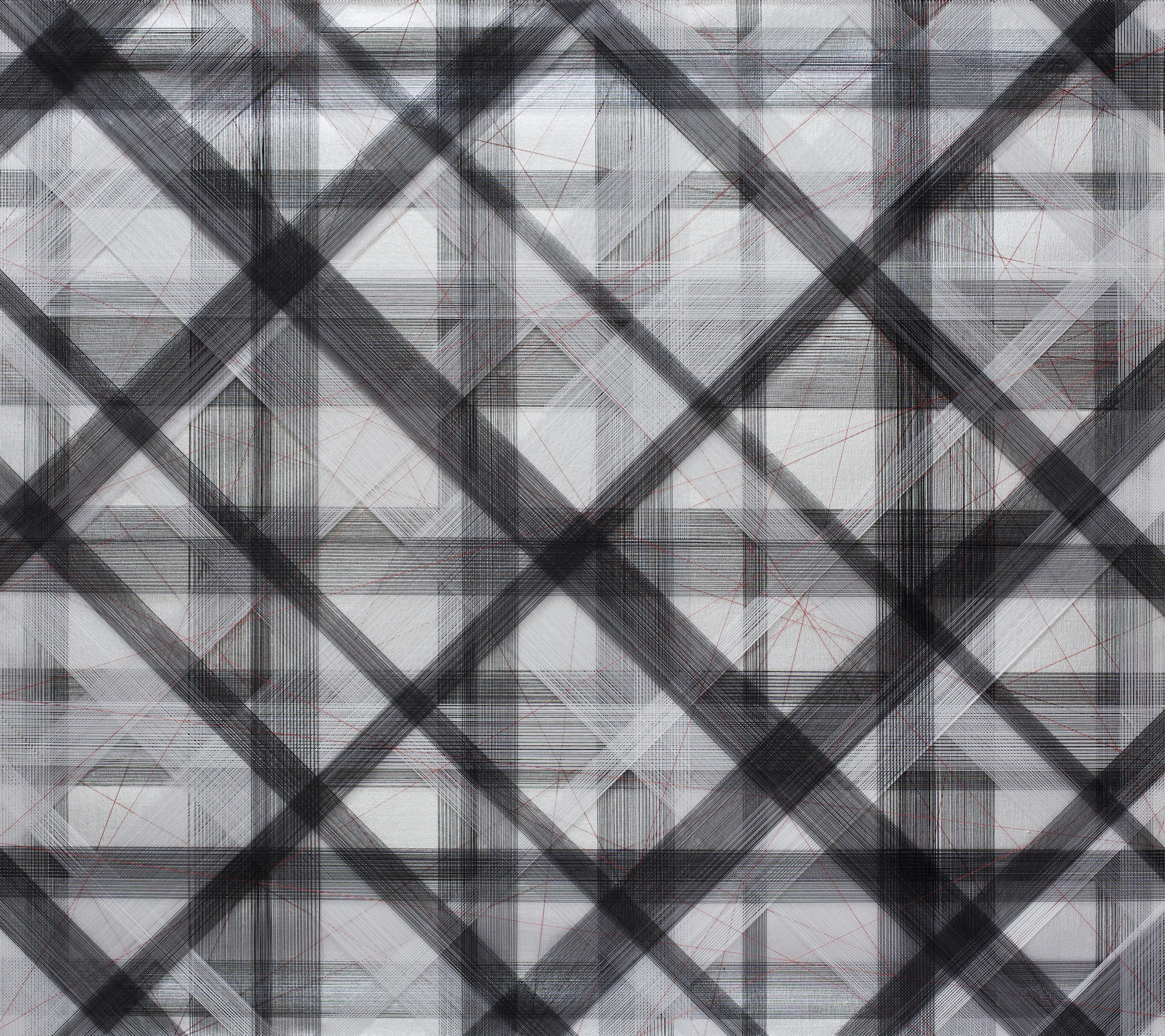
Gu Benchi, Constructology 2019-07 Polyester thread, stainless steel nails, acrylic adhesive, acrylic 180x160 cm, 2019
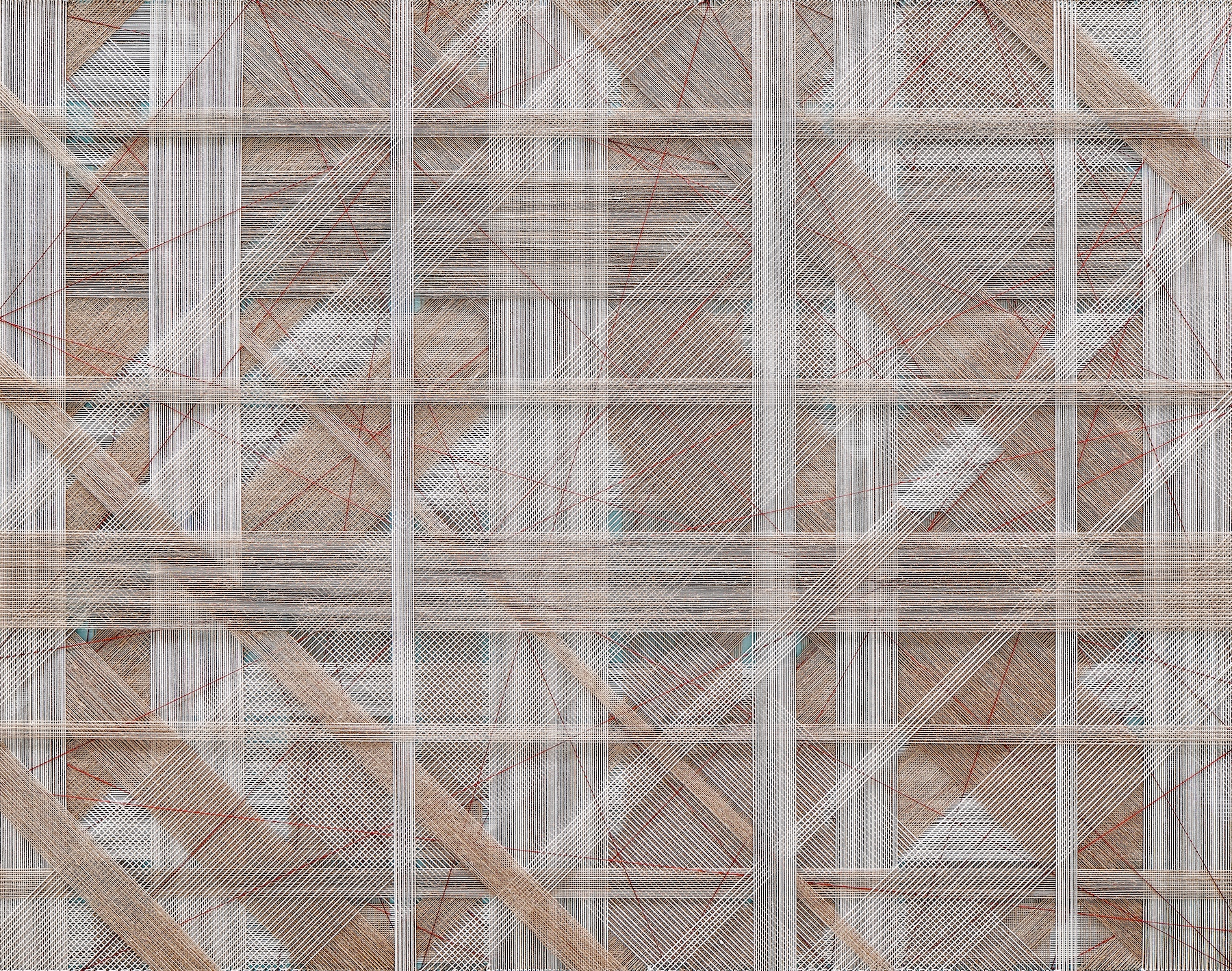
Gu Benchi, Erta No.54 Cotton thread, linen thread, acrylic Stainless-steel nails 155 × 122 cm 2017

Gu Benchi, Noology 2025-07 Polyester thread, stainless steel nails, acrylic adhesive, acrylic 50×70 cm 2025

Gu Benchi, Noology 2025-05 Polyester thread, stainless steel nails, acrylic adhesive, acrylic 50×70 cm 2025
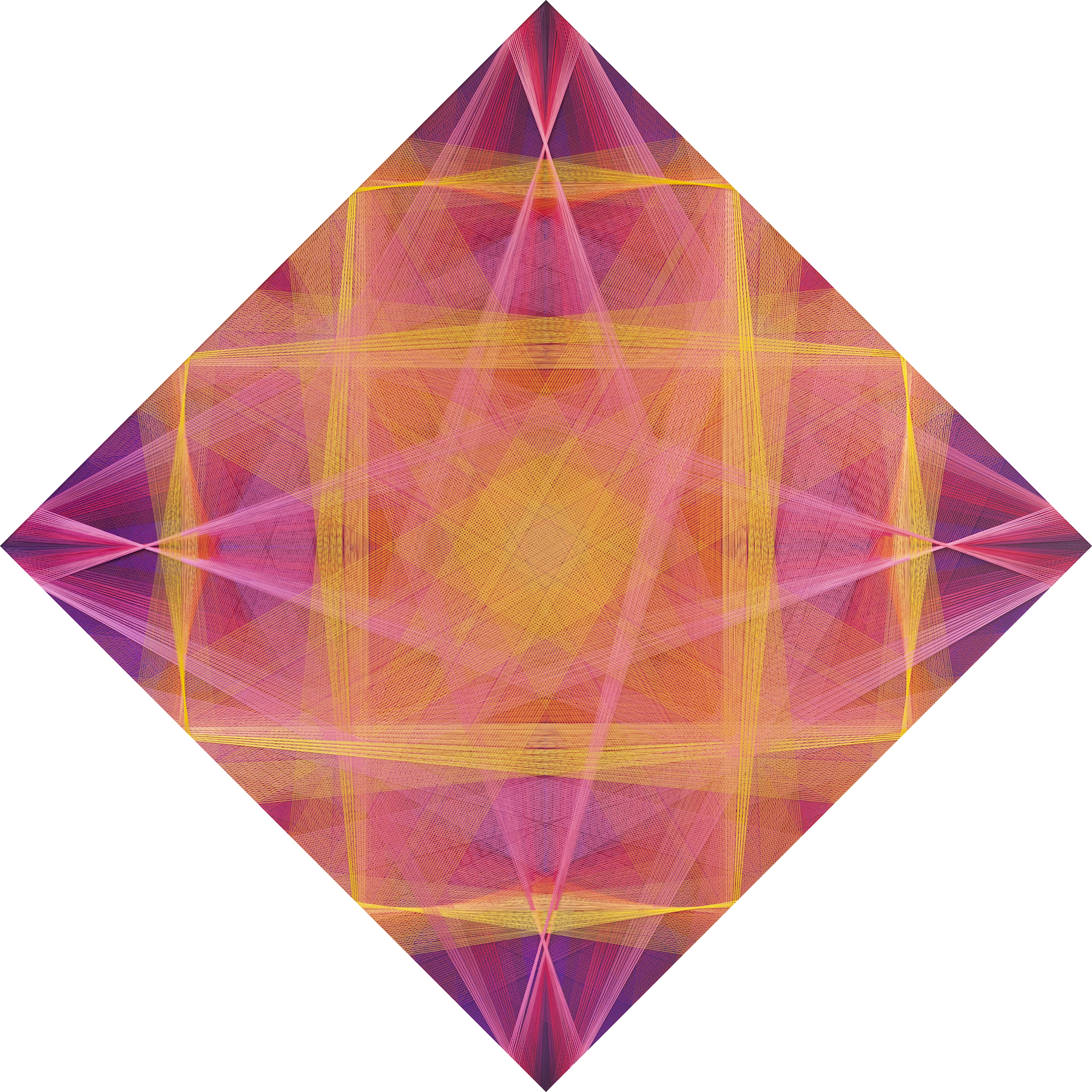
Gu Benchi, Constructology 2021-09 Polyester thread, stainless steel nails, acrylic adhesive, acrylic 160×160 cm (square placement) 226×226 cm (diamond placement) 2021
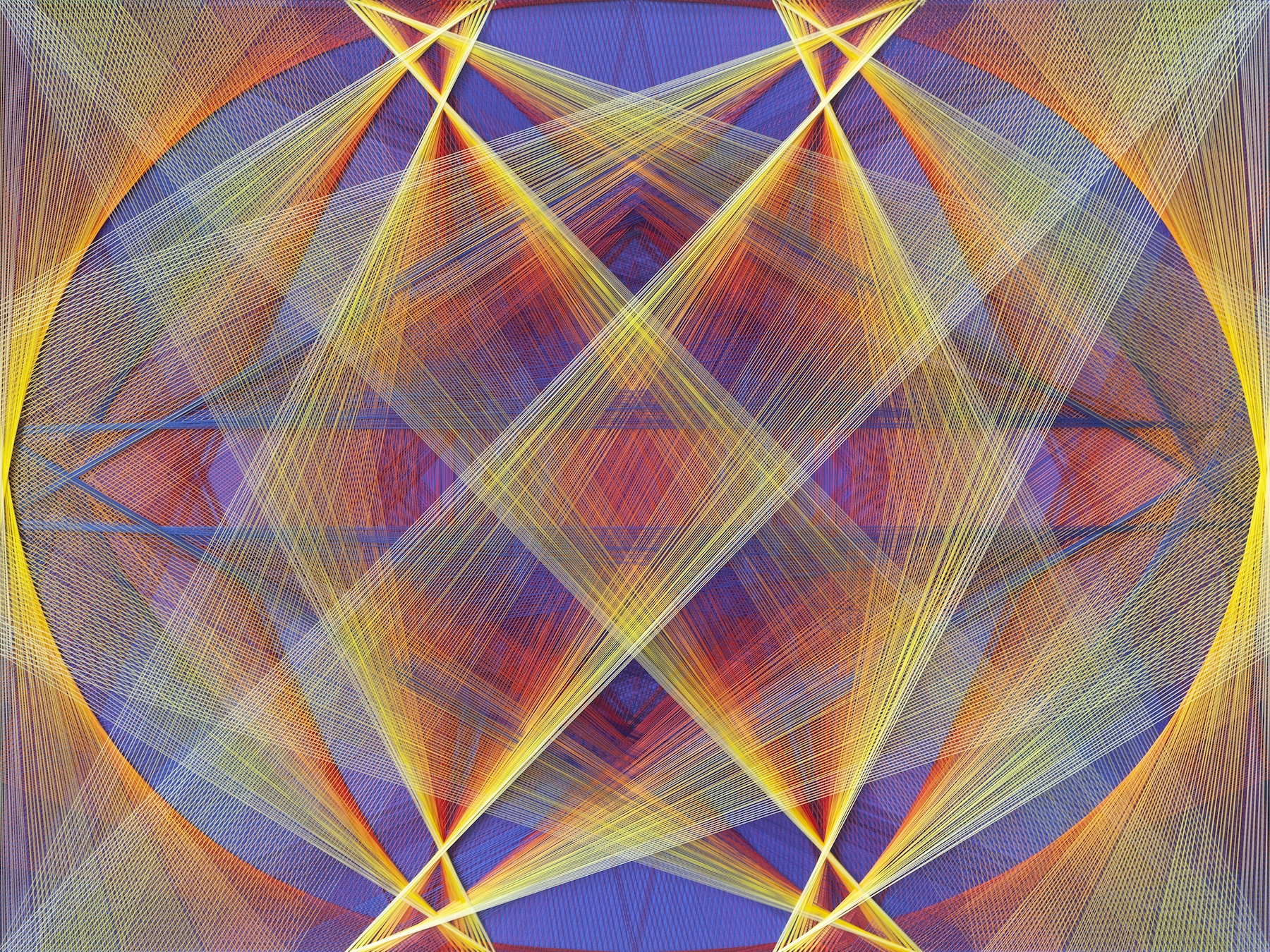
Gu Benchi, Constructology 2023-09 Polyester thread, stainless steel nails, acrylic adhesive, acrylic 120×90 cm 2023
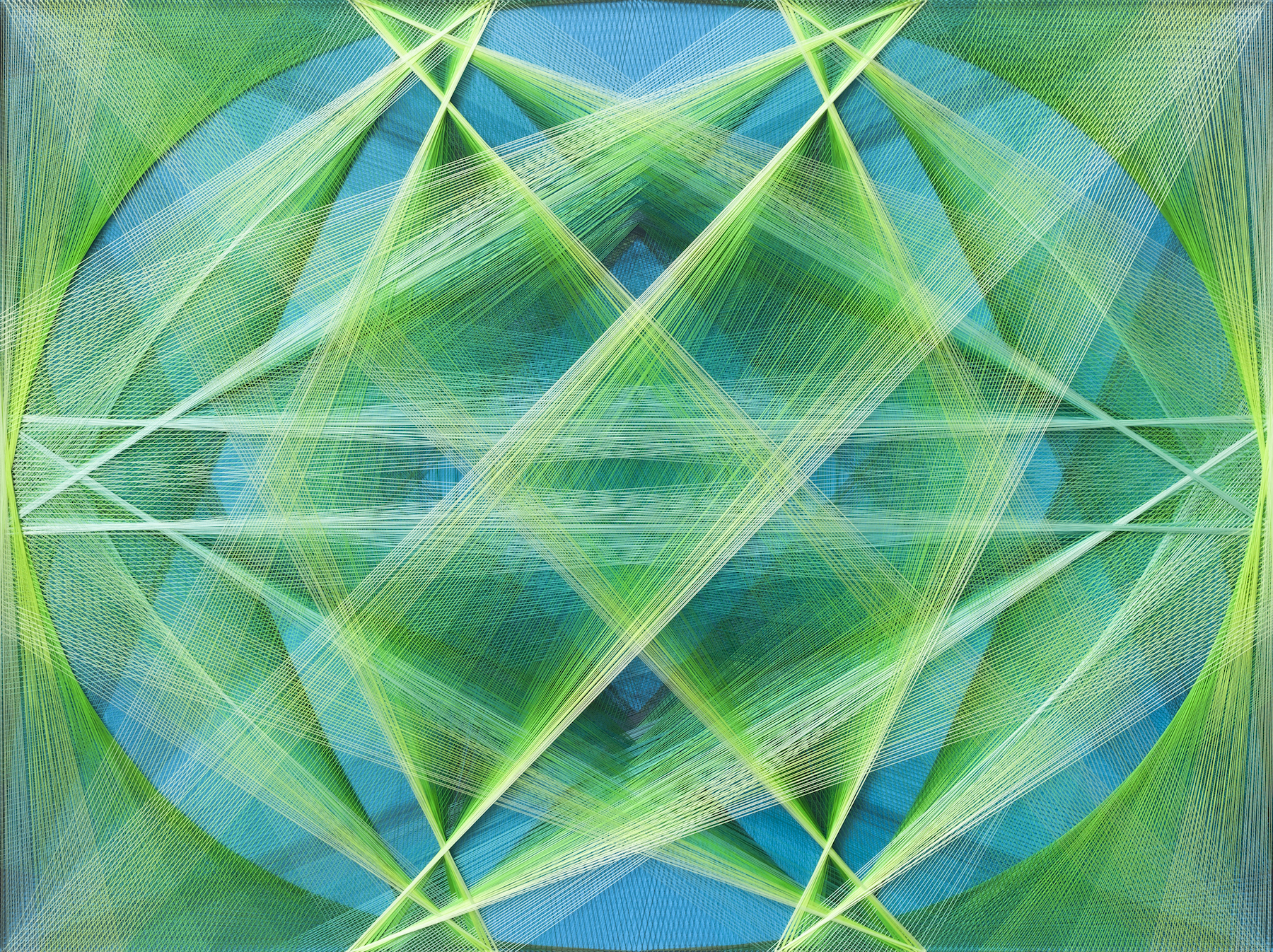
Gu Benchi, Constructology 2023-10, Polyester thread, stainless steel nails, acrylic adhesive, acrylic 120×90 cm 2023

Gu Benchi, Constructology No.38 Polyester thread, stainless steel nails, acrylic adhesive, acrylic 163×183 cm 2014
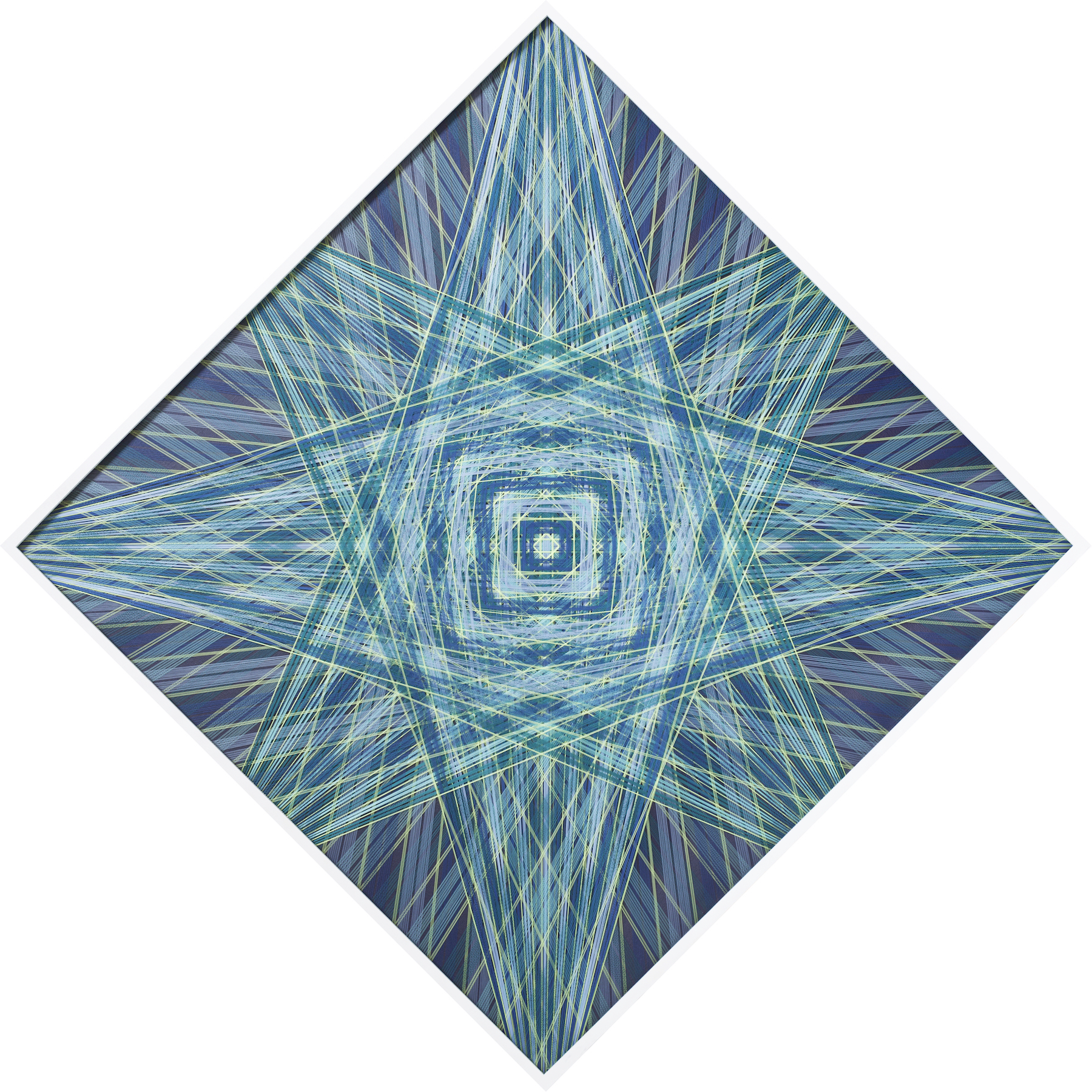
Gu Benchi, Constructology 2019-06 Polyester thread, stainless steel nails, acrylic adhesive, acrylic paint 160 × 160 cm (square orientation) 226 × 226 cm (diamond orientation) 2019
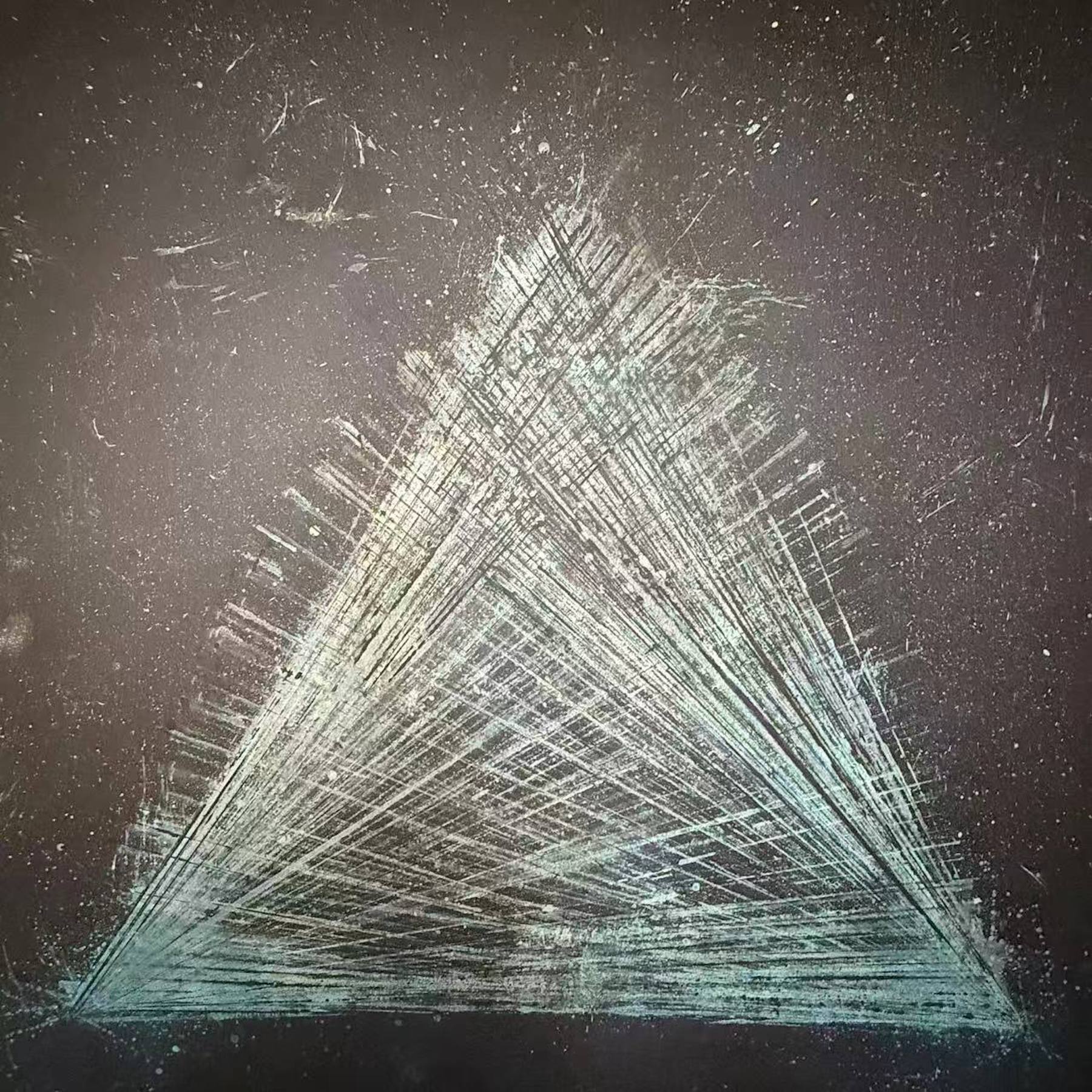
Julian Pesce, Drum and Bass Acrylic on Canvas 200x190 cm 2025
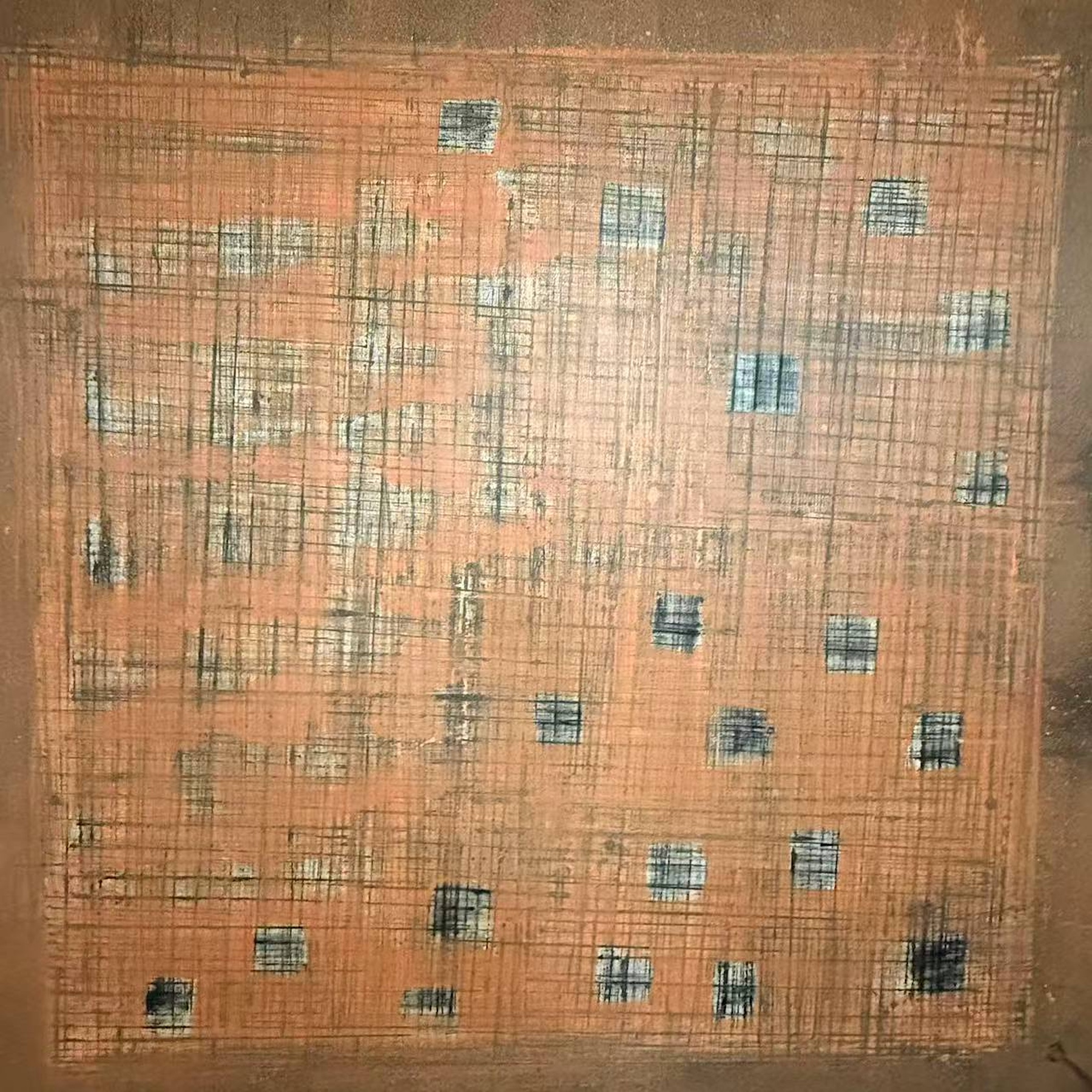
Julian Pesce, Kick 200x190cm Acrylic on Canvas 2025
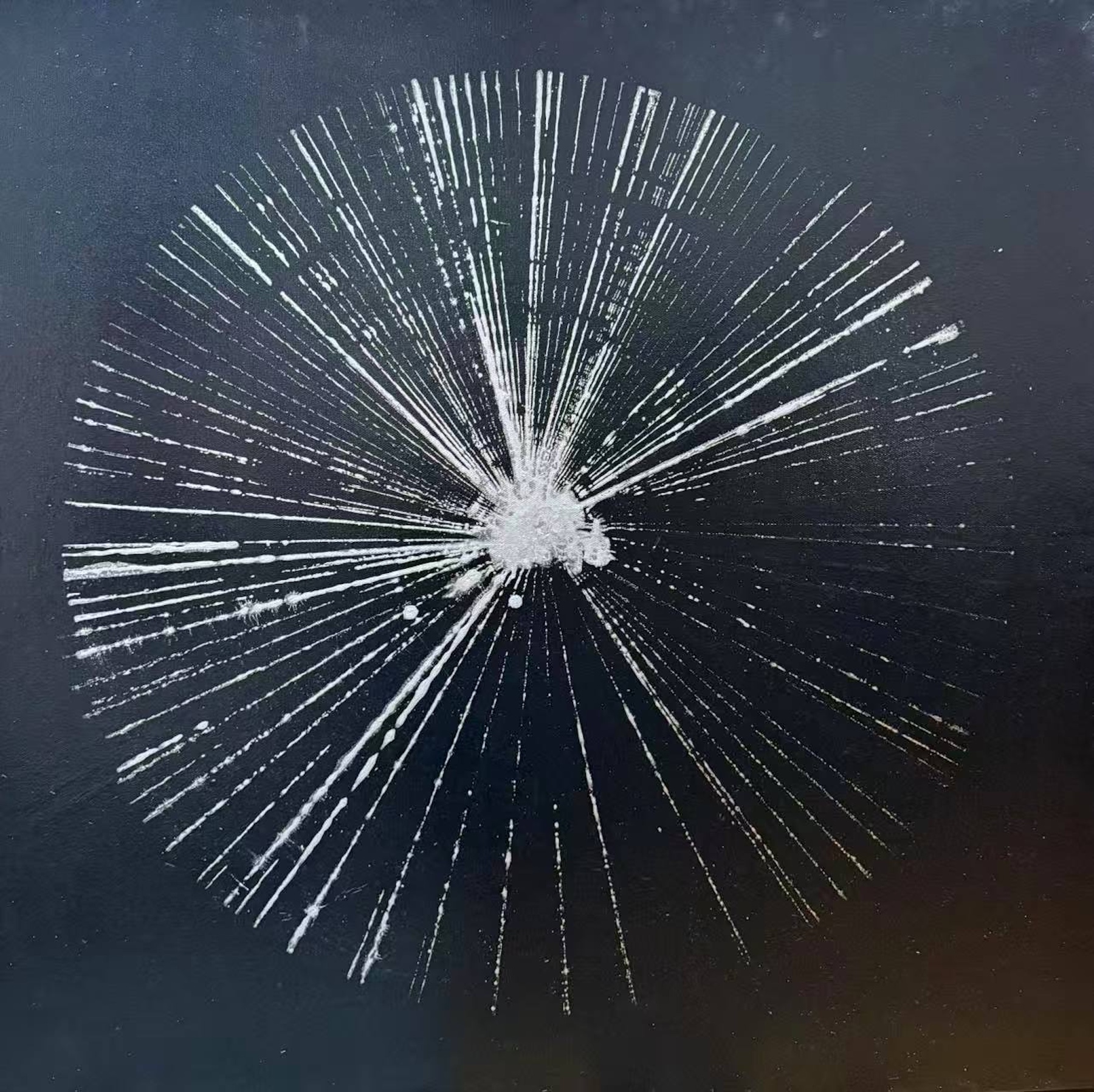
Julian Pesce, Our Time VII Acrylic on Canvas 100x100 cm 2025
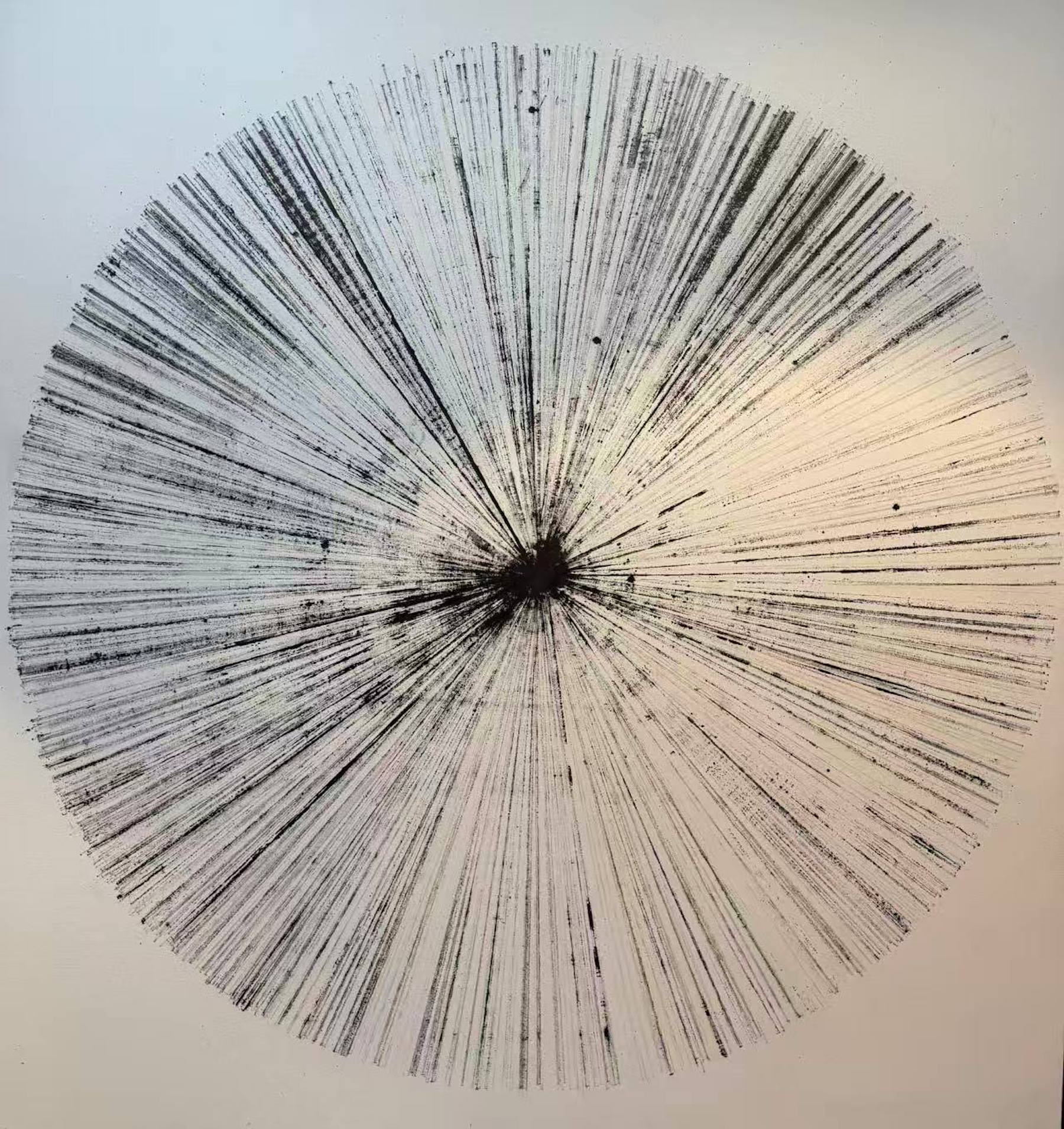
Julian Pesce, Our Time VIII, Acrylic on Canvas 100 x100 cm 2025
There is a moment in all acts of creation when structure forms to something it did not foresee. A grid bends beneath the weight of accumulated memory. A piece of paper, folded and then flattened, retains the ghost of dimension it no longer occupies. A thread stretched across a frame begins to vibrate with an energy that exceeds its engineering. A groove carved into wood by electric tool captures not a landscape, but the tremor of the hand that holds it.
“Between Order and Emergence” brings together four artists who work precisely at this threshold, the interval where the system encounters sensation, where deliberation gives way to the unforeseen. What unites Chen Linggang, Fu Shuai, Gu Benchi, and Julián Pesce is not a shared medium, generation, or geography, but rather a common conviction that, the deepest artistic meaning arises not just from the imposition of order or the embrace of chaos alone, but from the vivid and unresolved tension between the two. Each artist constructs rigorous systems of grids, folds, weavings, and serial repetitions. They then subject these systems to forces that alter, complicate, and ultimately transcend them. By doing so, they illuminate a condition that extends far beyond the studio: the experience of navigating a world in which inherited structures and emerging realities are in constant and generative collision.
The exhibition title is articulated between two conceptual poles. “Order” evokes the rational, the repeatable, the architectonic: the grid, the rivet, the mathematical formula, the warp and the weft. “Emergence” evokes what occurs when complexity exceeds prediction; when accumulated repetitions produce qualities that no isolated unit contains; when the fold surprises the hand that created it; when the viewer’s perception completes a meaning the artist could not fully prescribe. Between these two poles, the four artists in this exhibition conduct their respective investigations.
Cheng Linggang: The Grid as a Cultural Mirror
The starting point of Chen Linggang’s practice is the most elementary compositional unit, namely, a square. Each small square represents a person, a building, a city, a second, a day, a year, a page, a book, a period of history. They repeat infinitely, at once independent and inseparable, each simultaneously a whole and a part within a greater whole. Since 2008, when Chen began pasting photographs and newspaper fragments onto canvas and dividing the surface into blocks separated by white lines, the grid has served both as the structural skeleton and the philosophical foundation of his work.
In the Heritage Series, Chen transcribes text onto rice paper, old book pages, or newspapers, then crumples the material and affixes it to a canvas. The characters, once legible, dissolve into texture that are present yet indecipherable, inherited yet no longer fully understood. The question these works ask is quiet but relentless: if text is the vehicle of culture, how much of that culture has truly been transmitted to our generation? Is our understanding clear or rather irreversibly blurred? Chen offers no answer. Each viewer’s response, is like each small square, completely different.
The Reading Series prolongs this question. Entire books, novels, poetry, and historical texts are taken apart page by page and reconstituted as visual fields on canvas. Knowledge is physically present, yet resists retrieval. More recent works incorporate newspapers, magazines, portraits, and metallic star forms, evoking the collective memory of a generation and its contemplation of lived reality. In every case, the specific image is hidden. What remains is a condition that Chen describes as “both is and is not,” a fundamental uncertainty he refuses to resolve, because uncertainty itself is the subject.
Chen’s most recent works, completed in 2025, mark a significant evolution. Using paper and ink as fundamental art medium, the compositions feature vertical lines, ink-wash motifs, and fragments of text symbolizing the fleeting nature of time and the slippage of memory. Conceived as a counterpart to the Reading Series, this new body of work reflects the ordered relationship between whole and part with a distinctly more “information-oriented” sensibility. Against the backdrop of artificial intelligence and accelerated technological change, the work invites what Chen calls a multidimensional “reading,” an extension of two-dimensional art whose elements diffuse into the surrounding space. The grid endures, but what it contains and how we are invited to read it, is constantly in motion.
Fu Suhai: The Fold as Metaphysical Inquiry
If Chen Linggang’s unit is the square, Fu Shuai’s is the fold. For more than a decade, Fu has been situated within the border zone of materiality and illusion, developing a singular practice in which paper, through saturation, layering, and meticulous handiwork, is transformed into surfaces that simulate corroded, patinated industrial metal. This territory, often described as “2.5D,” occupies the ambiguous zone between two-dimensional image and three-dimensional object, and it is here that Fu conducts both a philosophical and visual exploration.
In the new Fold-Fix series, this exploration continuous further. Fu’s working method has evolved toward a form of “reverse engineering”.Firstly, the paper is physically folded to construct a real volume, afterwards pigment is projected from a single, fixed angle using an airbrush and spray pen. Finally, the paper is unfolded and returned to flatness. What remains is what Fu calls a “memory of light and shadow,” the faithful recording of a three-dimensional moment, now compressed into two dimensions. Realism is not painted in the traditional sense, but is rather developed, like a photograph, through the physics of projection. Yet the process is entirely manual, producing a quality of light and shadow difficult to reproduce through conventional painting precisely because it simulates the physical laws of light projection in the real world.
His works’ conceptual resonance are multi-layered and rich. Fluorescent pigments, which in earlier works served as metaphors for the virtual hues of electronic screens, have migrated outward into the skin of the city: corrugated metal facades, vacant billboards, and the metallic barriers of unfinished buildings that fill the modern metropolis.
Under urban lights, these industrial materials resembling ruins, take on psychedelic colors. It evokes cyberpunk landscapes of science fiction where fluorescence is no longer confined to the digital realm, but materialized as urban fact. Fu Shuai captures this liminal state between construction and abandonment, between the new and the dilapidated. He casts an archaeological gaze upon the residues left by the accelerated development of contemporary society.
The rivets appearing in recent works are preinstalled before each folding, imposing a rational, industrialized order of fixed points. Yet when the supple paper is compressed and folded between them, the resulting textures are never entirely predictable. Even with identical fixed points, each folding generates a unique form. Fu reads in this an analogy to social structures: beneath an overarching systemic order, the rivets, each individual existence retains an organic, unpredictable dimension. This tension between rule and chance, system and singularity, is not merely represented but physically embodied in every work. Drawing on French philosopher Gilles Deleuze’s concept of the fold as a passage between interior and exterior, visible and invisible, Fu Shuai creates works that are at once trompe-l’œil illusions and investigations into the very nature of perception. When flat illusion becomes more convincing than three-dimensional reality, we are no longer looking at a painting; we confront the condition of a world saturated with images and simulacra.
Gu Benchi: Thread as Cosmological Structure
Gu Benchi arrives at order through a unique origin. While accompanying his wife in 2012 to a textile market in Shanghai, he encountered a stall where thousands of polyester thread spools were arranged by specification, material, and color on shelves nearly three meters high and more than ten meters long. This spectacle awakened something fundamental: the recognition that the universe itself is organized according to a subtle, invisible order, and that it’s the artist’s task to make this order tangible.
This revelation was not isolated, but an accumulation of multiple life changing events. Gu had spent years in society’s margins, spending a decade in an artists’ village in a former nursery outside Shanghai’s ring road, a period he compares to as life on a deserted island. However, the most formative event was during his adolescence when he encountered Piet Mondrian’s geometric abstraction in an art book at his teacher’s studio. This eventually planted the first seed of his artistic DNA, one governed by rules, rhythm, and visual order. On the other hand, Buddhist practices, absorbed through Gu’s wife’s devotion and by years of copying the Diamond Sutra, provided a spiritual framework: the conviction that both art and religion share the quality of transcendence and that the capacity to surpass one’s own existence can be achieved through training in concentration and contemplation.
These threads, esthetic, spiritual, and material, converge in works of extraordinary precision and luminous beauty. Inspired by the ceiling medallions of traditional Chinese opera stages, whose complex bracket systems radiate outward in concentric layers, and by esoteric Buddhist mandala paintings, whose progressive expansion from a central core represents cosmic order, Gu constructs multilayered woven structures from high-strength polyester fiber. The symmetrical works are the product of precise mathematical calculation, often computer-assisted to establish the generative logic of a pattern, a formula in which different parameters may be substituted. Grid-based works, by contrast, maintain a strict spatial order of horizontal and vertical lines while seeking rhythm and cadence through variations of color, width, and thickness. A process Gu compares to jazz improvisation.
For Gu, light is an implicit yet essential artistic medium. Under shifting conditions, the interaction of overlapping segments becomes more distinct and three-dimensional, enriching the spatial experience. Gu favors exhibition spaces lit like dim theaters, where spotlights illuminate only the works, allowing them to appear as luminous stars in the darkness.
Yet precision alone does not explain these works. Gu describes his process as allowing “dispersed energy to finally concentrate and burst forth through constant repetition, accumulation, and layering of the same object.” Weaving is a form of meditation like a mirror reflecting the mind’s state. In his most recent portrait series, prompted by the fractures of the post-pandemic world, this spiritual architecture confronts the human figure. Inspired by German-American philosopher Herbet Marcuse’s critique of modernity in One-Dimensional Manand by the Buddhist teaching that all appearances are illusion, Gu renders the self through eight layers of continuous weaving as something fragmented and reconstructed, no longer whole, but shimmering with the tension between dissolution and coherence. These portraits are not celebrations of individual identity but meditations on its impossibility: an acknowledgment that human beings do not exist as fixed “selves,” but as vessels for world and mind. And yet, like Sisyphus pushing his rock, the act of creation is persistent, concentrated, and repetitive and generates its own form of hope.
Julián Pesce: The Mark as Transcultural Translation
Julian Pesce brings the sensibility of a percussionist and an engraver to every surface he touches. Born in Buenos Aires in the late 1980s and trained in both Fine Arts and Electronic Arts, he carries within him something of the analog world while remaining open to digital tools. He calls himself a member of a “hinge” or transitional generation. His practice is rooted in translation: between cultures, between media, between handmade and technological processes, between sound and image. “One of my recurring questions,” Pesce says, “is: how might I say the same thing in another language?”
Working from what he describes as “the exact antipodes” of China, Julian came to Shanghai not to reproduce the masters of Shan Shui painting, but to absorb certain lessons and transform them into a more personal art. The philosophical foundations of Chinese landscape painting, including its sensitivity, reverence for nature, and its understanding of the human scale as a small part of a vast whole, carry for Julian a powerful message in an era of climate urgency. The technical discipline fascinates him equally: the four tonal values of ink that generate depth and shadow; the risk of brush on rice paper that cannot be erased; the capacity of different brushes to absorb and release ink through gesture. He adopted this tonal differentiation in his circle series, building from very light tones to the most saturated, blending field observation, study, and personal history.
Shanghai’s hypermodernity sharpened Julian’s attention to what persists beneath technological surfaces. Two elements caught his eye in the street: bamboo brooms and bamboo scaffolding , ancestral objects representing intelligent use of natural resources that have survived the current digital-technological era. Chopsticks, too, became both subject and tool, giving rise to a series of small-format paintings. “Some things are so well designed,” he observes, “that they withstand the technological-digital avalanche.” These humble objects anchor a practice that finds the sacred in the overlooked, the durable within the ephemeral.
Across woodcuts, biomaterials, watercolors, and installations, the common thread of Julian’s practice is the body in action: the energy of gesture, the trace, the imprint in the broadest sense. He works consistently in series, driven by curiosity and by the conviction that technique must never eclipse what one wishes to express. Each body of work responds to a specific context: a moment in life, the people nearby, the workspace in which it was created. “Those of us who make art,” he reflects, “leave traces by which we are ultimately recognized—messages that speak of an era.”
“Between Order and Emergence” proposes that the most vital art of our time is created at the meeting point of control and contingency. Chen Linggang’s grids hold culture in suspension, legible yet unreadable, inherited yet irrevocably transformed. Fu Shuai’s folds capture a light that no longer exists in the space it once occupied, enacting the metaphysical predicament of a world saturated with images. Gu Benchi’s weavings transform meditative repetition into cosmological revelation, confronting the fragmented self with the possibility of transcendence. Julian Pesce’s marks translate between worlds situated at opposite ends of the earth, finding in humble materials and transcultural encounter a language at once deeply personal and universally resonant.
What emerges from their collective practice is not resolution but recognition: order is not the enemy of life, but rather its scaffolding. And emergence is not disorder; it is the most beautiful and unpredictable consequence of order. In the space between the two, something essential about our contemporary condition takes shape. We all navigate this intermediate state, between the inherited and the invented, the fixed and the fluid, the systemic and the singular, the known and the becoming. These four artists do not claim to map this territory in its entirety. They offer something more honest and more enduring: proof of its exploration, conducted with rigor, sensitivity, and an unshakable faith in art’s capacity to make visible what systems alone can never predict.