Scan our QR code to stay updated with the recent news and upcoming events.
Scan our QR code to stay updated with the recent news and upcoming events.

Gong Zhanlei was born in 1989 in Hengshui, Hebei province. He graduated from the Experimental Art Institute of Tianjin Academy of Fine Arts in 2017 and received a Master ‘s degree in Integrated Visual Arts.
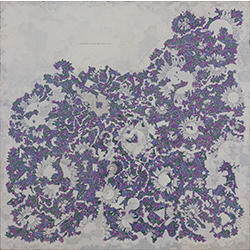
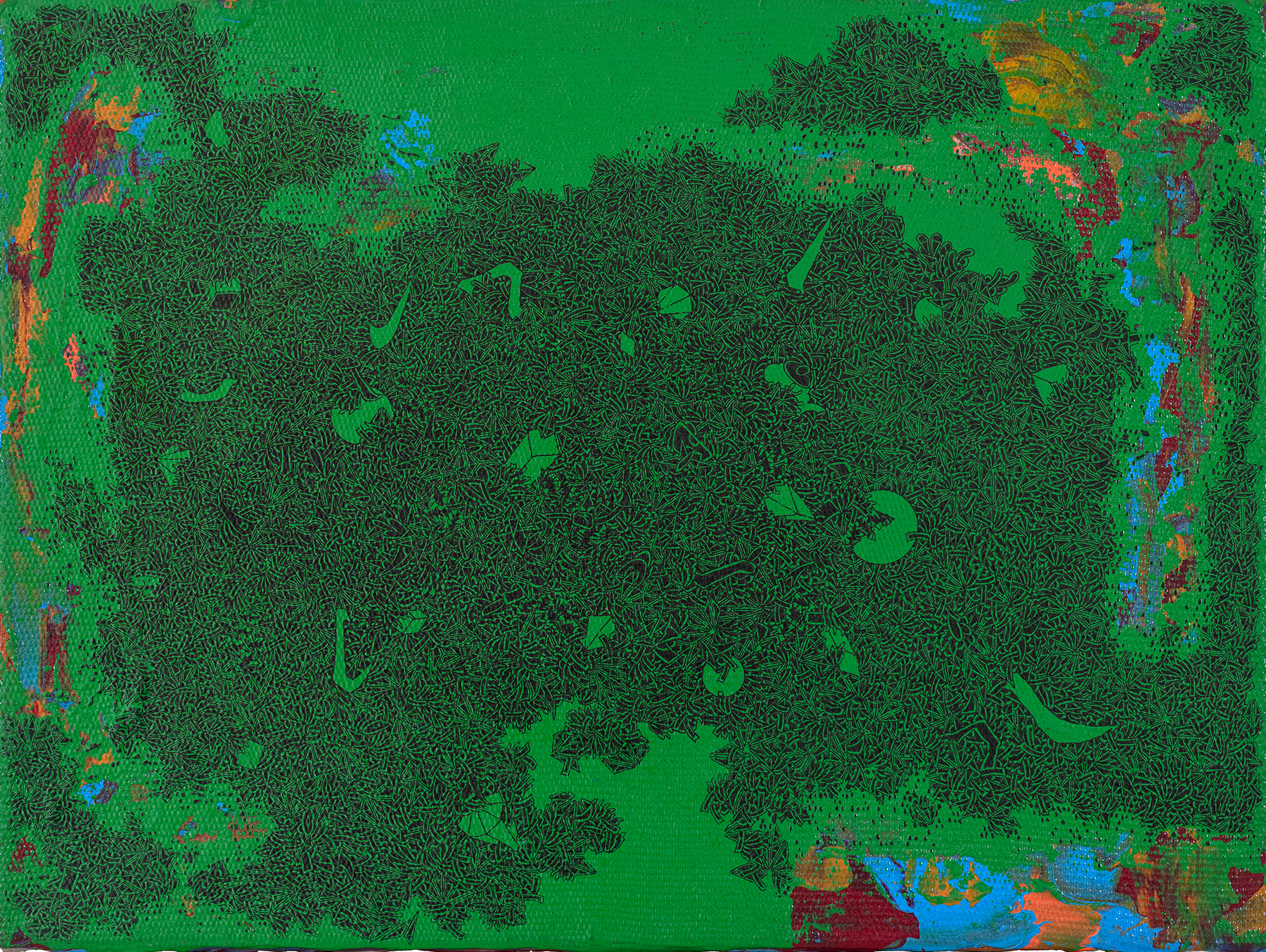
Gong Zhanlei’s practice, in which drawing and painting operate less as descriptive media than as instruments of psychic calibration, technologies for locating stillness within conditions of pressure, excess, and historical drift. Across bodies of work that move from rigorous black-and-white pencil compositions to recent canvases that interlace collage and paint, Gong posits image-making as a form of disciplined interior labor: a slow reordering of affect, a self-redemptive praxis enacted through material decisions that refuse immediacy.
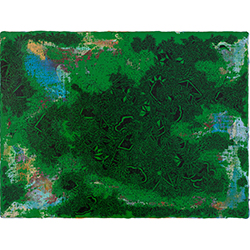
The early monochrome series establishes a foundational lexicon. Gong’s insistence on black and white does not reduce the world; rather, it concentrates it. Monochrome becomes a total field, “all-pervading and rich”, where intimacy and severity cohabit, and where the simplest tonal shifts carry the weight of lived contradiction. The works stage an ontological tension between the legible and the unruly: a surface that appears controlled yet is continuously threatened by the pressure of what cannot be named. In this sense, complexity is not an aesthetic effect but a lived condition; the drawing is a site where chaos is neither illustrated nor denied, but gradually metabolized into composure.
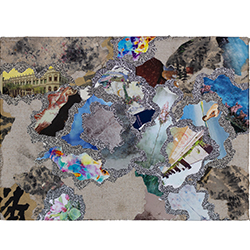
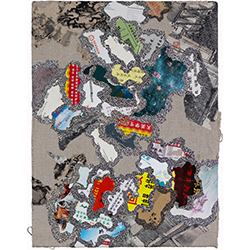
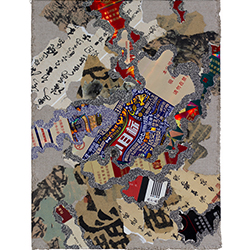
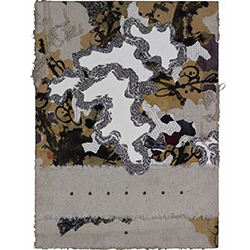
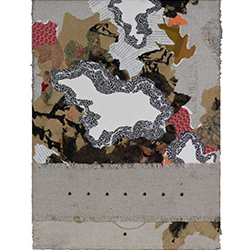
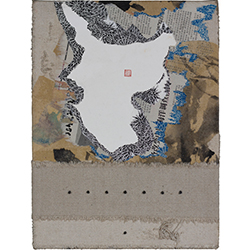
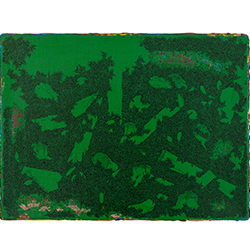
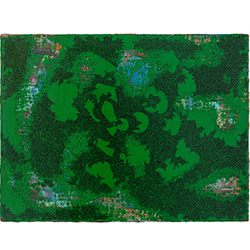
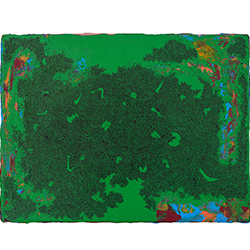
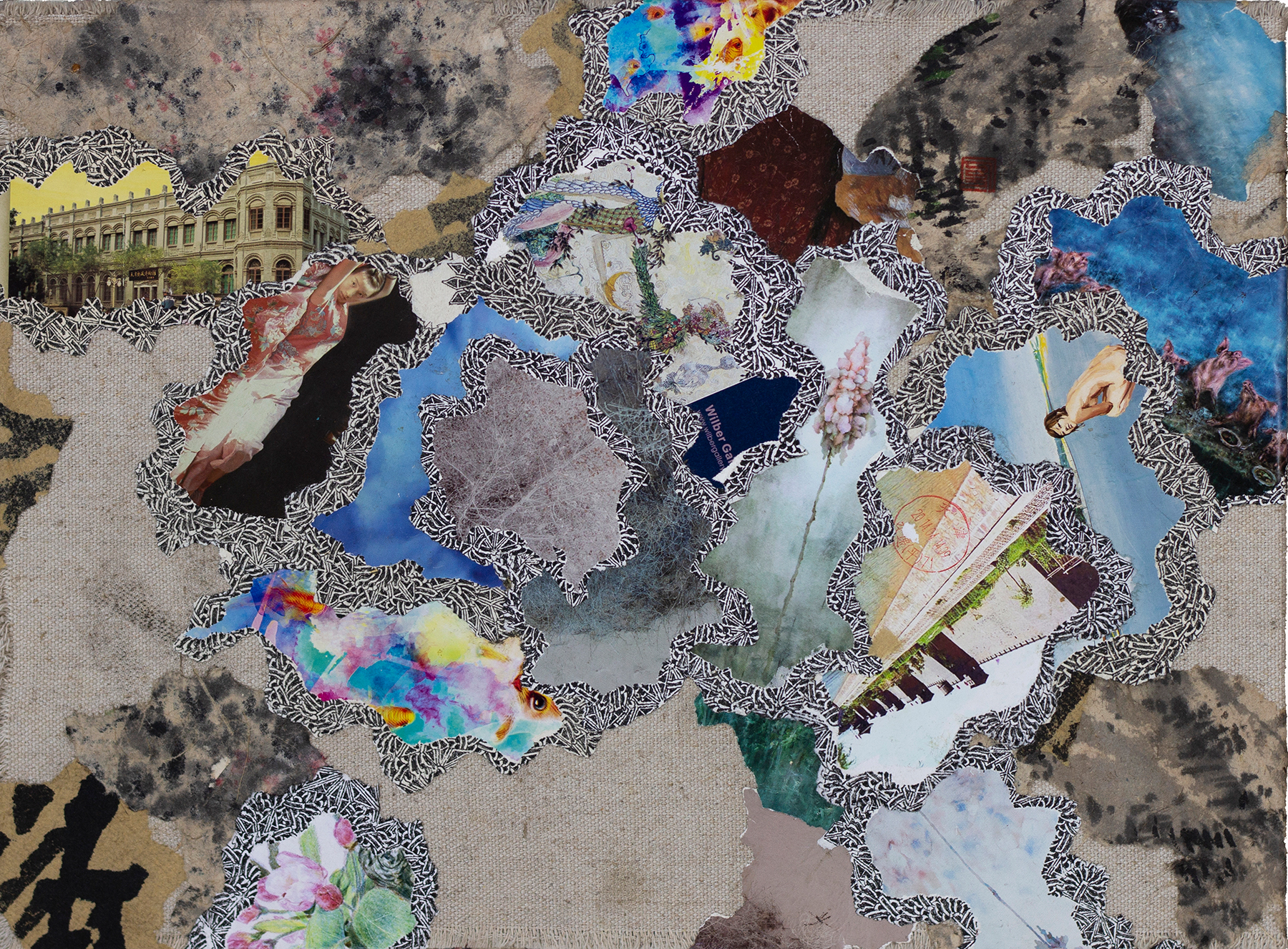
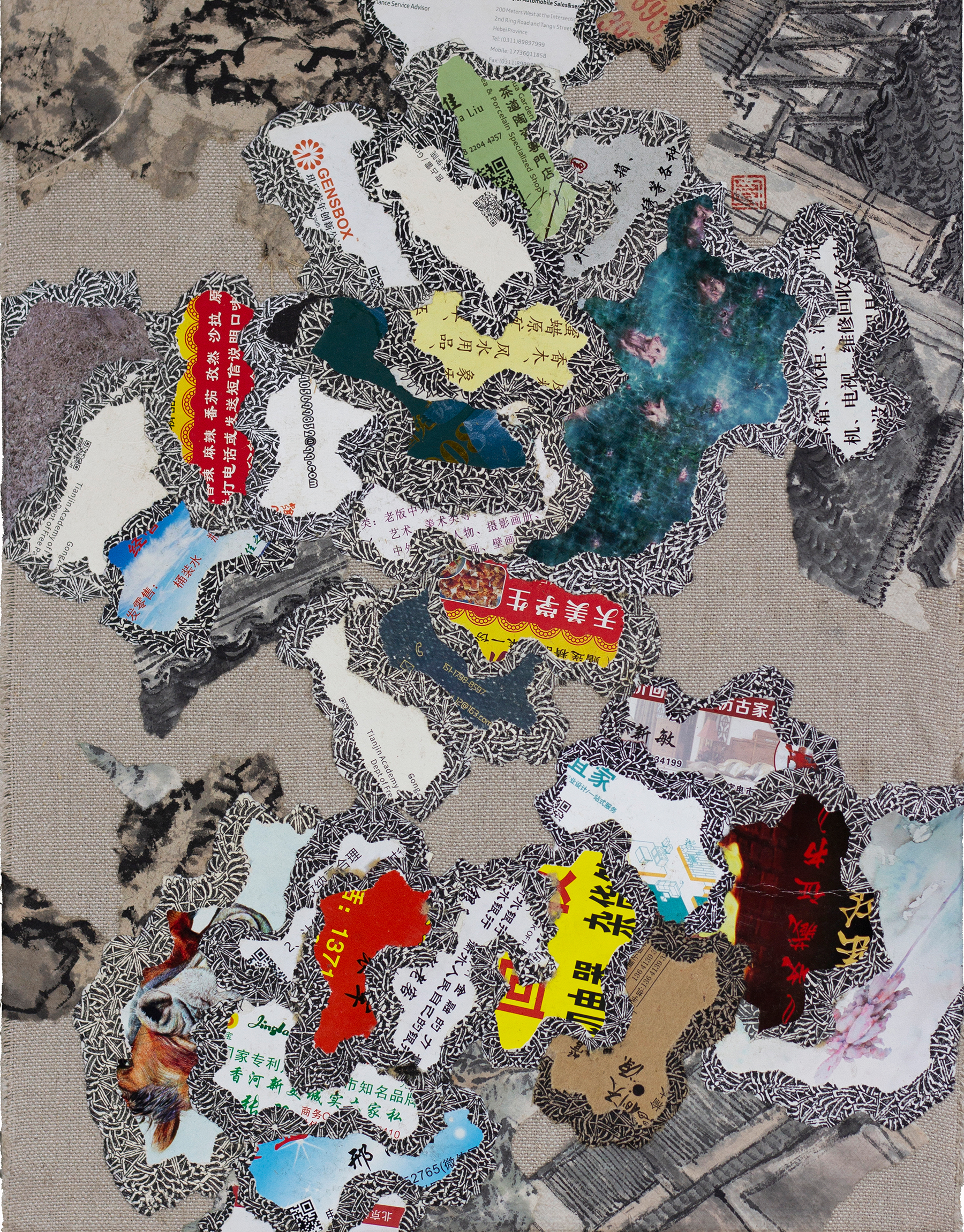
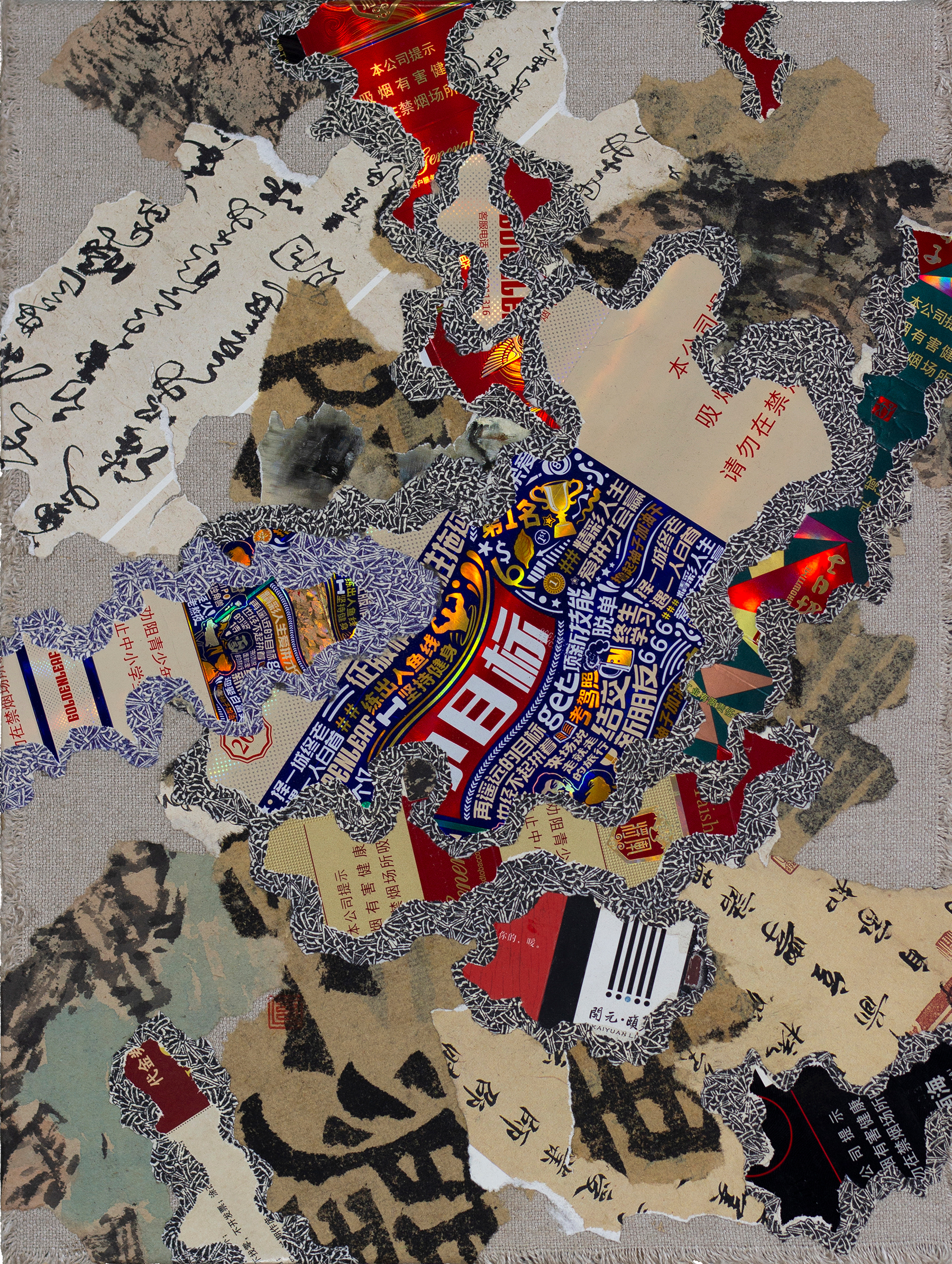
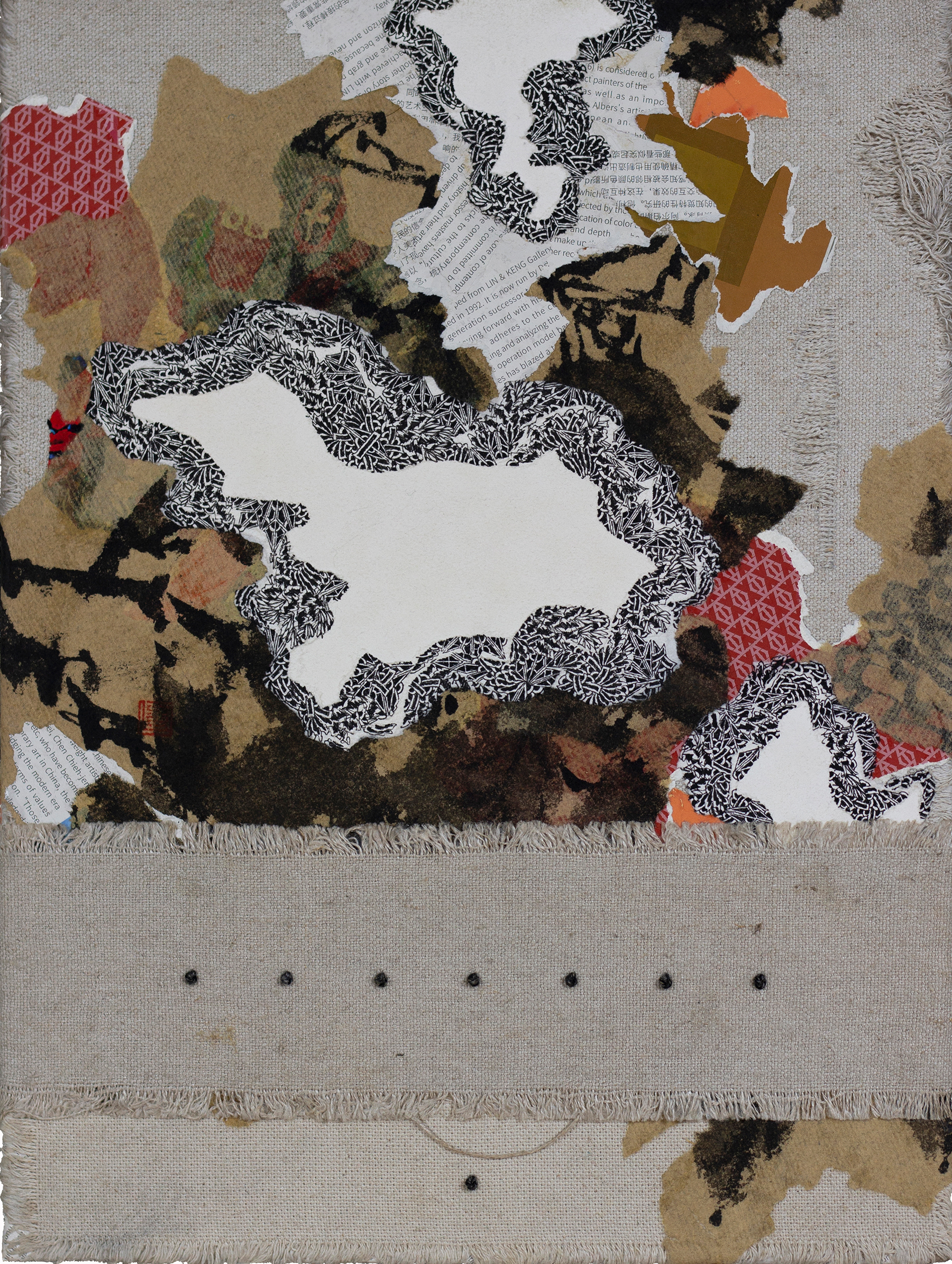
This inquiry deepens in the recent canvases, where collage introduces a vernacular archive: business cards, postal cards, and other remnants that index social exchange and the passage of time. Such fragments function as minor documents—evidence of what is vanishing from everyday visibility, yet they resist nostalgia. Incorporated into painterly structure, they form a bridge between present and past, insisting that history is not a distant narrative but an active substrate shaping perception in the now.
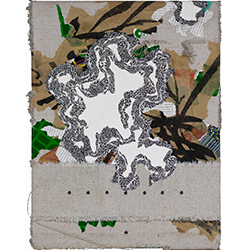
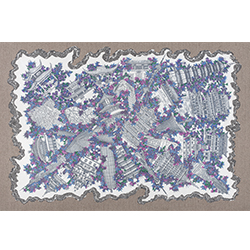
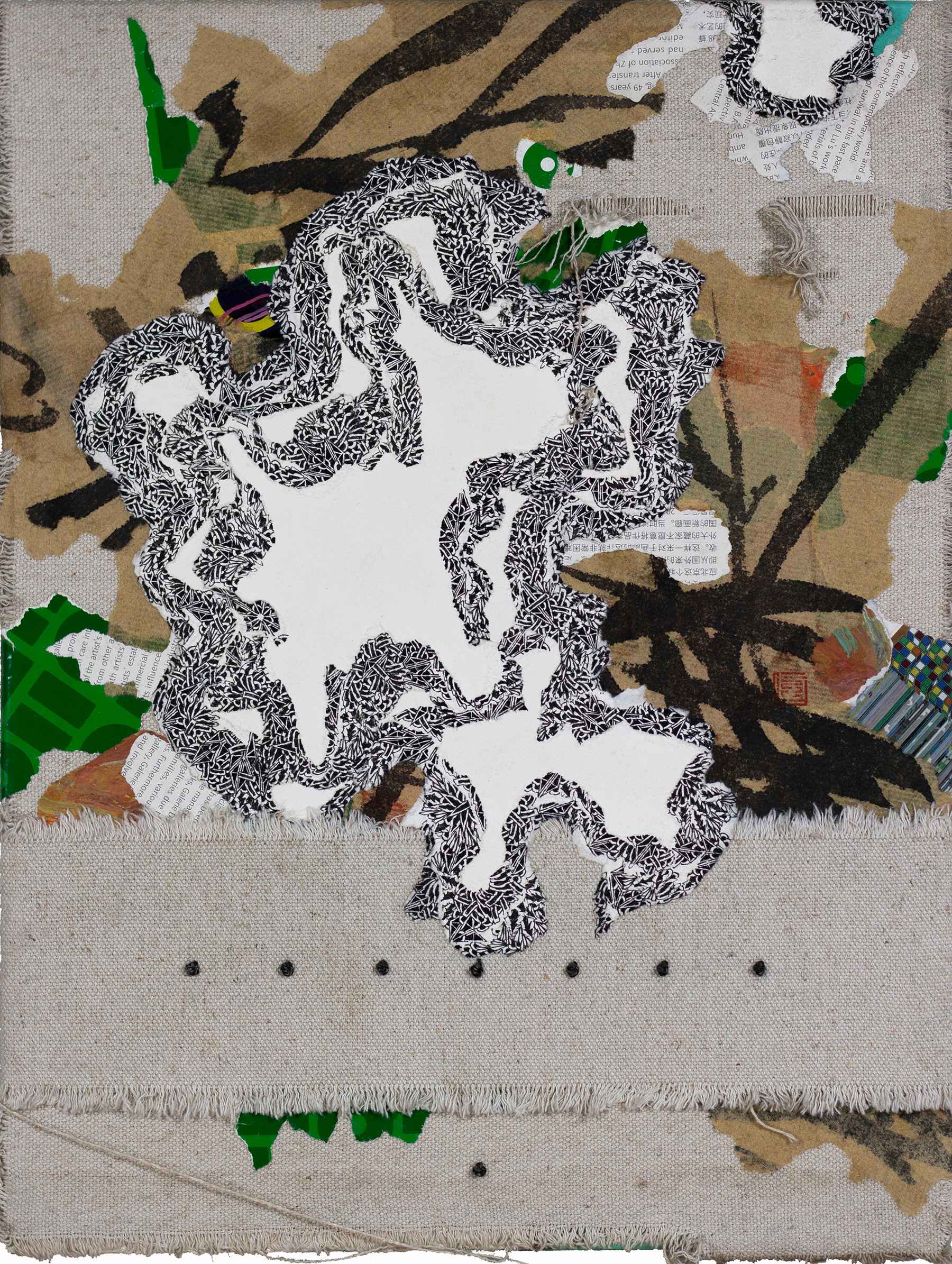
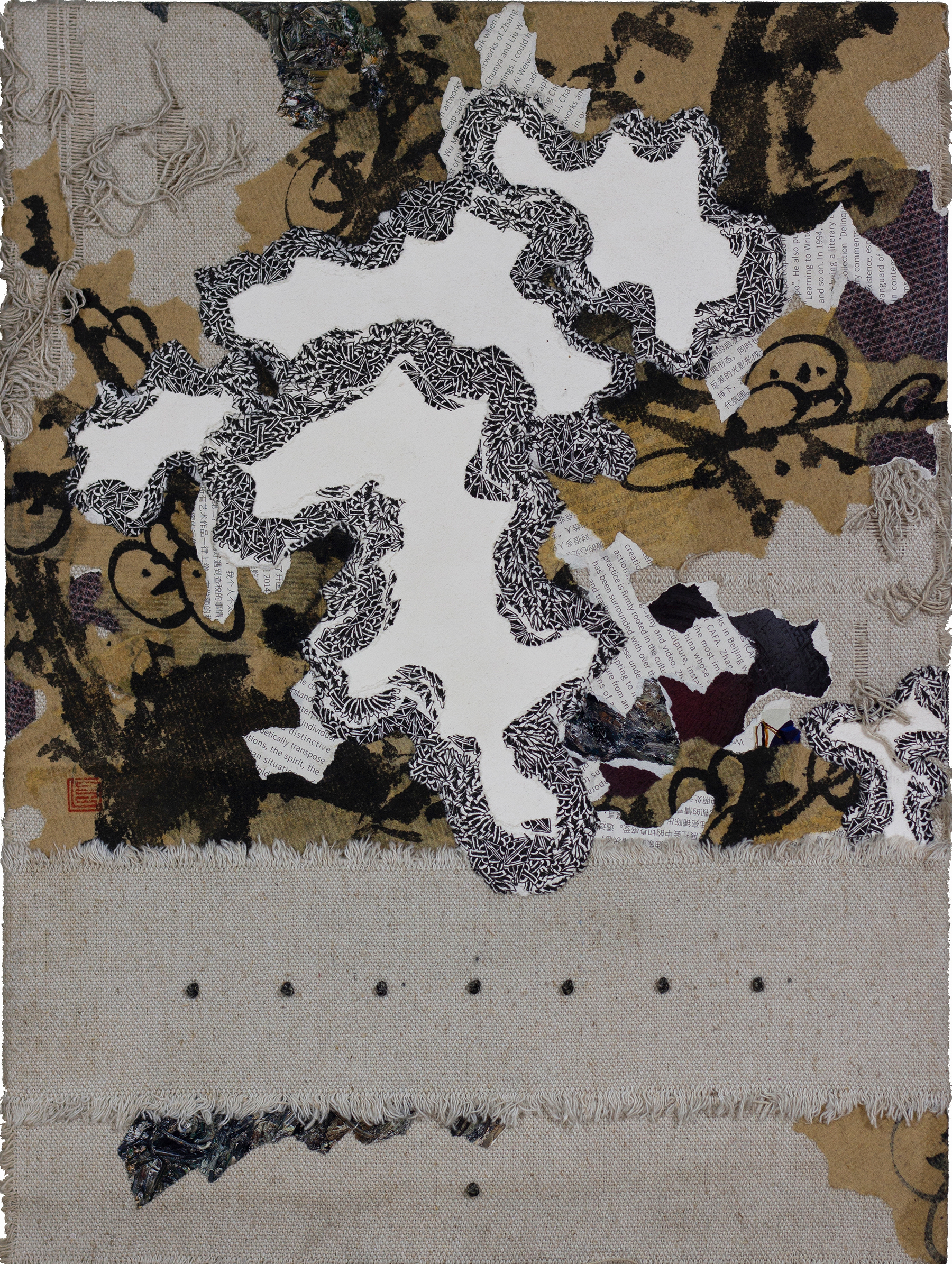
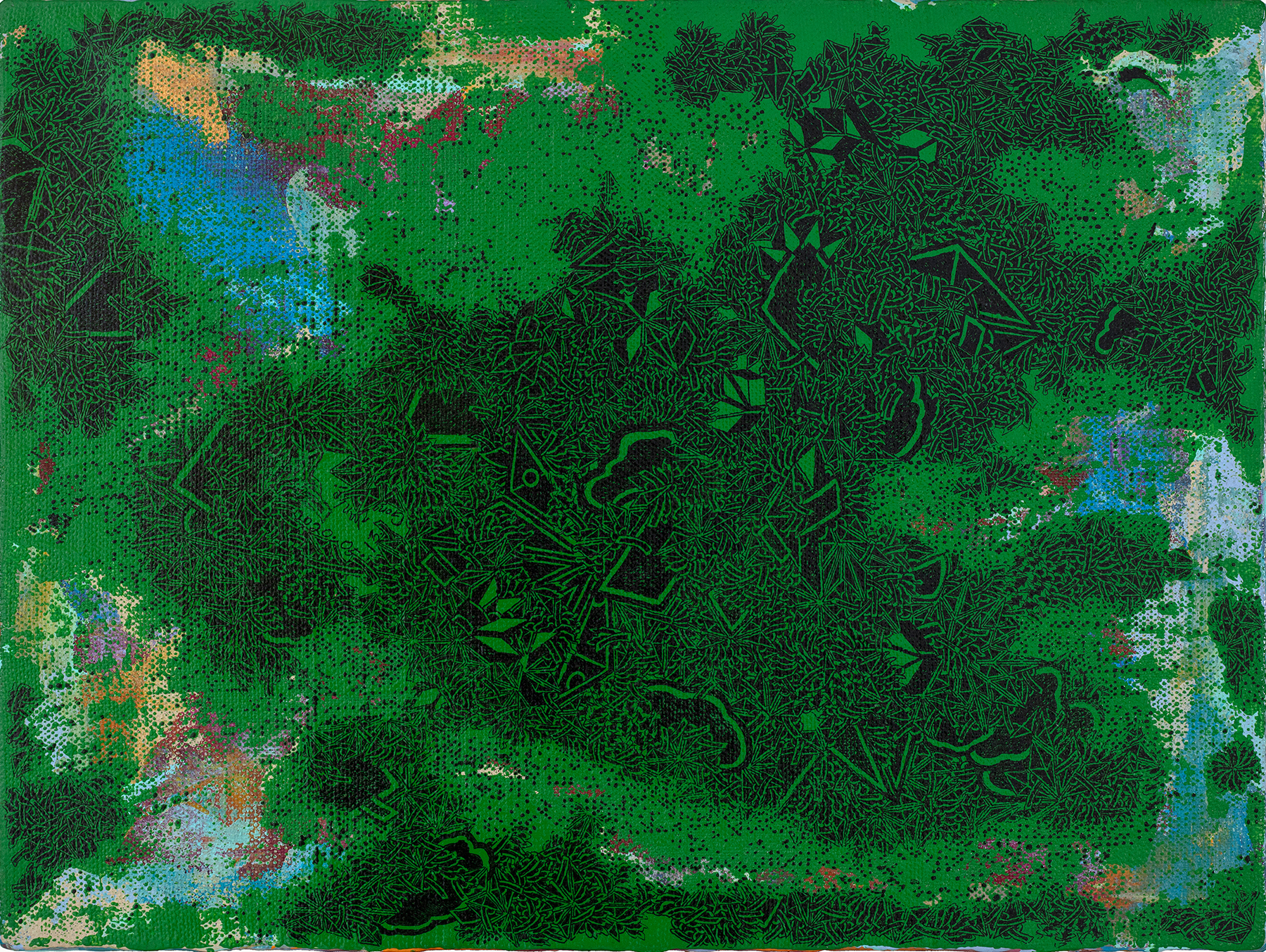
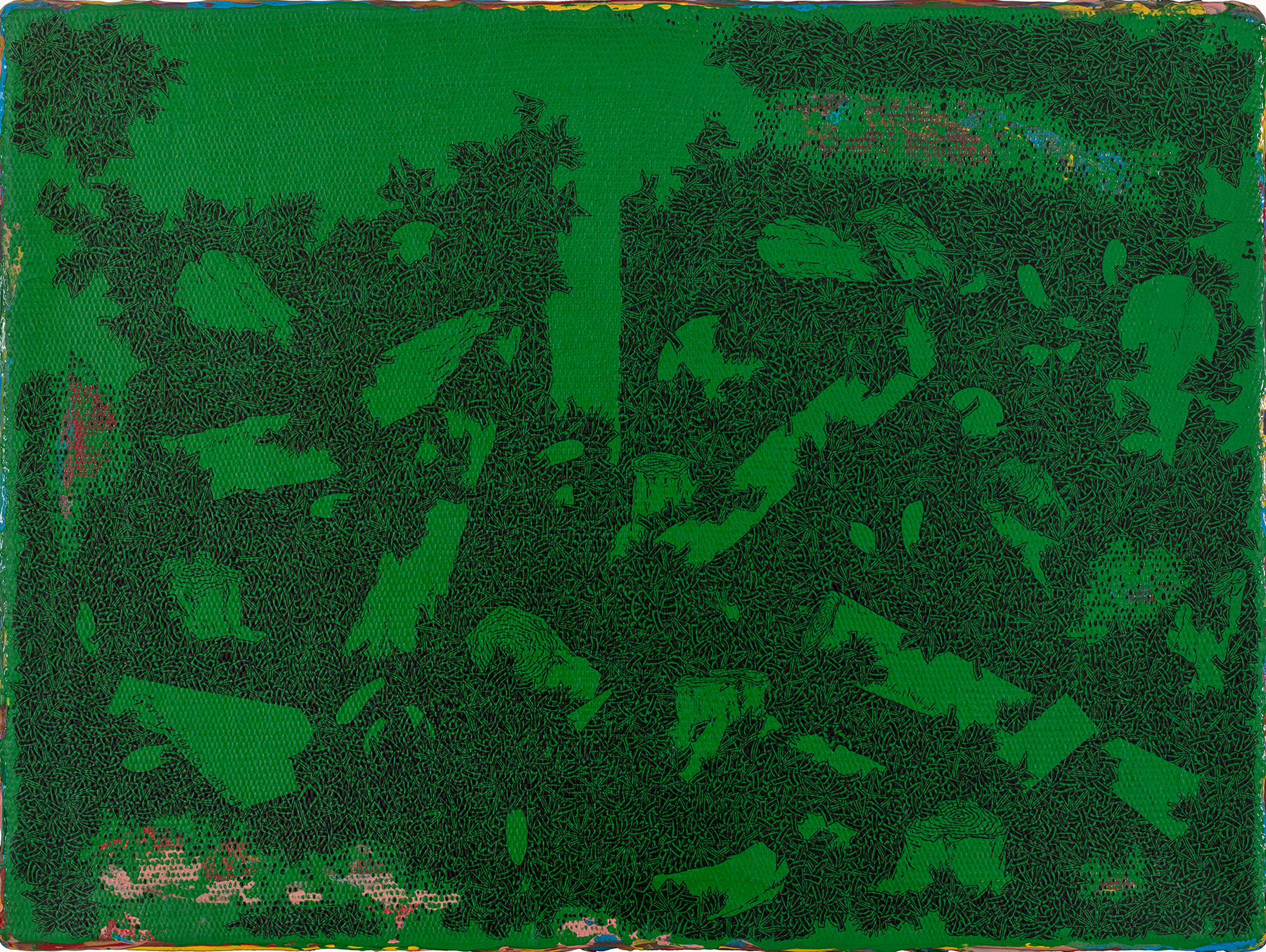
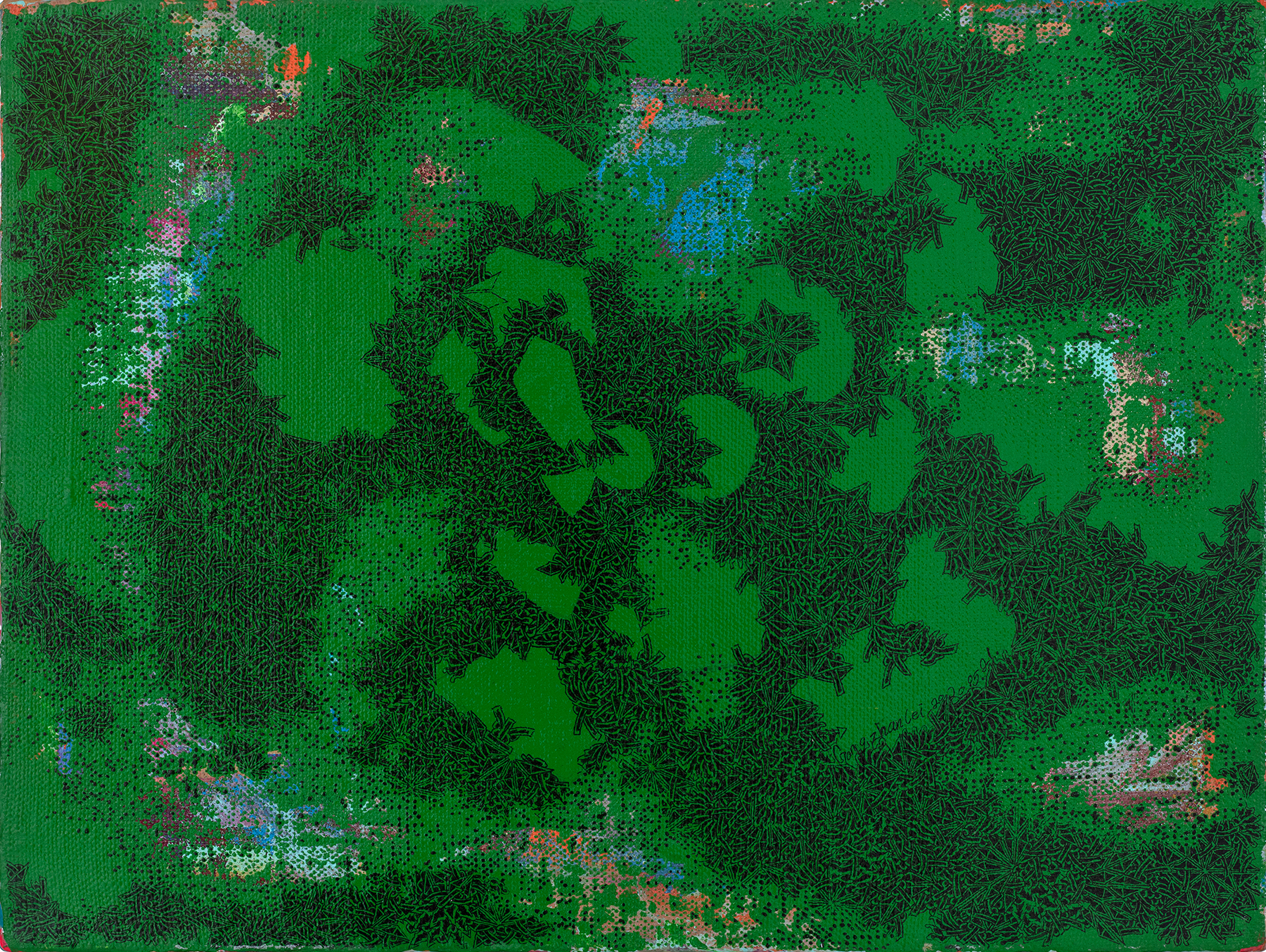
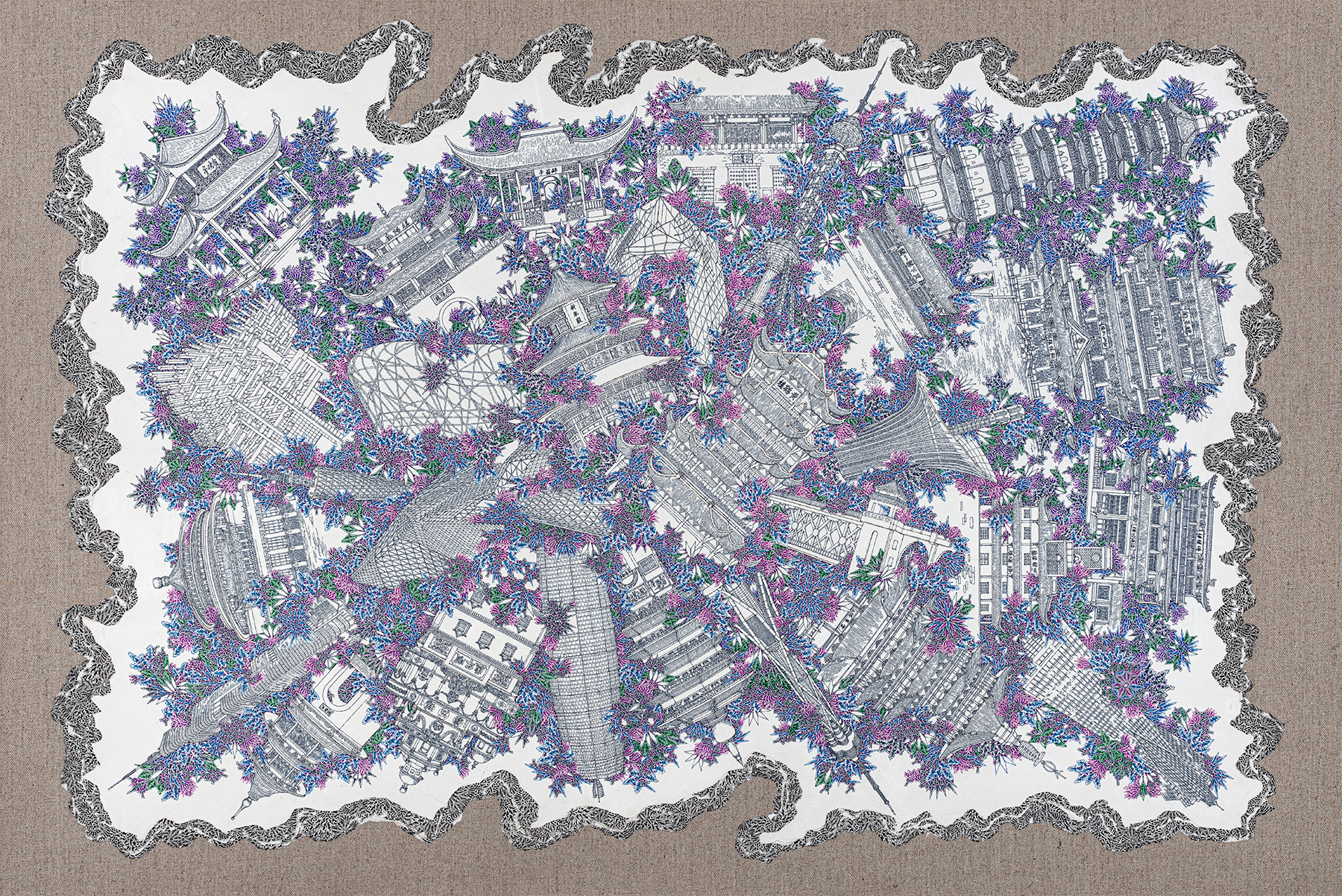
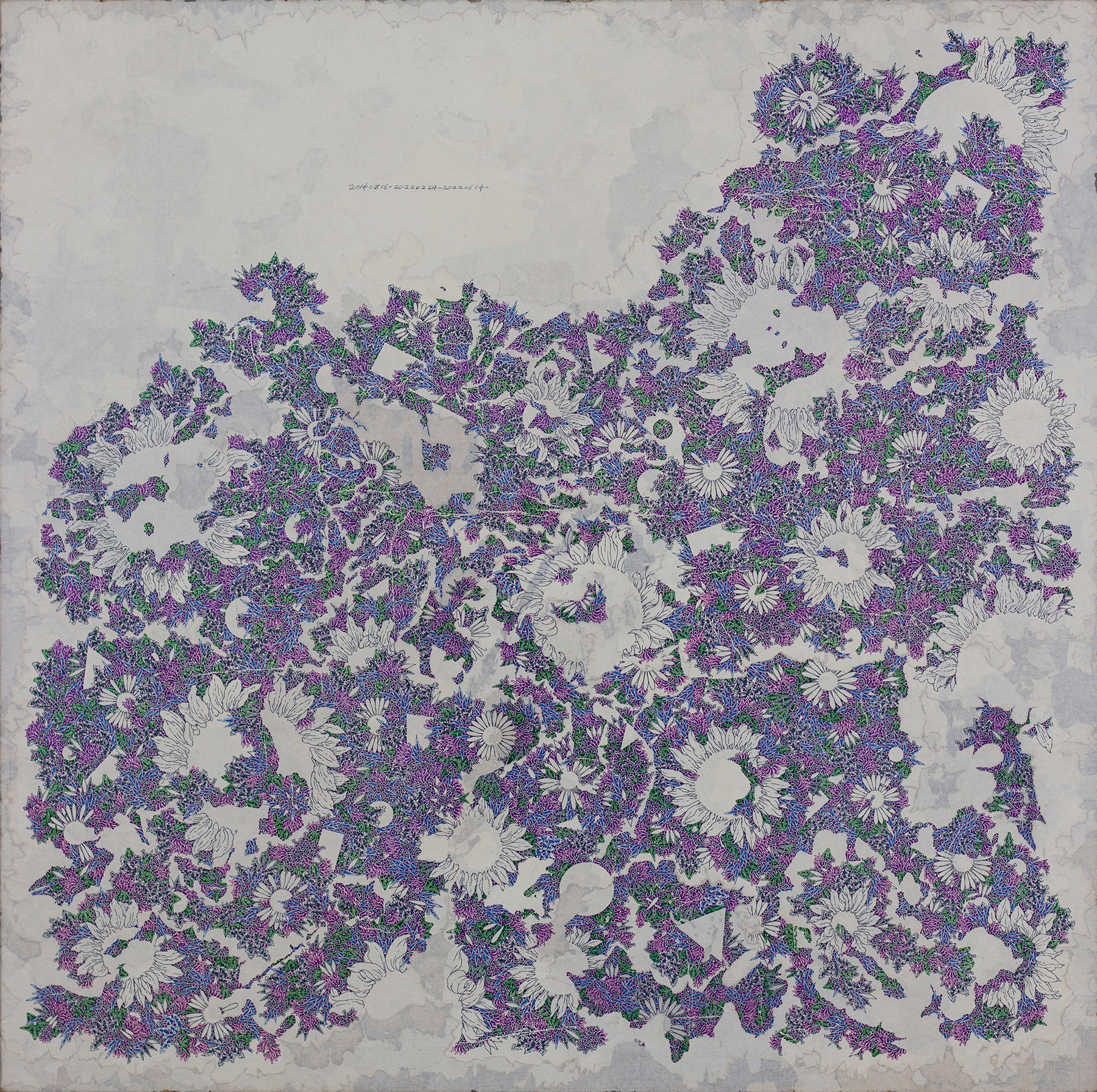
Running through these material negotiations is Gong’s return to the “Four Gentlemen”, lotus, orchid, plum, chrysanthemum, motifs historically revered within literati culture. Here, however, the symbols are not revived as quotation. They are subjected to a contemporary spatial problem: an exploration of verticality through side profiles, layered and segmented, as if tradition itself were being reoriented in cross-section, made structural, modular, and endlessly recomposable. Gong’s works ultimately argue that tranquility is not a given state but a constructed horizon: from visual dazzle, a measured calm; from confusion, a method; from time’s erosion, a renewed capacity to see.

Gong Zhanlei was born in 1989 in Hengshui, Hebei province. He graduated from the Experimental Art Institute of Tianjin Academy of Fine Arts in 2017 and received a Master ‘s degree in Integrated Visual Arts.
Gong Zhanlei’s practice, in which drawing and painting operate less as descriptive media than as instruments of psychic calibration, technologies for locating stillness within conditions of pressure, excess, and historical drift. Across bodies of work that move from rigorous black-and-white pencil compositions to recent canvases that interlace collage and paint, Gong posits image-making as a form of disciplined interior labor: a slow reordering of affect, a self-redemptive praxis enacted through material decisions that refuse immediacy.
The early monochrome series establishes a foundational lexicon. Gong’s insistence on black and white does not reduce the world; rather, it concentrates it. Monochrome becomes a total field, “all-pervading and rich”, where intimacy and severity cohabit, and where the simplest tonal shifts carry the weight of lived contradiction. The works stage an ontological tension between the legible and the unruly: a surface that appears controlled yet is continuously threatened by the pressure of what cannot be named. In this sense, complexity is not an aesthetic effect but a lived condition; the drawing is a site where chaos is neither illustrated nor denied, but gradually metabolized into composure.
This inquiry deepens in the recent canvases, where collage introduces a vernacular archive: business cards, postal cards, and other remnants that index social exchange and the passage of time. Such fragments function as minor documents—evidence of what is vanishing from everyday visibility, yet they resist nostalgia. Incorporated into painterly structure, they form a bridge between present and past, insisting that history is not a distant narrative but an active substrate shaping perception in the now.
Running through these material negotiations is Gong’s return to the “Four Gentlemen”, lotus, orchid, plum, chrysanthemum, motifs historically revered within literati culture. Here, however, the symbols are not revived as quotation. They are subjected to a contemporary spatial problem: an exploration of verticality through side profiles, layered and segmented, as if tradition itself were being reoriented in cross-section, made structural, modular, and endlessly recomposable. Gong’s works ultimately argue that tranquility is not a given state but a constructed horizon: from visual dazzle, a measured calm; from confusion, a method; from time’s erosion, a renewed capacity to see.

Gong Zhanglei
(b. 1989, Hengshui, Hebei, China)
Education
2017 — B.A, Integrated Visual Arts, Experimental Art Institute, Tianjin Academy of Fine Arts, Tianjin, China
Selected Exhibitions
2023 - We are Millennials, Art+ Shanghai Gallery, Shanghai
2023 — Annuity Jingtong Tide, 2023 Yangxia Village Marine Art Season, Yangxia Village, Jinjiang, Fujian, China
2021 — China Songzhuang Culture and Art Festival — Fulan Nuancui Invitational Exhibition, Shangshang Art Park / Peace Culture International Art Museum, Songzhuang, Beijing, China
2020 — Moving Sand Carrying Healthy — 2020 Mohaitang Contemporary Art 10 Exhibition, Mohaitang, Beijing, China
2019 — The First China Illustration Art Exhibition, Beijing Cultural Palace of Nationalities, Beijing, China
2018 — Invisible World 2: Small Narratives (group exhibition), Art+ Shanghai Gallery, Shanghai, China
2017 — “Situation” of Daily Life — Wuzhou International Art Invitational Exhibition, Wuzhou International Square, Linfen, Shanxi, China
2016 — National Sketch Art Exhibition (work: Still Life · I), Exhibition Hall of Tianjin Academy of Fine Arts, National Art Museum, Tianjin, China; National Art Museum, Beijing, China
Awards
2014 — Second Degree Scholarship
2015 — Second Prize, The Magnificent Time – The Seventh National Beauty and Achievements Exhibition (work: Self-series)